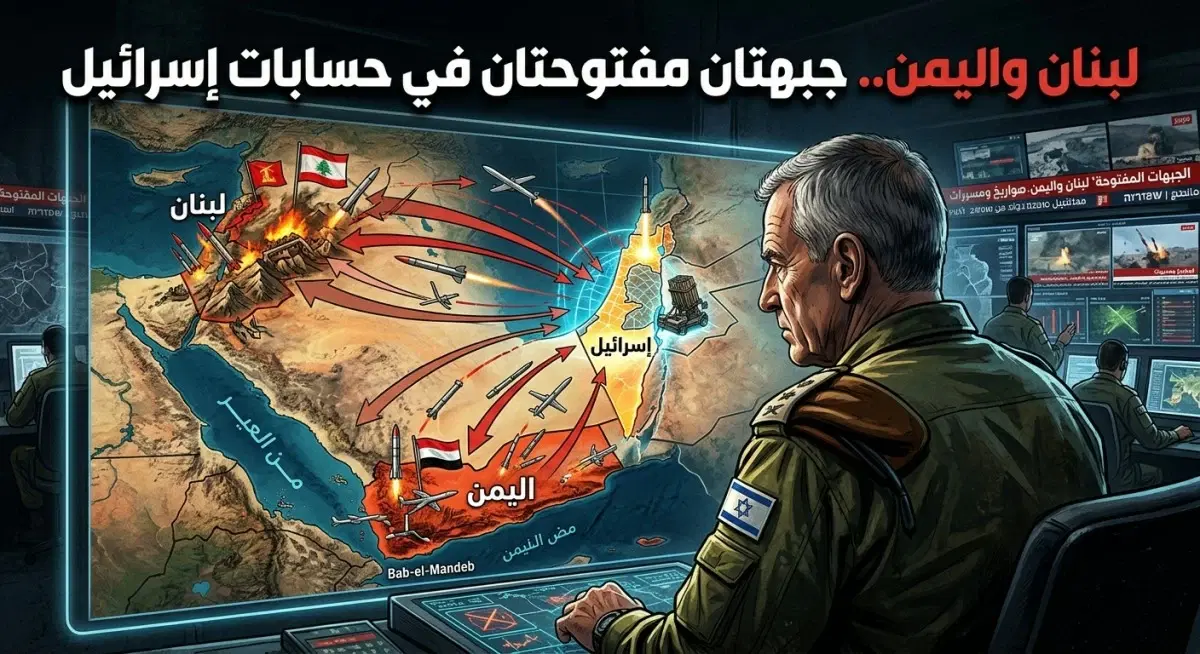
Lebanon and Yemen.. Two open fronts in Israel's calculations..
US efforts to maintain communication channels between Beirut and Tel Aviv
Amman7 min read
Share
The Middle East is witnessing rapid developments on both diplomatic and military levels, where negotiation paths intersect with field escalation, and regional considerations overlap with international calculations, at a time when the chances of reaching radical settlements remain elusive.
In this context, attempts to keep communication channels between Israel and Lebanon open emerge despite setbacks and delays, coinciding with growing fears of the repercussions of the Houthi group's threats to international navigation in the Bab el-Mandeb Strait and their impact on maritime security and the global economy, in light of the continued Israeli military operations in southern Lebanon and the statements of Israeli Prime Minister Benjamin Netanyahu, which carried clear escalatory messages.
It is expected that the Israeli Ambassador to the United States, Yehiel Leiter, will meet this week with the Lebanese Ambassador in Washington, Nada Hamada, as part of US efforts to maintain communication channels between Tel Aviv and Beirut, following the stalling of the negotiation path and the postponement of meetings that were scheduled to be held in the Italian capital, Rome.
The newspaper "Haaretz" reported that the meeting comes after the postponement of a meeting that was scheduled between the Israeli and Lebanese negotiating teams until next month, at a time when Washington is trying to prevent the complete collapse of the negotiation path.
The newspaper quoted an informed source as saying that the main reason for postponing the Rome talks to next month is "logistical" and is related to constraints in the participants' schedules, including Jewish holidays in Israel and preparations for the United Nations General Assembly meetings.
On the other hand, Israel's Channel 14 quoted a political source as saying that the Lebanese Army's plan to disarm Hezbollah has failed, alleging coordination between the Lebanese Army Commander, Rudolph Haykal, and Hezbollah, and confirming the postponement of negotiations until next September, while claiming that the Israeli army is the only party capable of ending the party's presence in southern Lebanon.
In a field development, Israeli Prime Minister Benjamin Netanyahu boasted on Monday evening about the scale of the destruction left by Israeli explosions in the Ali al-Taher heights in southern Lebanon, announcing that Israel will continue to destroy what it describes as "terrorist infrastructure" in what it calls the "security zone" inside Lebanese territory, and threatening its opponents with "harder strikes" if they resume attacking it.
Netanyahu's statements came in a video statement in which he displayed a Lebanese commentary on the scenes of the explosions published by the Israeli army on Ali al-Taher hill, in which he considered that what happened represents an announcement of the "end of the project" represented by Hezbollah, and that the party is "militarily finished in Lebanon." The commentary appeared on a Lebanese channel known for its support for the positions of the Lebanese Forces party.
Following the screening of the clip, Netanyahu said that Israel had achieved "another huge victory over Hezbollah," claiming that it had destroyed its "great fortress" in the heights of Beaufort Castle and Ali al-Taher.
He claimed that the military infrastructure established by Hezbollah in Ali al-Taher was not only directed towards the Galilee and the occupied Syrian Golan, but was used, according to his narrative, as an advanced command post within the party's plan to occupy the Galilee, adding that the Israeli army had confiscated "huge quantities of weapons" from tunnels he said were built with Iranian funding.
Netanyahu directed a direct threat to Israel's opponents, saying that they would receive "harder strikes" if they decided to attack Israel again, adding that "there is other work that must be completed, and we will complete it."
Regarding the Yemeni file, the Israeli army recommended that the political echelon refrain from initiating an attack on the Houthis or carrying out military operations that would put Israel at the forefront of the confrontation, calling instead for focusing on political moves, following the Houthis' control of the Bab el-Mandeb Strait, according to what was reported by "Haaretz".
The newspaper reported on Tuesday, citing Israeli security sources, that senior army officers called during closed deliberations held in recent days to focus at the current stage on political efforts to establish an international and regional coalition to confront the Houthi threat.
According to the sources, the Israeli army believes that the Houthi threat goes beyond the direct Israeli context, especially since Bab el-Mandeb is considered one of the most important commercial passages in the world, and that any threat to navigation there could have broad repercussions on the stability of the global economy and international trade movement.
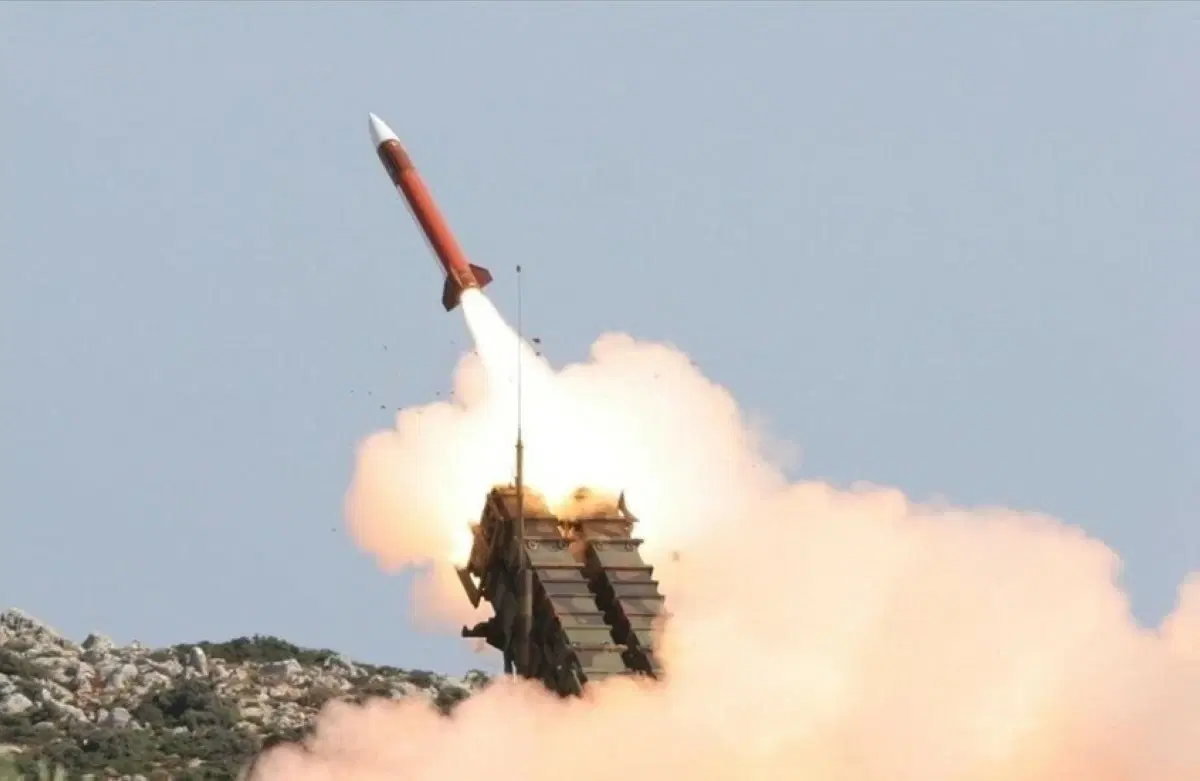
Israeli military sources said that the army is preparing for the possibility that Iran might decide to use the Houthis against Israel directly in the event of escalating military tension between it and the United States.
The sources considered that the danger of the Houthi threat to Israel is not related to military power alone, but to its ability to expand the scope of fronts and threaten trade and maritime navigation, noting that carrying out a limited military response would not, according to the Israeli assessment, constitute a long-term solution to this dilemma.
The Israeli army believes, according to the newspaper, that turning the Houthi front into an international issue and involving multiple countries in confronting it would keep Iran at the center of international attention and discourse, instead of limiting the confrontation to a direct Israeli framework.
The circulating data indicate that Netanyahu's recent statements carry internal political and electoral dimensions in addition to their military messages, as he seeks through them to project an image of strength and deterrence in the face of Israel's opponents. However, this escalatory tone may further complicate any potential negotiation path with Lebanon, and may weaken the position of the Lebanese Army as a party capable of imposing stability in the south.
On the other hand, the Israeli approach towards the Houthis reflects a growing realization of the difficulty of entering into a direct military confrontation with them, in light of the complexities of the regional scene.
It seems that the call to form a regional and international coalition is based on an Israeli assessment that the threat to Bab el-Mandeb goes beyond direct Israeli interests, and that dealing with it as a threat to global navigation and trade may allow for expanding the circle of parties involved in confronting it.
This shift from focusing on direct military action to pushing for a multilateral political move may constitute an important development in the Israeli approach towards the Yemeni arena, especially in light of fears of the expansion of the confrontation and the opening of new fronts.
In light of current data, the possibilities of limited escalation in southern Lebanon seem to exist, with Israel continuing to focus on what it calls the "security zone" and attempting to impose a new deterrence equation, at a time when this approach may face resistance from Hezbollah, keeping the possibilities of repeated rounds of escalation and calm in place.
In Yemen, it is likely that Israel will continue to adopt a more cautious approach towards the Houthis, based on pushing for a regional and international coalition instead of engaging alone in a direct confrontation, with the possibility of seeking to involve Arab and regional countries concerned with the security of navigation, and focusing on protecting international trade movement in Bab el-Mandeb.
In both cases, the Iranian role will remain an influential factor in determining the course of events, whether in Lebanon or Yemen, in light of Tehran's ability to use these fronts as leverage in any negotiations or wider confrontation with the United States and Israel.
The regional scene reflects, in its outcome, a high degree of complexity and interdependence, where diplomatic paths overlap with military developments, and local calculations intersect with regional and international dimensions. With the continued absence of clear indicators of radical and imminent settlements, the coming period remains open to multiple possibilities, and fraught with the risks of escalation and the expansion of the scope of the confrontation.