BRICS nations succeed in overcoming differences over the "Middle East war"
Call for parties to the conflict to exercise "restraint"
Follow Al Rai

Diplomatic bloc discusses boosting inclusive global economic growth
BRICS nations succeed in overcoming differences over the "Middle East war"
Call for parties to the conflict to exercise "restraint"
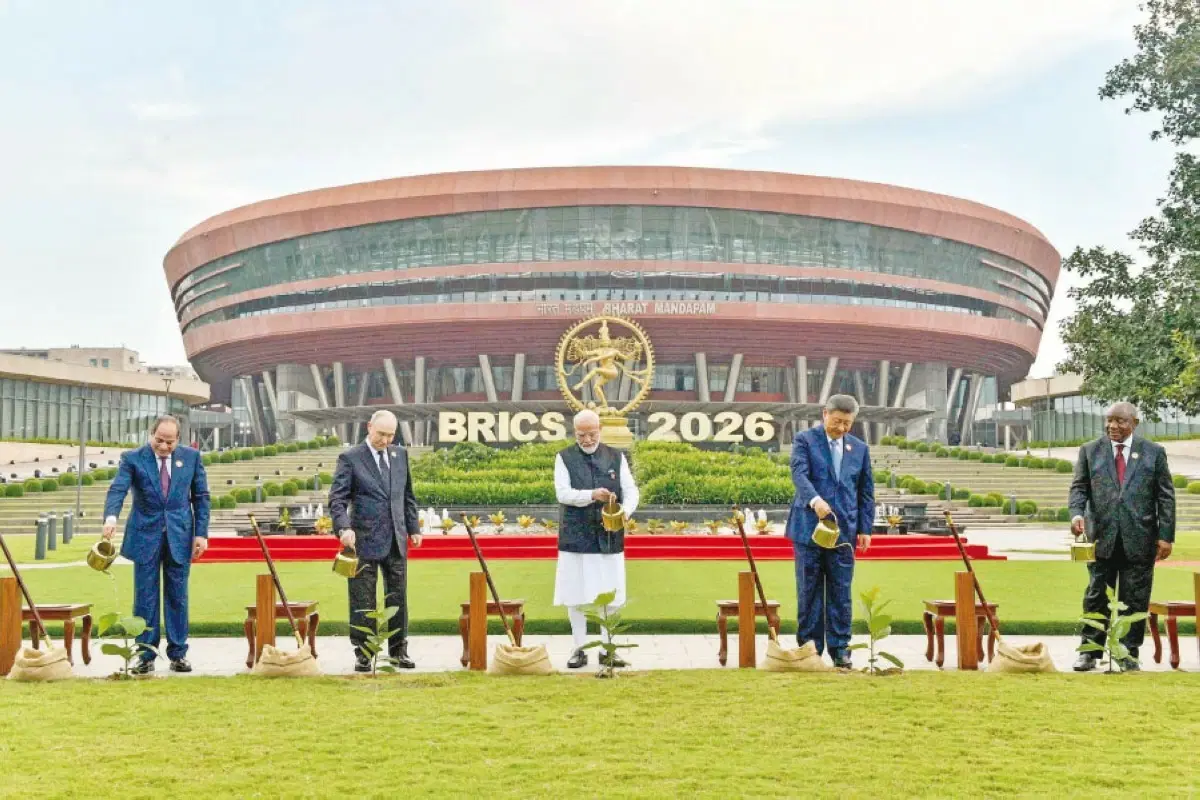
Leaders of the BRICS member states, including China, Russia, and India, discussed on Sunday ways to boost "inclusive global economic growth" on the second and final day of their summit held in the Indian capital, New Delhi.
The heads of state and government of this diplomatic bloc succeeded in overcoming their differences regarding the war in the Middle East, issuing a joint statement in which they called on the parties to the conflict to exercise "the utmost restraint."
Indian Prime Minister Narendra Modi, whose country is hosting the summit, called on member states on Sunday morning to strengthen "cooperation" among themselves, noting that the group's nations represent "about half of the world's population, 40% of global GDP, and more than a quarter of the volume of international trade."
Images released by the Russian Embassy in India showed Russian President Vladimir Putin departing the Indian capital after attending the summit.
During the summit, Putin praised the growing importance of the diplomatic bloc, which seeks to counter Western influence, considering that it contributes to shaping a "new, fairer, and multipolar world order."
The BRICS forum was founded in 2009 to bring together major emerging economies—Brazil, Russia, India, and China—and was soon joined by South Africa, operating outside the framework of blocs dominated by the United States and Western powers, such as the G7. The bloc has expanded to include countries like Iran, Saudi Arabia, and the UAE, which hold widely varying positions on the war in the Middle East.
In his speech, Modi said, "The strength of the BRICS group lies in its diversity and cooperation." He added, "We have sought to promote inclusive global growth. We may face a different reality, but we are capable of rising together through cooperation to serve humanity."
The economic dominance of China, which floods the markets of its BRICS partners with its products, is causing growing tensions among the group's nations. Following bilateral talks held on Saturday, Modi and Chinese President Xi Jinping stressed the "need to address issues of concern, including structural imbalances in trade," according to a statement issued by New Delhi. India's trade deficit with China reached a record level of $112 billion in the 2025-2026 fiscal year.
In their joint statement issued on Saturday, BRICS leaders reaffirmed their "support for a non-discriminatory, open, fair, transparent, equitable, and inclusive rules-based international trading system, with the World Trade Organization at its core."
Less than two weeks before his expected visit to Washington, Jinping called on the group to "reject all forms of trade protectionism" and "support the global trading system."
Jinping's statement carries an allusion to the tariff war that President Donald Trump has been waging on several fronts since his return to the White House in January 2025.
The Chinese President left New Delhi on Sunday afternoon immediately after the end of the morning session. His visit to India marked a new milestone in the gradual rapprochement between Beijing and New Delhi, six years after the deadly clash that erupted between the two countries' soldiers on their border in the Himalayas. Both countries have succeeded in putting their bilateral relations back on track, but mistrust remains. During their meeting on Saturday on the sidelines of the summit, Modi and Jinping expressed their "commitment to reaching a fair, reasonable, and mutually acceptable solution to the border issue," according to the Indian Ministry of External Affairs.
The ministry's statement added that Modi "stressed the need for both sides to adhere to existing agreements and understandings regarding border-related issues." Jinping said, "Although our two countries differ in many aspects, they are fully capable of complementing each other's strengths, supporting one another, achieving mutual success, and advancing together."
Know more about this story?Send us a tip
Ask about this report — answers stay grounded in its text.