Jerusalem Governorate: 1678 settlers stormed Al-Aqsa during the Jewish "Yom Kippur"
Agencies4 min read
Share
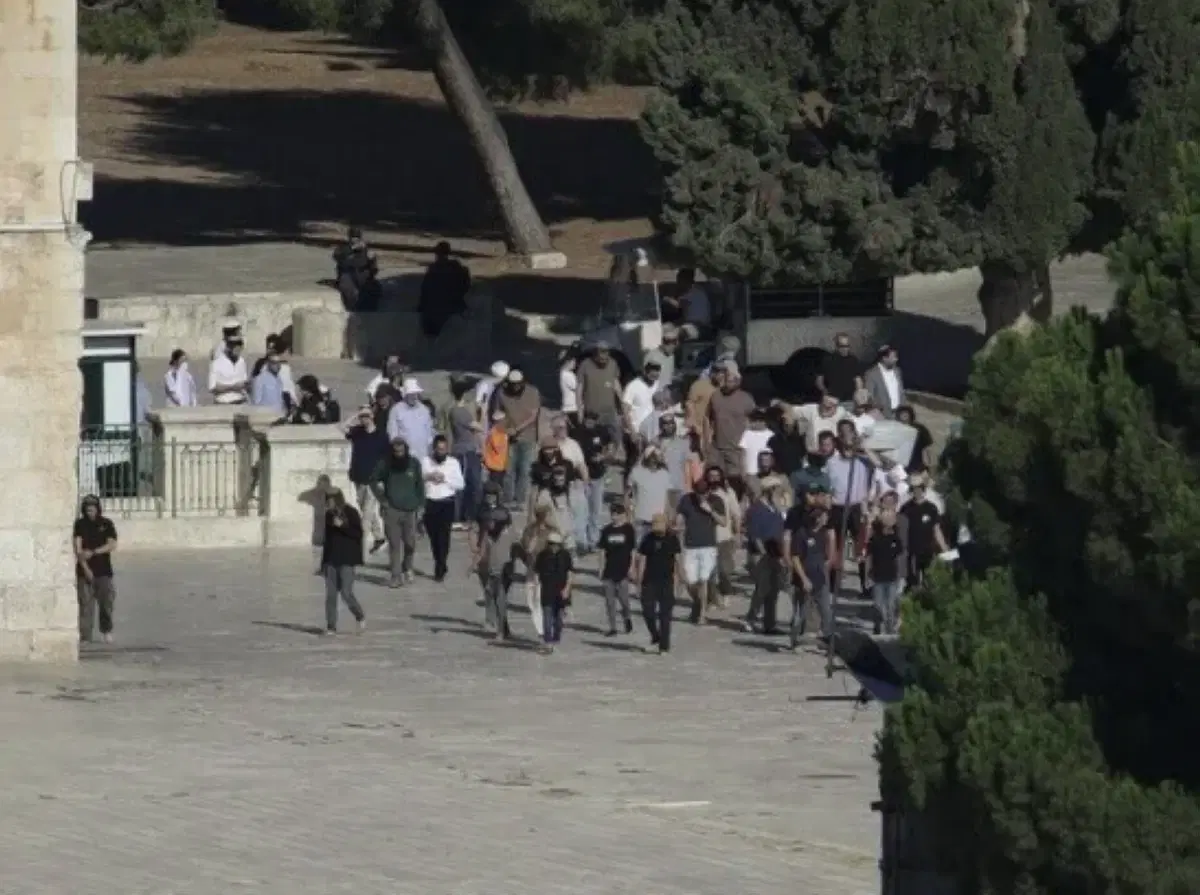
1678 Israeli settlers stormed the Al-Aqsa Mosque in the occupied East Jerusalem, on Sunday and Monday, during the Jewish "Yom Kippur" (Day of Atonement).
The Jerusalem Governorate said in a statement on Monday, in which it monitored all the attacks on the mosque, that the incursions were distributed with 992 settlers on Sunday, on the eve of "Yom Kippur", and 686 on Monday in conjunction with the holiday.
It added that the number of settlers who stormed the mosque during "Yom Kippur" is "the highest number recorded for this occasion according to the record monitored by the Jerusalem Governorate".
It explained that the distribution of the incursions over two days is due to the nature of "Yom Kippur", which coincided with Monday this year, and is considered according to Jewish teachings the so-called "Sabbath of Sabbaths", during which religious Jews refrain from food, drink, work and movement.
According to the Governorate, this leads groups linked to the "Temple" to organize the so-called "compensatory incursion" on the day before the holiday.
It stated that the incursions were accompanied by the performance of Torah rituals and prayers openly and collectively, and the introduction of tools, books and religious clothing, alongside the participation of Israeli government officials in the incursions and rituals.
During the Sunday incursions, settlers performed Torah rituals and prayers openly and collectively, focusing part of them in the eastern courtyard of the Al-Aqsa Mosque.
The rituals were interspersed with episodes of individual and collective dancing, clapping and prostration, and extended to other areas of the mosque, including the western courtyards opposite the Dome of the Rock.
The Governorate said that settlers appeared wearing prayer shawls "Tallit", black prayer scrolls "Tefillin", and carrying papers containing prayers and rituals specific to the incursion, alongside "Siddur" books that a number of incursion leaders are allowed to bring into the mosque.
It added that the Israeli police facilitated the distribution of these papers at the doors of the mosque, in a practice that it said began during the current year and reflects an "escalation in imposing Torah tools inside the Al-Aqsa Mosque".
This comes days after the registration of the incident of blowing the shofar inside the Al-Aqsa Mosque, as the Jerusalem Governorate documented it blowing about 30 times on September 13, coinciding with the so-called "Hebrew New Year".
In this context, Israeli Minister of National Security Itamar Ben Gvir stormed the Al-Aqsa Mosque at the end of the incursion period on Sunday, and led a group of settlers in rituals and a "penitential prayer" inside it.
The Governorate said that this incursion is the twentieth carried out by Ben Gvir to the Al-Aqsa Mosque since he assumed office in early 2023.
It confirmed that what the mosque witnessed during Sunday and Monday represents an "escalation" targeting the imposition of new facts inside it, warning that this affects the historical and legal status quo and the powers of the Jerusalem Endowments affiliated with the Jordanian Ministry of Endowments and freedom of worship and access to the mosque.
"Yom Kippur", which is the holiest day of the year in the Jewish religion, began on Sunday evening and lasted until Monday evening, during which religious Jews fast and refrain from a number of daily activities, while large sectors stop working.
Israel imposes extensive restrictions on vehicle movement during the occasion, while air traffic at Israeli airports is halted and land border crossings are closed for varying hours.
Since 2003, the Israeli police have allowed settlers to storm the Al-Aqsa Mosque, while the Islamic Endowments Department in Jerusalem repeatedly calls for a halt to these incursions, without a response from the Israeli authorities.