Israel's Central Elections Committee Chairman rejects Netanyahu's questioning of poll results
Agencies3 min read
Share
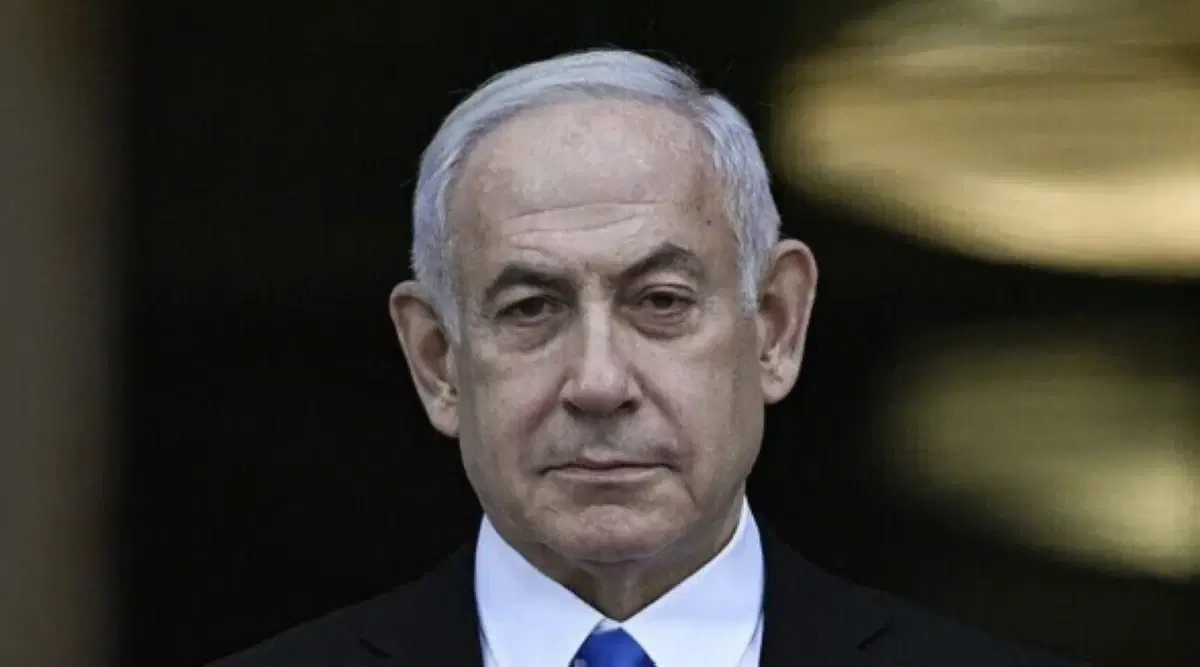
The Chairman of the Israeli Central Elections Committee, Judge Noam Sohlberg, rejected on Sunday any questioning of the overall Knesset election results, in light of accusations made by Prime Minister Benjamin Netanyahu and his "Likud" party regarding alleged Qatari interference in the voting, following his bloc's failure to secure a parliamentary majority.
Sohlberg's remarks come after the elections held last Tuesday, which resulted in Netanyahu's bloc winning 53 out of 120 seats in the Knesset, falling short of the 61-seat majority required to form a government.
The Hebrew newspaper "Yedioth Ahronoth" quoted Sohlberg as saying that "the claim that the available evidence could lead to questioning the election results as a whole is incorrect."
His remarks were made in the presence of the head of the Israeli Security Agency "Shin Bet," David Tzur, and the Attorney General, Gali Baharav-Miara.
Sohlberg clarified that irregularities and potential suspicions are being examined, emphasizing that even if proven, they would not undermine the overall election results.
Netanyahu and his "Likud" party had leveled accusations regarding alleged Qatari interference in the elections, by funding activities aimed at increasing voter turnout in the Arab community and influencing the results.
The party claimed to possess recordings and materials documenting the offering of bribes to voters, including money and fuel vouchers, in exchange for votes, describing what happened as a "theft of the elections."
The party did not provide public evidence proving its accusations of Qatari interference or widespread fraud.
In response, Qatar rejected these accusations last Thursday, describing them as a "new disinformation campaign" aimed at dragging its name into Israel's internal political disputes.
The Qatari Foreign Ministry spokesperson, Majed Al-Ansari, said that his country "categorically denies the allegations regarding its interference in the Israeli elections, or funding any activities aimed at influencing their results."
He added that Qatar "is not a scapegoat for the political failures of some Israeli politicians," confirming his country's rejection of being dragged into internal Israeli polarization.
In a related development, Israeli opposition leader Gadi Eisenkot accused Netanyahu on Sunday of launching an "organized campaign" to delegitimize the election results by suggesting Qatari interference to support his rivals, according to the Associated Press.
The head of the United Arab List, Mansour Abbas, also denied on Thursday the accusations related to improper influence on the elections through foreign funding.
The Israeli Central Elections Committee had previously announced that there was no basis for the claims regarding systematic damage to the integrity of the voting, according to Hebrew Channel 12.
According to the final vote count, Netanyahu's bloc received 53 seats, compared to 48 for the opposition bloc led by Eisenkot, and 19 for the Arab parties.
The final voter turnout reached 77.9 percent, the highest since 1999, according to the Elections Committee.
The official results are scheduled to be presented to Israeli President Isaac Herzog next Wednesday, in preparation for the start of his consultations with the parties represented in the Knesset on designating a figure to form a government.