Tehran: Any new war with the United States may be longer than the previous one
Amman5 min read
Share
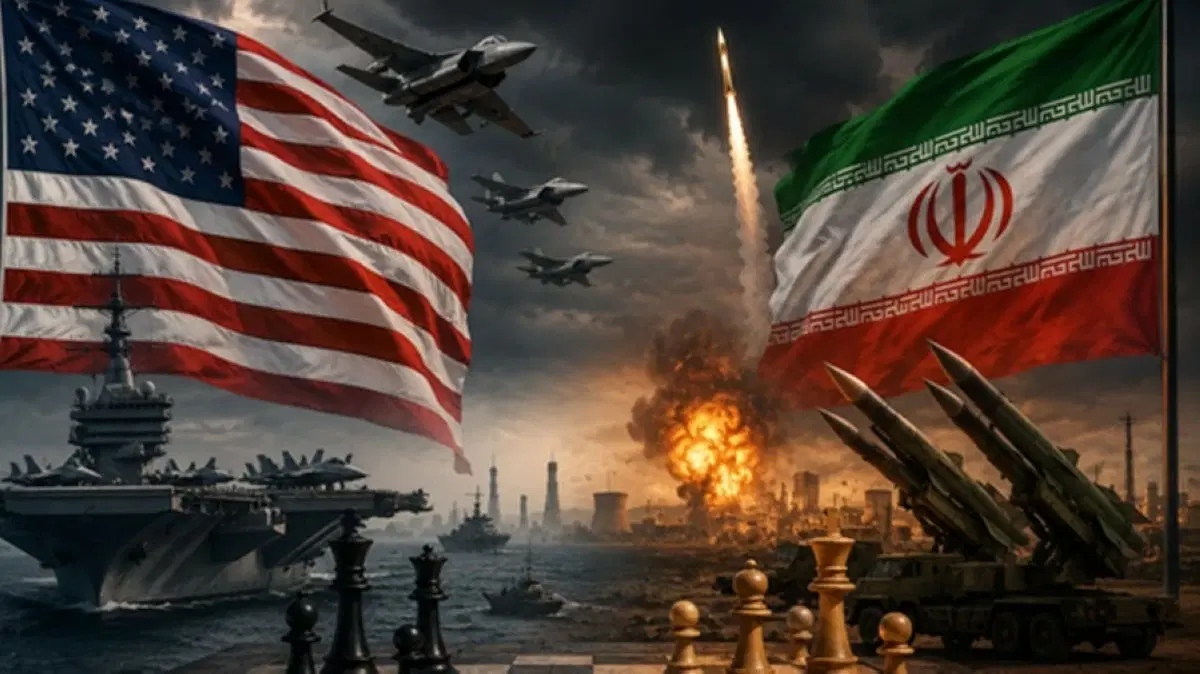
Iran warned on Sunday that any new war with the United States could be longer than the previous one, asserting that the United States would not be the one to decide its end, a day after President Donald Trump hinted at the possibility of launching new strikes on Iranian targets.
The spokesman for the Iranian Armed Forces, Mohammad Akrami-Nia, said that "any future war could last longer than the previous one, and the US President will not be in a position to dictate the timing of its end or the conditions for its termination," as reported by Iranian state television.
On Saturday, Trump said that the United States had destroyed a large part of Iran's nuclear capabilities, but that "we still have one or two sites left to deal with."
US media reported that Trump held a phone call with Israeli Prime Minister Benjamin Netanyahu on Saturday to discuss whether military operations against Iran should be intensified and when that could be done.
The "Axios" website quoted a US official and an Israeli official as saying that the two leaders discussed the path of negotiations with the Islamic Republic, as Netanyahu urged the US President to strike Iran immediately after the US midterm elections, while Trump preferred to allow room for negotiations to continue their course.
In remarks to reporters on Sunday, Trump confirmed that he had discussed the Iran file with Netanyahu, but did not want to provide further details.
On the other hand, Iranian Defense Minister Mehrdad Akhlaghi vowed on Sunday a "proportionate, decisive, and effective" response to any attack targeting his country, according to Iranian state television.
He added, "Those issuing threats will not be able to determine the scale, timing, and consequences of the Iranian response."
Likewise, the spokesman for the Iranian Revolutionary Guard, Hossein Mohebbi, said that "in any conflict with America, there will be no geographical limits, as targets have been identified on a wide scale to inflict losses on the enemy," according to the same source.
On Saturday, US Secretary of State Marco Rubio said that Trump had not made a decision regarding launching new strikes on Iran in light of the stalled talks to end the war, and that the United States is open to a diplomatic solution.
The Iranian officials' remarks come a day after Iranian Supreme Leader Mojtaba Khamenei warned, in a statement attributed to him and published on his Telegram channel on Saturday, the United States and Israel against launching new attacks, issuing directives to respond "without geographical limits" to American and Israeli threats.
Khamenei asserted that "if the enemies launch military or terrorist attacks again, the armed forces of the Islamic Republic and the Iranian people are the ones who will determine the timing of its end and its conditions."
The statement added that during his meeting with senior military commanders, the Supreme Leader issued "directives that every level and type of threat be met with an immediate and effective response, without geographical limits."
Khamenei also ordered military commanders to update the list of Iranian targets to include "all types of material and non-material assets belonging to the American-Zionist enemy."
Iran had previously warned that it might consider cutting undersea communication cables passing through the Strait of Hormuz.
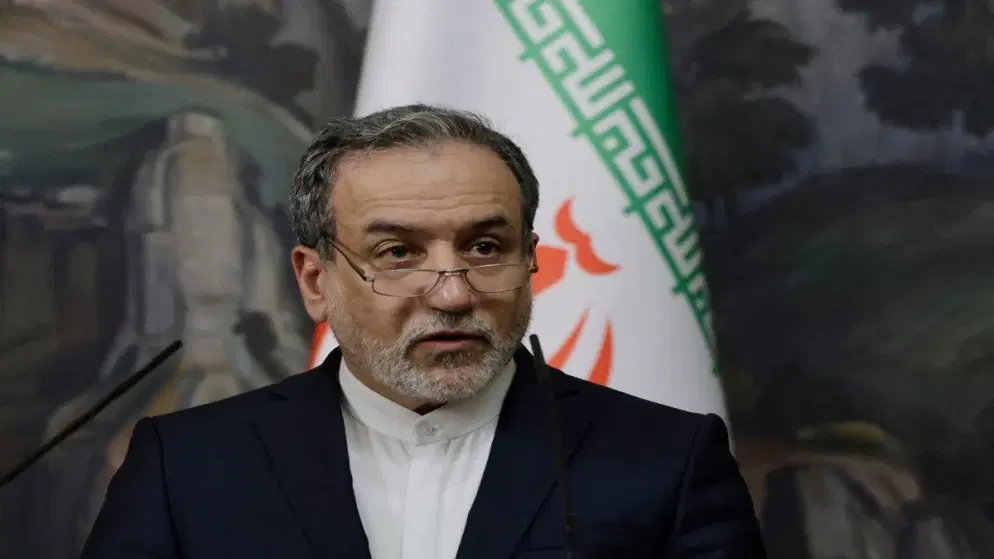
Iranian Foreign Minister Abbas Araghchi stated that "Tehran does not see, under the current circumstances, a necessity to meet with the American side."
The official Iranian news agency (IRNA) also quoted him as saying, "We hope that the other party will exercise rationality and choose diplomacy," adding that Iran "remains prepared for both defense and diplomacy."
The war broke out on February 28 with the United States and Israel launching joint strikes against Iran, which responded by targeting Gulf countries allied with Washington. In April, a ceasefire was concluded that ended nearly 40 days of intensive shelling, and a protocol agreement aimed at putting a final end to the conflict was also concluded in June.
However, the agreement collapsed completely this summer. Hostilities have recently focused on the Strait of Hormuz, vital for energy exports in the Gulf, which Iran has been restricting since the beginning of the war.
In response, the United States is imposing a blockade on Iranian ports in an attempt to pressure its economy.
The Iranian military reported on Saturday, according to state television, that an oil tanker "caught fire after colliding with mines," while Washington confirms that it has removed most of the mines from the area.
- Kolang Mountain -
Trump told reporters at his residence in Florida on Saturday, "We have destroyed their nuclear capabilities. We still have one or two sites left to deal with, but we can get that done in 10 minutes," mentioning Kolang Mountain located in Isfahan province.
Press reports indicate the possibility of a short and intensive military campaign following the US midterm elections scheduled for Tuesday.
Kolang Mountain is located 250 kilometers south of Tehran, near the Natanz uranium enrichment site, and Trump had vowed to strike it in late July.
While the United States accuses Iran of building a secret underground nuclear facility at the site, Tehran denies these accusations while simultaneously asserting its right to enrich uranium for civilian purposes.
- "Opportunity" -
Against the backdrop of continued diplomatic efforts mediated by Qatar to end the war in the Middle East, UAE Presidential Advisor Anwar Gargash expressed hope on Sunday for achieving diplomatic progress.
During the annual "Manama Dialogue" forum in the Bahraini capital, Gargash said, "We hope for a diplomatic breakthrough... We do not wish to see another round of confrontation," but he asserted, "However, as we have shown on previous occasions, we are prepared for the worst."
In Israel, Prime Minister Benjamin Netanyahu spoke, following the legislative elections, about a "historic, once-in-a-lifetime opportunity" to topple the Iranian government.