Golan: Netanyahu is a dictator who refuses to accept defeat
Agencies4 min read
Share
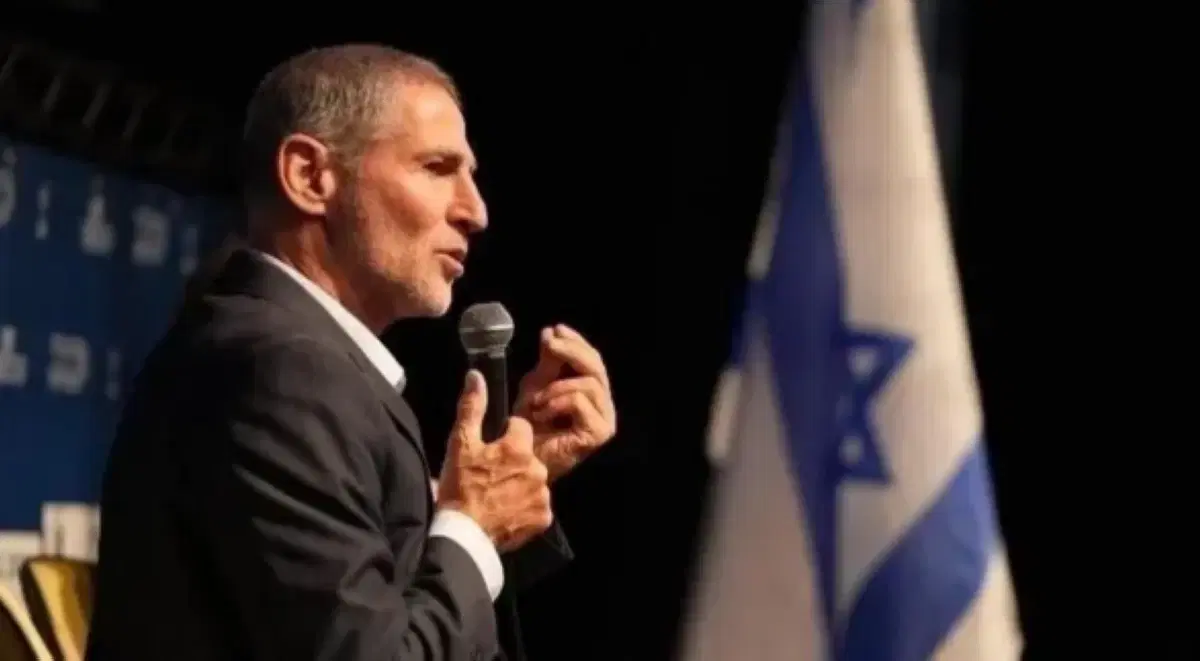
The leader of the Israeli "Democrats" party, Yair Golan, described Prime Minister Benjamin Netanyahu on Sunday as a "dictator who refuses to accept defeat at the ballot box," calling on him to acknowledge the results of the parliamentary elections and respect the will of the voters.
In a post on the American "X" platform, Golan said that Netanyahu must announce "immediately and explicitly" that he respects the election results.
He considered that his refusal to do so lends legitimacy to what he described as "conspiracy theories regarding election fraud."
He added that Netanyahu's behavior embodies the danger of his continued rule, stressing the necessity of respecting the voters' will and accelerating the formation of what he described as a "change and rescue government."
Golan likened Netanyahu's behavior to the actions of "a dictator who refuses to accept defeat at the ballot box."
Golan's statements came after the Chairman of the Israeli Central Elections Committee, Judge Noam Sohlberg, and the head of the Israel Security Agency (Shin Bet), David Zini, confirmed the integrity of the electoral process and the lack of evidence that would cast doubt on its overall results.
According to the results of the vote count, Netanyahu's bloc received 53 seats, compared to 48 for the opposition bloc led by Gadi Eizenkot, and 19 for the Arab parties, out of 120 seats in the Knesset, without any bloc being able to secure the majority required to form a government, which is 61 seats.
It is noteworthy that Netanyahu and his "Likud" party leveled accusations regarding alleged Qatari interference in the elections, through funding activities aimed at increasing the turnout in the Arab community and influencing the results.
The party claimed to possess recordings and materials documenting the bribery of voters, including cash and fuel vouchers, in exchange for voting, describing what happened as a "theft of the election."
The party did not provide public evidence proving its accusations of Qatari interference or large-scale fraud.
In response, Qatar rejected these accusations last Thursday, describing them as a "new disinformation campaign" aimed at dragging its name into internal political disputes in Israel.
In a related development, Israeli opposition leader Gadi Eizenkot accused Netanyahu on Sunday of launching an "organized campaign" to delegitimize the election results by implying the existence of Qatari interference to support his opponents, according to the Associated Press.
The head of the United Arab List, Mansour Abbas, also denied on Thursday the accusations related to attempting to influence the elections illicitly through foreign funding.
Earlier on Sunday, the Chairman of the Israeli Central Elections Committee, Judge Noam Sohlberg, refused to cast doubt on the overall results of the Knesset elections, confirming that the voting took place properly and that the results reflect the will of the voters.
The Hebrew newspaper "Yedioth Ahronoth" quoted Sohlberg as saying that the claim that the available materials and evidence could lead to casting doubt on the overall election results is "incorrect."
He explained that potential violations and suspicions are subject to examination, stressing that "even if they are proven, they do not detract from the integrity of the electoral process and its results as a whole."
The final turnout for the elections reached 77.9 percent, the highest since 1999, according to the Elections Committee.
The results place Israel in a political impasse, given the inability to form a government without understandings between the blocs, amid opposition disagreements regarding the possibility of seeking support from Arab parties.
The official results are scheduled to be presented to Israeli President Isaac Herzog next Wednesday, in preparation for the start of his consultations with the parties represented in the Knesset regarding tasking a figure to form the government.