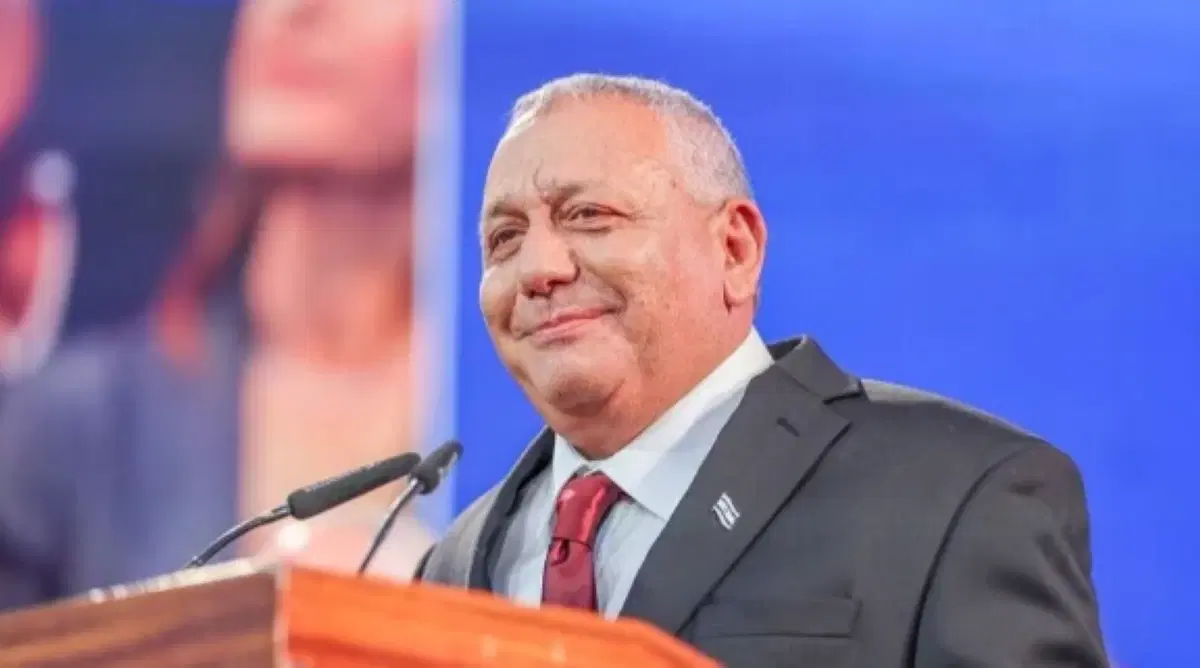
Eisenkot: The despicable attempt to evade the election results has failed
Agencies4 min read
Share
The leader of the Israeli "Yashar" party, Gadi Eisenkot, said on Sunday that the attempt aimed at evading the election results, challenging the will of the voters, and dragging the country into new elections has "failed," describing it as "despicable and malicious."
This came in a post published by Eisenkot on the American "X" platform, referring to the moves by Prime Minister Benjamin Netanyahu and his "Likud" party to question the election results by accusing Qatar of interfering in the voting and funding activities to increase the Arab vote.
Eisenkot said: "The despicable and malicious attempt to evade the election results, challenge the will of the public, tarnish the image of an entire society, and drag Israel into new elections has failed."
He added: "Only someone who realizes they have lost would be prepared to wage such a crude campaign to delegitimize [the results], even if it comes at the expense of further damaging public trust in state institutions."
Eisenkot emphasized that the results of the 26th Knesset elections are "stable and clear," welcoming the statements by the Chairman of the Central Election Committee, Judge Noam Sohlberg, in which he confirmed the integrity of the electoral process and the absence of evidence that would cast doubt on its overall results.
He continued, addressing the Israelis: "Ignore the background noise and the political maneuvers that change every hour. The people are sovereign, and they have had their say: the government of failure does not have a majority, and it has lost the election."
Eisenkot's remarks come amidst accusations leveled by Netanyahu and his "Likud" party regarding alleged Qatari interference in the elections through funding activities aimed at increasing the voting rate in the Arab community and influencing the results.
The party claimed to possess recordings and materials documenting the bribery of voters, including cash and fuel vouchers, in exchange for votes, describing what happened as "stealing the election."
The Likud did not provide public evidence proving its accusations of Qatari interference or large-scale fraud.
In contrast, Qatar rejected these accusations last Thursday, describing them as a "new disinformation campaign" aimed at dragging its name into internal political disputes in Israel.
The head of the United Arab List, Mansour Abbas, also denied the accusations related to an attempt to influence the elections illicitly through foreign funding.
Earlier on Sunday, the Chairman of the Israeli Central Election Committee, Judge Noam Sohlberg, affirmed that the voting took place properly and that the results reflect the will of the voters.
The Hebrew newspaper "Yedioth Ahronoth" quoted Sohlberg as saying that the claim that the available materials and evidence could lead to questioning the election results as a whole is "incorrect."
He explained that potential violations and suspicions are under examination, stressing that, even if proven, they do not detract from the integrity of the electoral process and its results as a whole.
His statements came in the presence of the head of the General Security Service (Shin Bet) David Barnea and the Attorney General Gali Baharav-Miara.
According to the results of counting all votes, the Netanyahu camp obtained 53 seats, compared to 48 for the opposition camp led by Eisenkot, and 19 for the Arab parties, out of 120 seats in the Knesset, without any camp being able to secure the majority required to form a government, which is 61 seats.
The final turnout reached 77.9 percent, the highest since 1999, according to the Election Committee.
The results place Israel in a political impasse, given the difficulty of forming a government without understandings between the blocs, amid differences within the opposition regarding the possibility of relying on the support of Arab parties.
The official results are scheduled to be submitted to Israeli President Isaac Herzog next Wednesday, in preparation for him to begin consultations with the parties represented in the Knesset regarding assigning someone to form the government.