Eisenkot moves to form a government and discusses coordinating steps with Lapid
Agencies5 min read
Share
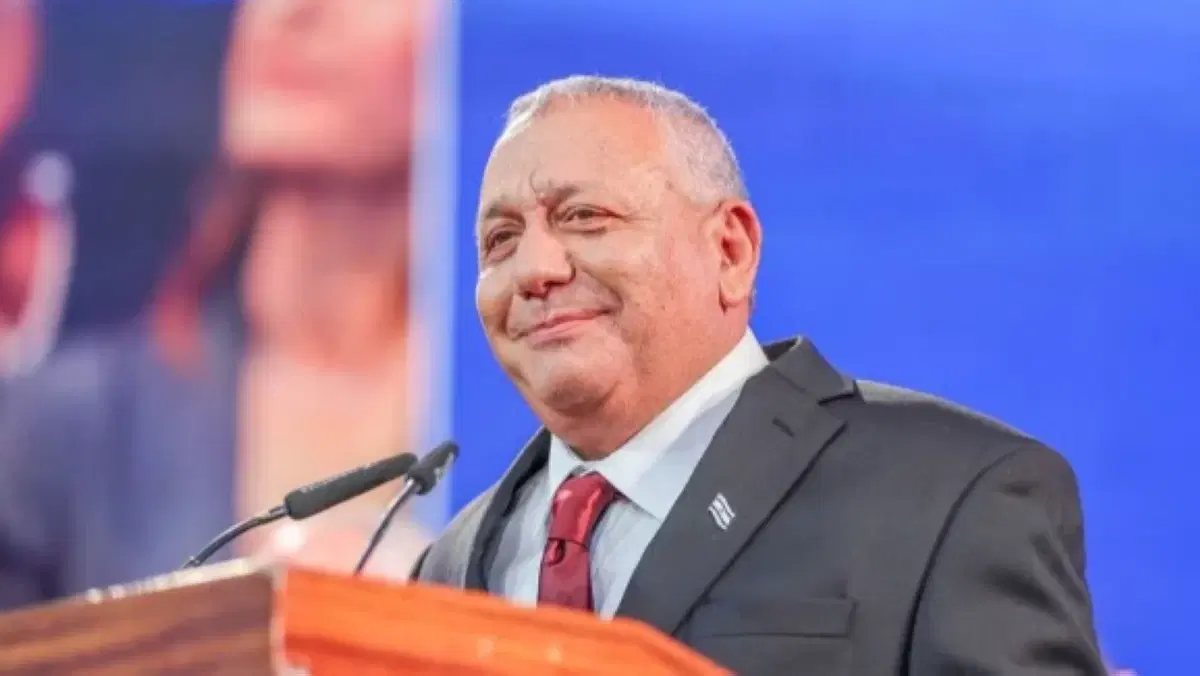
The leader of the Israeli "Yashar" party, Gadi Eisenkot, announced on Saturday his intention to work on forming a new government with the broadest possible political consensus, calling on Knesset (parliament) members to join it based on 4 principles.
This comes in light of the failure of either of the two main camps to secure a parliamentary majority, following last Tuesday's elections.
In a statement posted on his account on the American "X" platform, Eisenkot said that the results of the elections held on October 27 showed that the majority of Israelis voted against Prime Minister Benjamin Netanyahu's government, which he described as the "October 7th and draft evasion government," by a margin of more than half a million votes.
He added that he would work in coordination with his political partners to translate the election results into political change, end what he described as the culture of "lies and division" led by Netanyahu, and form a "Zionist and official" government that enjoys broad consensus.
According to observers, by a "Zionist and official government," Eisenkot means a broad coalition of parties that recognize "Israel as a Jewish and democratic state, are committed to the values of the Declaration of Independence, and impose military or national service on everyone," in contrast to the current coalition led by Netanyahu, which includes religious and hard-right parties.
According to Eisenkot's declared positions, these conditions exclude Arab and Haredi parties from participating in the government, as he refuses to involve the former in his coalition, while he makes the latter's participation conditional on their agreement to conscript their followers, which the Haredi parties oppose.
The importance of these positions is highlighted in light of the election results, which gave Eisenkot's camp 48 seats, compared to 53 for Netanyahu's camp, while Arab parties won 19 seats out of 120 in the Knesset.
Netanyahu's "Likud" party won 27 seats, compared to 21 for the "Yashar" party led by Eisenkot, opening the door to consultations between parties regarding the formation of a new government coalition.
These results mean that Eisenkot's camp cannot form a government on its own, while the Arab parties' seats, if an agreement is reached with them, give it the possibility of crossing the 61-seat majority threshold.
However, his refusal to involve Arab and Haredi parties leaves him with limited options, including swaying deputies from Netanyahu's camp, forming a minority government with external support from Arab parties, or reaching political understandings that would require backtracking on some of his campaign pledges.
It is noteworthy that Eisenkot announced during his election campaign his refusal to form a government with the participation of Arab and Haredi parties, confirming that he seeks a government based on a majority of Zionist parties that adopt the four principles he set.
- Talks with Lapid
Within the framework of these moves, the Hebrew newspaper "Yedioth Ahronoth" reported that Eisenkot met with Yair Lapid, a leader in the (Together) list, at the latter's home to discuss the election results and coordinate upcoming political steps, as part of a joint commitment to achieving what they described as the will of the voters.
Eisenkot called for avoiding new elections and entering into a prolonged political crisis, considering that the next phase requires forming a government capable of addressing the security, domestic, economic, and international challenges facing Israel.
The "Yashar" leader set four principles for joining the government he seeks to form: the first is recognizing Israel as a Jewish, democratic, liberal, and equal state, and the second is commitment to the values of the Declaration of Independence.
As for the third principle, it consists of imposing military, national, or civil service on all citizens, while the fourth stipulates recognizing the "Hamas" movement as a terrorist organization and working to dismantle its military capabilities and authority in the Gaza Strip.
The issue of conscripting ultra-Orthodox Jews (Haredim) is one of the most prominent contentious issues in Israel, as Eisenkot demands an end to exemptions from military service, while religious parties allied with Netanyahu insist on their continuation.
On the domestic front, Eisenkot announced his intention to work on forming an official committee of inquiry into the failures associated with the October 7, 2023, attack, increasing the number of recruits in the army, improving service conditions and compensation for soldiers, and repealing laws related to judicial amendments.
The October 7 attack and the subsequent Israeli war on the Gaza Strip, along with disagreements over military service and judicial amendments, were key files in the competition between Netanyahu's camp and his opponents during the recent elections.
Regarding military affairs, Eisenkot said that the war against Israel's enemies has not ended and that its goals have not yet been achieved.
However, he stressed that he would not support any military moves before the formation of the new government, with the exception of operations aimed at countering direct and immediate threats against Israel that cannot be delayed until the government is sworn in.