949 military checkpoints hinder the movement of 2.6 million Palestinians
Smotrich calls for the pursuit of Palestinian security forces
Follow Al Rai

Additional Military Reinforcements and Combat Battalions
949 military checkpoints hinder the movement of 2.6 million Palestinians
Smotrich calls for the pursuit of Palestinian security forces
Construction bids for the controversial 'E1' settlement project postponed
In a scene that repeats with every Jewish religious occasion, the Israeli army and police announced an increased level of alert in the West Bank, in preparation for the thousands of settlers who will flock to natural sites, places of worship, and events in settlements and outposts scattered throughout the occupied West Bank, according to the Hebrew website ' Walla'.
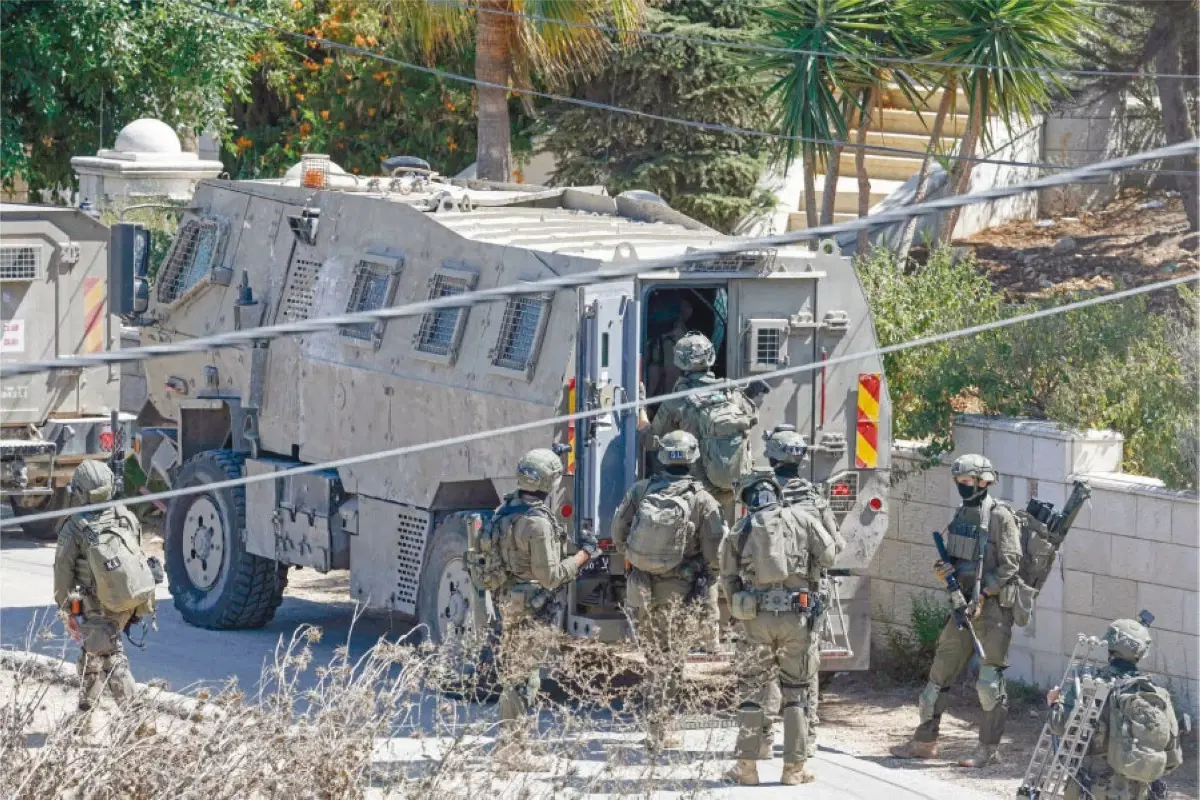
However, these preparations, which Israel presents as security measures to protect settlers and visitors, are reflected on the ground in the form of closures, checkpoints, and additional restrictions on the movement of Palestinians, amid fears of clashes and frictions at road junctions, where 949 Israeli military checkpoints hinder the movement of more than 2.6 million Palestinians, according to the United Nations.
Brigade commanders have been granted the authority to impose additional checkpoints and restrictions on Palestinians in the event of frictions or fears of confrontations with Israelis.
The Israeli army said in a statement that the Central Command of the Israeli army and the West Bank Brigade of the police expect hundreds of thousands of Israelis to flock during the 'holidays' to different areas of the West Bank, to visit natural sites, places of worship, and participate in recreational events.
Accordingly, and in light of Israeli fears of attacks that may be carried out by armed groups or individual attackers, the Chief of Staff of the Israeli army, Lieutenant General Eyal Zamir, decided to take a series of measures, including reinforcing the West Bank Division with additional combat battalions, reducing the response time of the Air Force, and increasing readiness to deal with emergency and unexpected events.
Zamir decided to assign responsibility for the regions of the southern West Bank, 'Judea and Etzion', with a focus on the area of contact with the occupied East Jerusalem, to the command of the 98th Division led by Brigadier General Manny Liberti, the former commander of the Commando Brigade.
A senior Israeli military official explained that this step aims to alleviate the burden on the command of the West Bank Division, in light of fears of escalating attacks and the need to strengthen the deployment of forces.
This measure comes despite the last time a similar measure was taken was in the aftermath of Operation 'Defensive Shield', when the number of battalions deployed in the West Bank exceeded 40 battalions, while currently about 24 battalions are deployed, and in contrast, the Central Command denies the existence of a specific warning about imminent attacks.
In parallel, the Israeli police and border police forces in the West Bank raised the level of alert on main roads and at known points of contact and natural sites, in anticipation of any exceptional events.
In Nablus, the occupation forces claimed to have found during their operations ten lathes, a locally made weapon, parts of an 'M16' rifle, and military equipment, and arrested two Palestinians on suspicion of possessing and manufacturing combat means.
The security and military escalation coincided with the call by Israeli Finance Minister Bezalel Smotrich to launch a large-scale military operation in the West Bank, similar to the operations carried out by the Israeli army in the Gaza Strip, demanding the dismantling of the Palestinian Authority and the pursuit of Palestinian security forces and the collection of weapons.
Smotrich said he believes that 'a war must be waged in the West Bank, and do what we did in the Gaza Strip there', adding that the Palestinian Authority, which he described as 'terrorist', must be dismantled.
Smotrich referred to the three refugee camps in northern West Bank, Jenin, Tulkarm, and Nur Shams, saying that their residents were evacuated and that they had undergone military operations targeting the removal of militants and armed infrastructure.
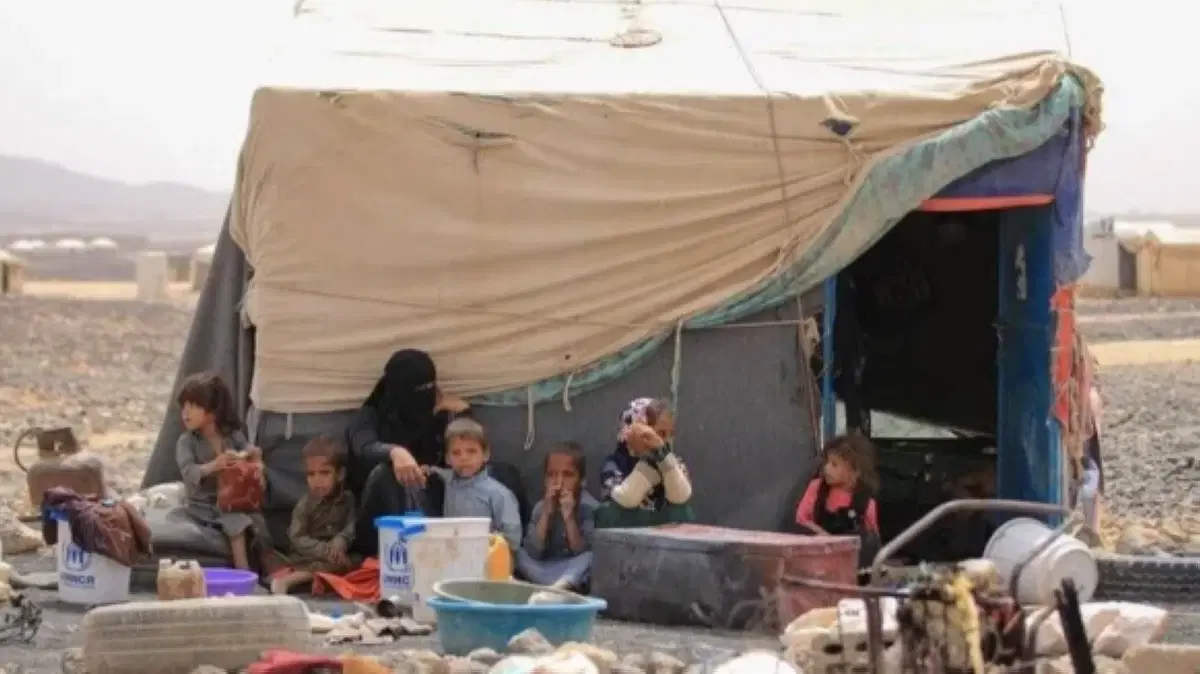
These statements come at a time when more than 33,000 Palestinians remain displaced from the three camps, following the Israeli military operations that targeted them. According to a recent report by the UN Human Rights Office, Israel continues to prevent the return of the camp residents, while a large number of buildings in them have been destroyed or damaged.
The UN Human Rights Office reported in a September 2026 report that the displacement of the residents of the Jenin, Tulkarm, and Nur Shams camps and the destruction of large parts of them raise serious concerns about the extent to which these measures comply with the provisions of international law.
On the other hand, the Israeli Attorney General ruled on Sunday to postpone the deadline for submitting construction bids for the controversial 'E1' settlement project, which would separate the northern West Bank from the south, until after the elections.
The bidding period was supposed to begin on Monday, ending after 21 days, before the legislative elections scheduled for October 27.
A spokesperson for the Attorney General, Gali Baharav-Miara, said, 'The Attorney General has instructed the relevant authorities to postpone the deadline for submitting bids for a month after the elections to reduce concerns about the use of the tender in election propaganda, which is prohibited'.
Last month, the Israeli Ministry of Housing approved the tender for the construction of more than 1,200 settlement housing units as part of the project, prompting non-governmental organizations to resort to the courts to challenge the tender and try to cancel it, while European countries called on Israel to abandon the project.
The plan mainly aims to build about 3,400 housing units in this highly sensitive area, located between Jerusalem and the Israeli settlement of Ma'ale Adumim.
The housing units offered in the announced tender represent a third of the planned project, according to the Israeli Peace Now organization last month.
The project would further separate the occupied East Jerusalem, which Israel has occupied and annexed, and whose majority of its residents are Palestinians, from the West Bank.
Last year, Britain, France, and about 20 other countries condemned Israel's approval of the 'E1' project, considering the move a violation of international law, and called on Israel to reverse the decision.
Last month, an Israeli court rejected a petition to halt the project filed by human rights organizations, which said that 'E1' would lead to the displacement of hundreds of Palestinians from their homes.
The judge then believed that 'there are no imminent irreversible material changes, and sufficient legal safeguards are in place' regarding the project.
The Municipality of Ma'ale Adumim said it would appeal the decision to postpone the tender deadline.
Excluding East Jerusalem, about 3 million Palestinians live in the West Bank, and about 500,000 Israeli settlers.
Know more about this story?Send us a tip
Ask about this report — answers stay grounded in its text.