Iranian oil exports fall to a quarter of a million barrels per day
A crisis with international dimensions threatens navigation in the "Hormuz"
Follow Al Rai

Strategic patience in Washington... and a naval blockade exhausting Tehran
Iranian oil exports fall to a quarter of a million barrels per day
A crisis with international dimensions threatens navigation in the "Hormuz"
The US administration seeks to achieve its goals at the lowest cost
The political and military leaderships in the United States and Israel are experiencing a growing state of strategic frustration regarding Iran, in light of a war that has entered its seventh month without either side being able to achieve a clear resolution.
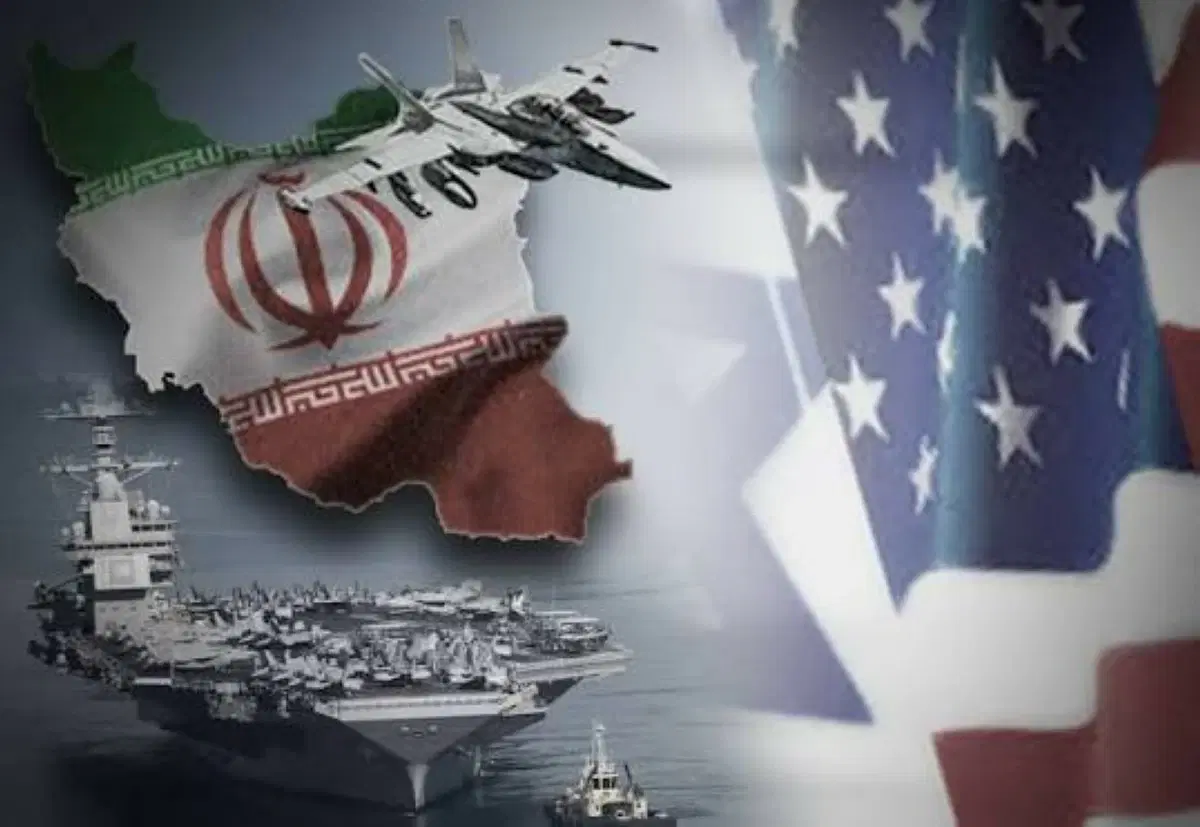
While Washington has succeeded in imposing an unprecedented naval blockade that led to a decline in Iranian oil exports to about a quarter of a million barrels per day, compared to about two million barrels before the war, and inflation in Iran has reached 69.9 percent, the Iranian regime has not collapsed. Instead, it has sought to turn its economic isolation into a crisis with international dimensions by threatening navigation in the Straits of Hormuz and Malacca, and expanding the scope of its operations to include Gulf states.
Here arises the fundamental question occupying research and strategic circles in Washington and Tel Aviv: Do the United States and Israel possess enough "strategic patience" to withstand an adversary that has shown a willingness to pay high prices in order to survive?
Economic data indicates that Iran is facing one of its most difficult phases in decades.
According to an analysis by Eyal Tsur Cohen, former head of the "World" division at the Mossad, published in the newspaper "N12", Iranian oil shipments have dropped from about two million barrels per day before the war to nearly a quarter of a million barrels only, while data from the Statistical Center of Iran showed that average inflation reached 69.9 percent, and prices rose by 89 percent compared to the same month last year.
Despite these harsh indicators, Cohen warns against rushing to conclude that the Iranian regime is on the verge of collapse, confirming that Tehran has been dealing with sanctions for more than four decades and has developed multiple mechanisms during this period to circumvent them. Therefore, "anyone who promises that economic pressure alone is enough to bring down the regime tomorrow morning is simply not serious."
The dilemma for Washington and Tel Aviv lies in the fact that the massive economic and military pressures have not pushed Tehran to surrender, but rather pushed it to try to shift the cost of the war to its adversaries and the global economy.
Cohen points out that Iran seeks to "make its isolation a problem for everyone" by expanding the circle of military damage to reach US allies and regions not directly linked to the Middle East theater.
In this context, he cites reports about Unit 4000 of the Iranian Revolutionary Guard Corps intelligence studying options for action against shipping in the Strait of Malacca, which reflects, according to his reading, a shift in Iranian strategic logic from trying to endure the blockade to seeking to expand its cost globally, based on a rule that states: "If you impose a blockade on us, we will seek to turn it into a blockade on all of you."
On the American side, the picture seems more complex. Brett McGurk, the former White House official for the Middle East file, argues in an analysis published on August 30, 2026, that Iran has begun to lose part of its influence in the Strait of Hormuz, and that US pressure has contributed to changing the balance of power, after the United States succeeded in curbing one of the most prominent pressure tools that Tehran possessed, which is the ability to turn the strait into a weapon directed against the global economy.
However, McGurk sees at the same time that military pressure provided a political opportunity, but it did not alone change the strategic equation, especially since the truce is still temporary and fragile, which means that Washington has not yet reached a point where the conflict can be considered resolved.
Before the US administration, according to this assessment, there are three main paths, none of which is free of significant strategic and political cost: accepting actual Iranian sovereignty over the Strait of Hormuz, continuing the policy of blockade and managing clashes and retaliatory attacks, or moving towards further military escalation against Iran while accepting the risk of the war expanding.
This proposition reveals the extent of the predicament facing the administration of US President Donald Trump, as there does not seem to be an ideal option that can achieve Washington's goals at the lowest cost, while the time factor is gradually turning into a double-edged sword; it pressures Iran economically, but on the other hand, it raises the cost of the war for the United States and its allies, and increases internal and external political and economic pressures.
As for Israel, the frustration seems double; it is linked on one hand to the extent of the pressures Iran is being subjected to, and on the other hand to Israel's inability to turn its military superiority and the widespread destruction caused by its operations into a clear political achievement.
In a report published by the newspaper "Maariv", writer Avi Ashkenazi describes the state of frustration prevailing in the Israeli security establishment, noting that Iran, despite US pressures, is trying to open new fronts and expand the circle of confrontation.
Ashkenazi points out that the Israeli security establishment realizes the extent of Iranian frustration, but at the same time faces increasing frustration among organizations and forces that have not succeeded in implementing steps capable of changing regional behavior decisively.
However, Israeli frustration is not related to Iran alone, as "Maariv" reports reveal that "the frustration in the Israeli security system is enormous," because military achievements on various fronts have not turned into political achievements, at a time when Israeli politics is suffering from a state of "paralysis" that prevents the translation of military power into settlements or long-term strategic results.
Regarding Hezbollah, Ashkenazi acknowledges that the party has lost a large part of its presence and influence within Lebanon, and that its loss of 15 tunnels in southern Lebanon constituted a moral blow to it, and showed the organization in the eyes of sectors within Lebanon and the region as more weak and damaged. But he warns at the same time that the party is reorganizing its method of operation according to a guerrilla warfare pattern, and is trying to challenge the Israeli army in specific points and localized operations.
In light of this scene, it seems that the essence of the coming battle is no longer linked only to who possesses military superiority or the ability to deliver stronger strikes, but rather to who possesses the ability to bear the cost of the war for a longer period.
Cohen summarizes the essence of the conflict by saying that it has become "a struggle over the price that each party is willing to pay in the long run," before posing the most urgent question: Can Israel and the United States withstand for long against an enemy "whose behavior shows that it will do almost anything to survive"?
Here, the concept of "strategic patience" takes on a harsher meaning than just waiting. The price, according to Cohen, may include disruption of lifestyles, periods of security instability, rising costs of living, economic damage, in addition to foreign political condemnations and pressures. Therefore, strategic patience does not mean passive waiting, but rather the willingness to pay a cost in the present to avoid paying a greater cost in the future.
With the war entering its seventh month, a highly complex picture is forming before decision-makers: on one hand, Iranian economic and military capabilities are eroding at an unprecedented pace, and on the other hand, the regime in Tehran is proving once again its ability to manage crises and turn the pressures imposed on it into tools to pressure its adversaries.
The US administration realizes, according to McGurk's reading, that it is facing three difficult options, while the Israeli security establishment realizes, according to Ashkenazi and Cohen's analyses, that military achievement alone is not enough to end the war or produce a new political reality.
Thus, the conflict is gradually turning into a race of nerves and wills, in which the time factor is part of the battle itself. The question is no longer just: Who can deliver the strongest blow? But rather: Who can bear the greatest price, maintain their political, economic, and military cohesion, and wait for the moment when their adversary begins to retreat?
And the most urgent question remains: Can a strategy based on "managing the conflict" instead of "resolving it" withstand an adversary that is betting that time is working in its favor, or will the continuation of the war turn strategic patience itself into the greatest test for the American and Israeli leaderships?
Know more about this story?Send us a tip
Ask about this report — answers stay grounded in its text.