From Karak to Salt.. The Jordanian Women's Union draws inspiration from excellence experiences and enhances development work horizons
Amman5 min read
Share
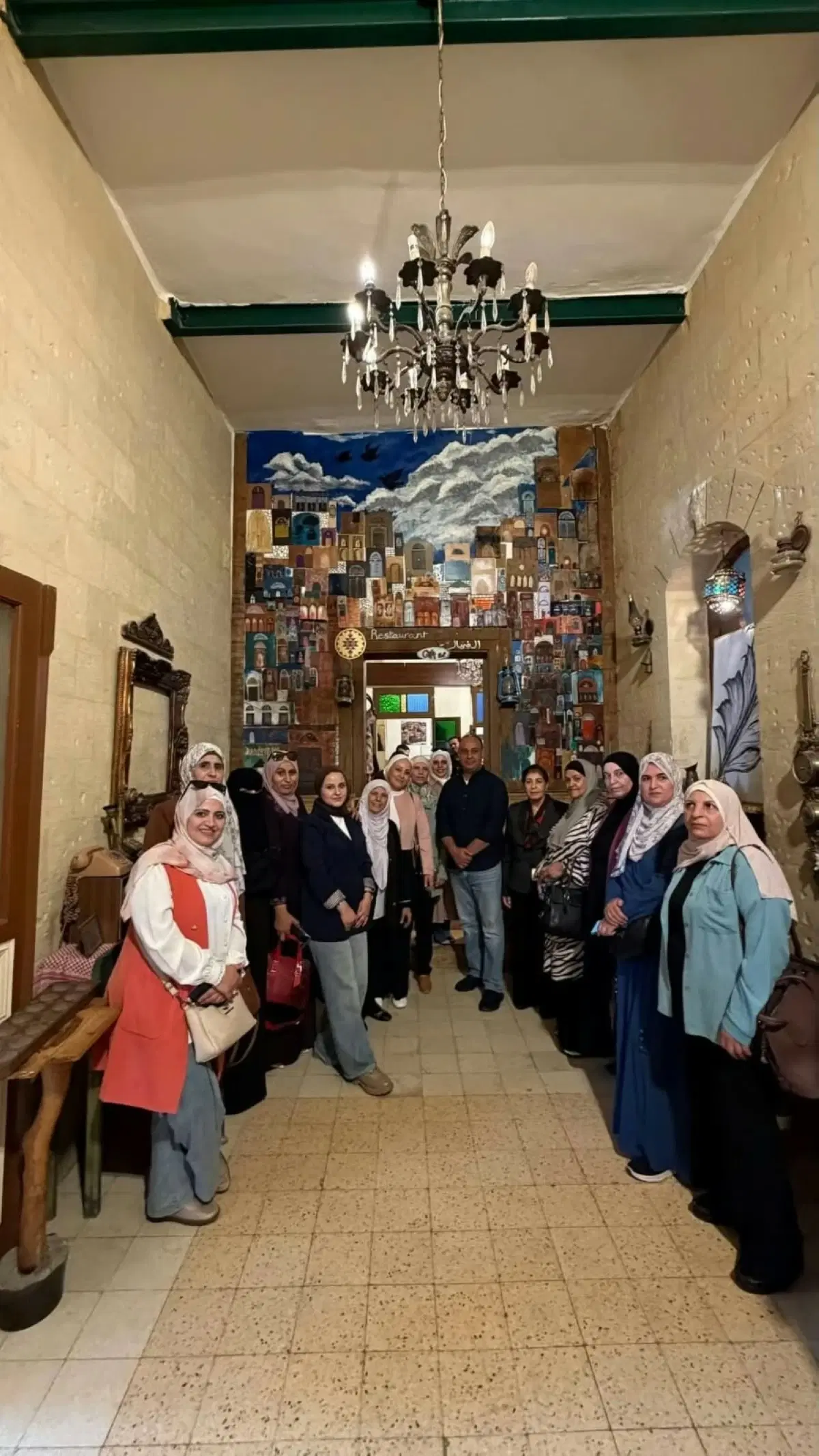
In a journey that combined the fragrance of history with the horizons of development, and invoked the memory of the place as a source of inspiration and future-making, the Jordanian Women's Union – Karak Branch, headed by Engineer Lama Al-Majali, carried out a visit to the city of Salt and the Salt Development Corporation, with the aim of viewing the city's civilizational heritage, learning about the experiences of successful community associations and institutions, and exchanging expertise to contribute to the development of women's work and enhancing its role in local development and women's empowerment.
The President of the Jordanian Women's Union – Karak Branch, Engineer Lama Al-Majali, affirmed that the visit came within the framework of the Union's keenness to expand the horizons of cooperation and exchange expertise with leading institutions and associations, and to benefit from successful experiences in community and development work, which reflects positively on the performance of women's institutions and their ability to implement qualitative initiatives that serve women, the family, and society.
Al-Majali said that the city of Salt, with the ancient historical and civilizational heritage it carries, and the values of brotherhood, tolerance, and social solidarity it embodies, constitutes a rich model in preserving national identity and safeguarding cultural heritage, pointing out that the visit was not limited to learning about historical landmarks, but provided an opportunity to reflect on the relationship between the authenticity of the place and the sustainability of community work, and to draw lessons from experiences that have proven the ability of local institutions to create a tangible impact in their communities.
She added that empowering women and enhancing their presence in development work requires exchanging knowledge, developing programs and initiatives, and building effective partnerships between institutions, stressing that the Union seeks to employ the acquired expertise in supporting women's work in Karak Governorate, and expanding the scope of initiatives that respond to the needs of the community and invest in women's energies and capabilities.
The visit included a number of the most prominent historical and heritage landmarks in Salt, including the Abu Jaber House, which houses a museum documenting aspects of the city's history and social life, the Great Salt Mosque, and Al-Hammam Street with its authentic features of the old city, in addition to Al-Khader Church, which embodies the values of coexistence and brotherhood among the members of the Jordanian society, in an image that reflects the depth of national unity and the diversity of the components of the Jordanian identity.
The delegation also visited the Salt Development Corporation, where it was briefed on its efforts in preserving urban heritage and highlighting the historical and civilizational value of the city, and listened to experiences and success stories of a number of community associations and institutions, which provided space for exchanging ideas and learning about models of association work that can be utilized and developed in a way that suits the specificity and needs of local communities.
For her part, the member of the Jordanian Women's Union – Karak Branch, Dr. Etemad Al-Jaafreh, affirmed that such visits represent an important opportunity to enhance practical knowledge of institutional work, and to view successful experiences that have managed to turn ideas and initiatives into projects with a sustainable social and developmental impact.
Al-Jaafreh said that the experiences viewed reflect the importance of planning, teamwork, good investment of available resources, and building participatory relationships between associations and local community institutions, indicating that the success of women's work is not measured only by the number of activities implemented, but by the extent of its ability to create positive change in the lives of women and families, and to enhance their participation in development and community decision-making.
She added that exchanging expertise between associations in the Kingdom's governorates contributes to transferring knowledge and developing initiatives, and opens the way for new ideas applicable in Karak Governorate, especially in the areas of women's empowerment, family capacity development, and promoting a culture of volunteering and social responsibility, stressing that Jordanian women possess the experience and will that qualify them to be an effective partner in the national development process.
She pointed out that combining the visit to heritage sites with learning about the experiences of community institutions gives these trips a value that exceeds the tourism aspect, as it connects generations to their history and identity, and enhances awareness of the importance of protecting national heritage, in parallel with developing tools for development work and benefiting from experiences that have proven successful on the ground.
The Jordanian Women's Union – Karak Branch valued the warm reception and hospitality the delegation received during its visit, expressing its appreciation to the Director General of the Salt Development Corporation, Khaldoun Al-Khreisat, and to those in charge of the corporation and the association experiences that were viewed, for the cooperation and interest they showed, which contributed to enriching the visit and achieving its cognitive and developmental goals.
The visit affirmed the importance of enhancing communication between women's institutions and associations in various governorates of the Kingdom, as a path for developing performance, exchanging expertise, expanding cooperation opportunities, and consolidating the concept of organized volunteer work based on planning, sustainability, and achieving impact.
Between the ancient memory of Salt and the national and civilizational history stored in Karak, the visit carried a message confirming that heritage is not just a story from the past, but a lever for awareness and belonging, and that empowering women and developing association work represent an investment in the human being and their ability to create a more participatory and solidarity-based future, in a homeland where efforts are integrated and the journey of giving and achievement is renewed.