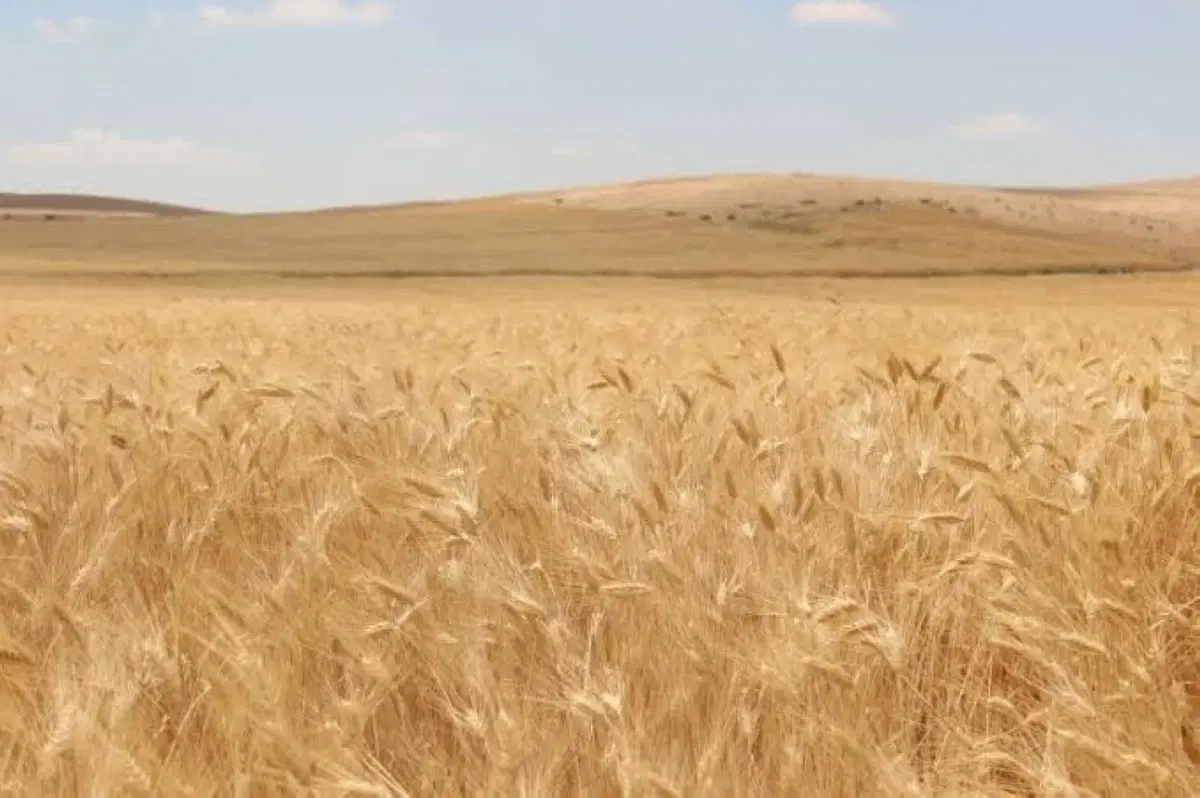
According to data from the Mafraq Agriculture Directorate, the area cultivated with wheat and barley in Mafraq for the 2025–2026 agricultural season exceeded 100,000 dunums, with favorable rainfall conditions improving production and enabling farmers to secure quantities of the crop for animal feed and seed storage for future seasons.
Dr. Mohammad Abu Dalbouh, agricultural expert and former director of the Agricultural Research Center, said barley cultivation holds strategic importance for Mafraq due to the nature of its lands and the vast areas suitable for rain-fed farming, in addition to the crop’s direct link with the livestock sector, a key economic activity in the governorate.
He added that agricultural season success depends on the timing, quantity, and distribution of rainfall during plant growth stages, along with selecting suitable seeds and adhering to proper planting schedules, emphasizing the importance of utilizing soil moisture and avoiding hasty planting before optimal conditions are met.
He noted that improving barley productivity is not solely linked to expanding cultivated areas, but also requires adopting proper farming practices, intensifying agricultural extension services, and selecting varieties suited to climatic conditions, all of which help reduce risks and achieve better yields for farmers.
For her part, Engineer Lama Shdeifat, Director of the Jordanian Cooperative Corporation in Mafraq Governorate, emphasized the importance of expanding barley cultivation as a strategic crop tied to food and feed security, pointing out that the governorate possesses vast agricultural potential that can be harnessed to increase local production.
She added that supporting farmers, strengthening cooperative efforts, providing production inputs, and encouraging joint agricultural initiatives can enhance production efficiency, improve farmers’ incomes, and strengthen local communities’ ability to benefit from their agricultural resources.
She indicated that the cooperative institution prioritizes projects that empower farmers and boost agricultural production, with positive impacts on rural communities, especially in areas relying on agriculture and livestock as a primary source of income.
Barley holds additional significance for Mafraq, given the large livestock population—estimated at over one million head, not including other types of livestock—where local production helps meet part of the feed needs for sheep and cattle breeders, reduces production costs and dependence on purchased feed, and allows retaining part of the harvest as seed for subsequent seasons.
With the start of the current season, attention turns to the volume of rainfall expected in the coming months and its impact on cultivated areas and projected yields, as farmers hope this season will continue the trend of favorable rainfall, boosting agricultural output in the governorate and supporting national food security.