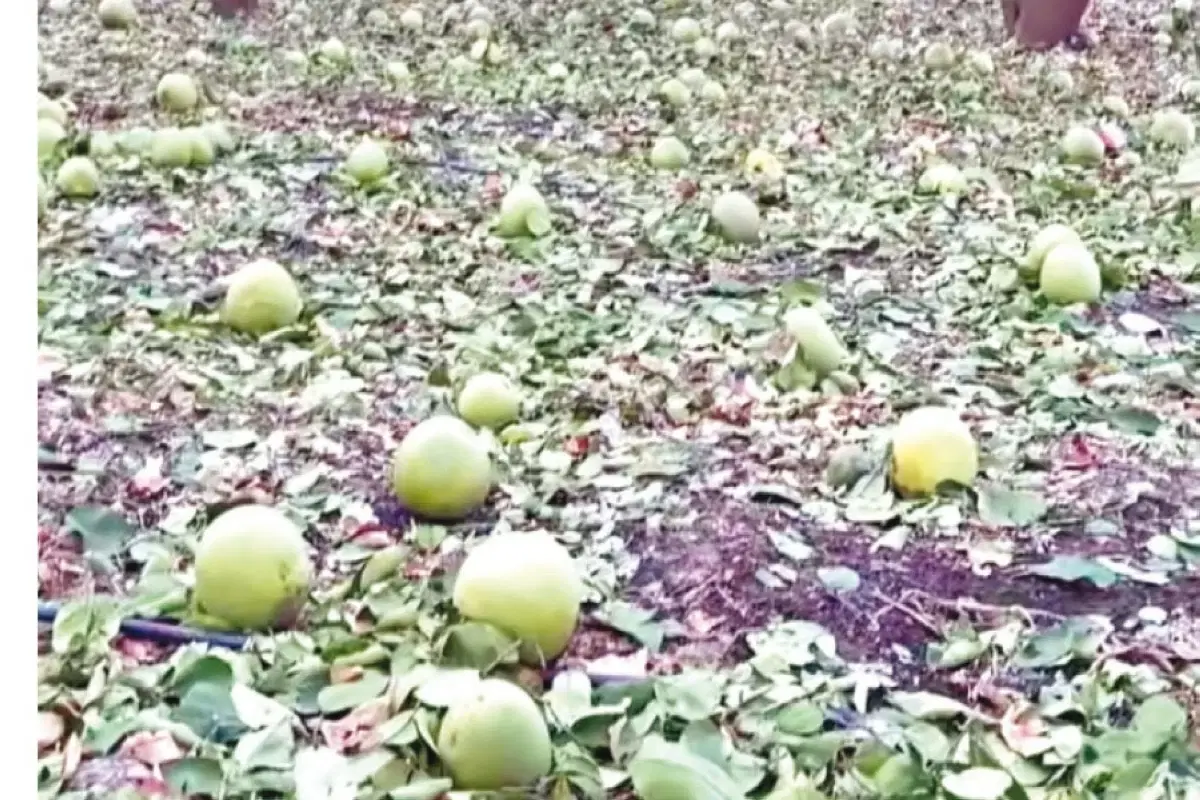
He emphasized that four to five days after the weather events ended, new negative effects and additional damages have become evident—not limited merely to fruit drop due to hail—but extending to structural damage to the trees themselves, including destruction and breakage of foliage and branches. He stressed that immediate attention and urgent support for citrus farmers have become imperative to ensure the sustainability of this vital sector.
For his part, Director of the Northern Jordan Valley Agriculture Directorate, Engineer Mohammad Al-Na’im, confirmed that technical teams and field staff from the directorate were present on-site and at operational points from the first day of the adverse weather conditions to closely monitor the situation.
He indicated that on the morning of the 28th of the month, specialized field committees were formed, each comprising three agricultural engineers, to cover all areas of the district and conduct precise, detailed inspections of all affected farms. He affirmed that these efforts are receiving direct and continuous attention and follow-up from the Minister of Agriculture to stay updated on developments in real time.
Engineer Al-Na’im explained that the directorate is implementing an organized, three-phase operational mechanism: the first phase involves receiving applications and conducting field inspections to document damages; this is followed by the second phase, which includes data verification and final approval; culminating in the final phase, which entails submitting all approved data to the Ministry for necessary decision-making. He clarified that the damaged area for which inspection requests have been received and documented so far amounts to approximately 2,500 dunums.
Engineer Al-Na’im stressed that the most critical phase at present is the immediate initiation of technical treatments, medicinal spraying, and stabilization of damaged trees. He issued an urgent call to farmers to act swiftly and treat their trees without delay, in order to protect them from fungal or bacterial infections, prevent further damage, and avoid the complete loss of trees in the future due to the severe impacts they have sustained.