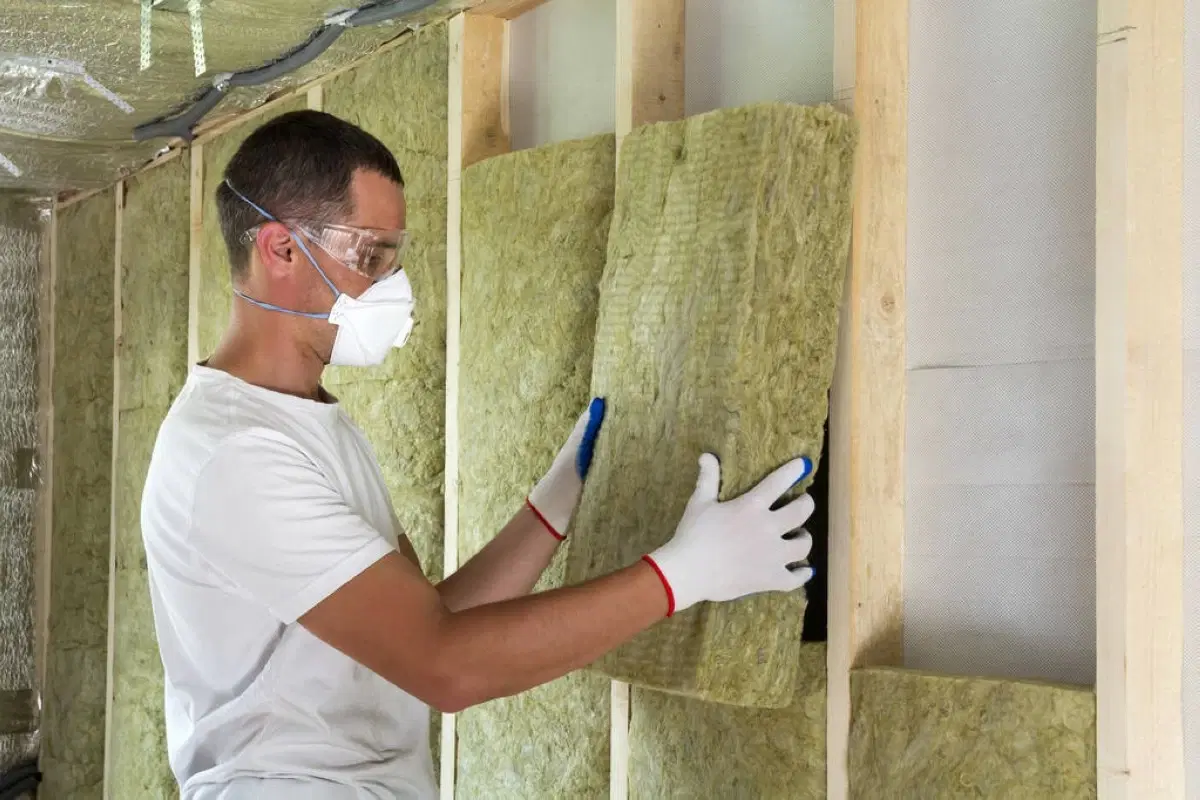
He explained that Jordanian thermal insulation requirements indicate a maximum value for the thermal transmittance coefficient of an external wall of approximately 0.57 W/m²·K, compared to about 2 W/m²·K for an uninsulated wall, which means that heat transfer through an uninsulated wall can be more than three times higher.
He added that calculations based on weather data at Queen Alia Airport indicate that the heat transfer difference could be equivalent to about 62 thermal kilowatt-hours annually per square meter of wall area. Assuming the use of a heat pump with a seasonal performance factor of 2.5 and an electricity tariff of 100 fils per kilowatt-hour, the additional energy cost could reach about 2.5 dinars annually per square meter, according to these assumptions.
He indicated that ineffective insulation not only increases energy consumption but also increases the load on heating and cooling equipment, and may contribute to moisture condensation and mold growth, especially at thermal bridges and cold interior surfaces.
Abu Dayyeh pointed out that a poor thermal environment is linked to health risks, especially for children, the elderly, and people with chronic diseases, explaining that the World Health Organization considers 18 degrees Celsius a general reference limit for indoor temperature in countries with cold seasons, with the possibility that more vulnerable groups may need higher temperatures.
In summer, poor insulation allows more heat to enter, which increases electricity consumption and the risks of heat stress, and affects concentration and productivity, making the improvement of the thermal performance of buildings an investment in health, the economy, and the environment.
He emphasized the importance of adopting an integrated system that includes insulating walls, roofs, and floors, addressing thermal bridges, shading windows, limiting air leakage, providing healthy ventilation, and using high-efficiency heating and cooling systems.
Abu Dayyeh concluded by emphasizing that a good building is not necessarily the one that costs the least to construct, but the one that achieves the lowest operating and maintenance expenses throughout its lifespan and provides a healthy, comfortable, and safe environment for its residents, stressing that the most important question is not "How much does insulation cost me?", but "How much will the building cost me if I do not insulate it?".