Democrats and Trump wrap up their campaigns on the eve of the midterm elections
Amman5 min read
Share
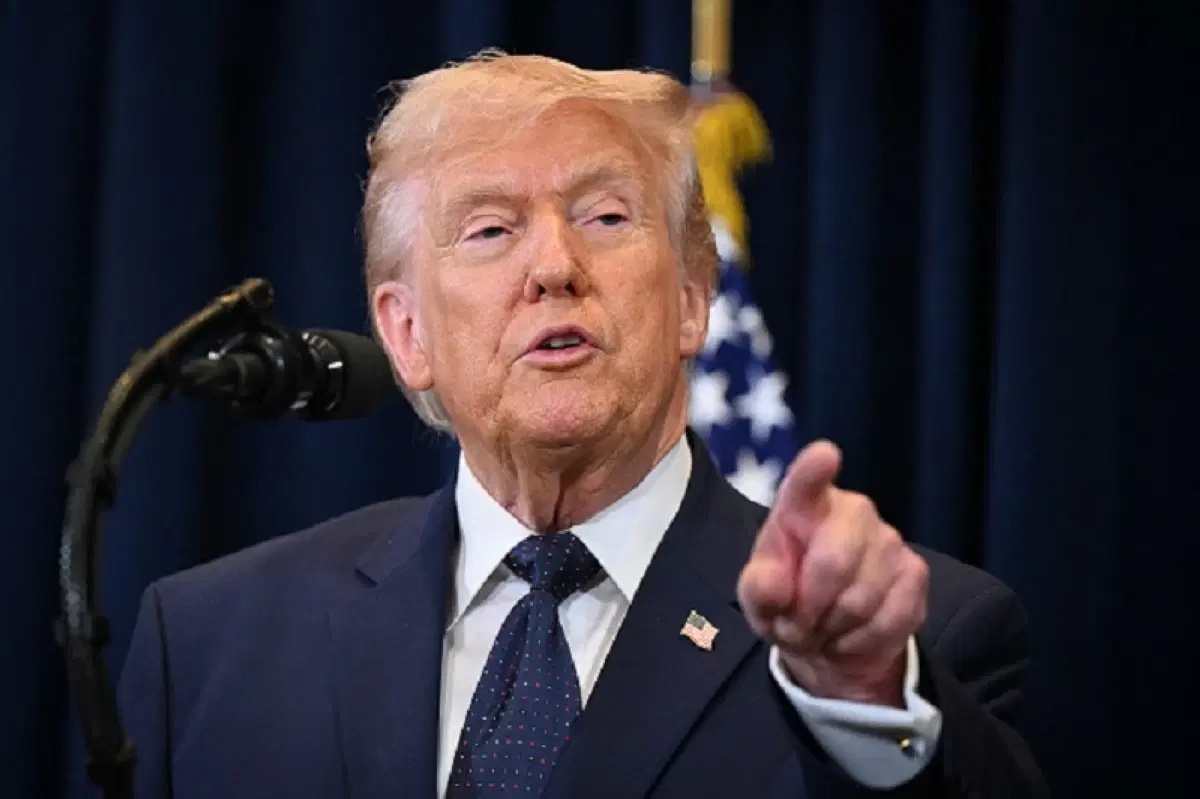
On Monday, US President Donald Trump chose the "Reflecting Pool" in Washington — a historic landmark that underwent a troubled restoration process that has come to symbolize the chaos that marked his presidency — as a platform to rally Republicans against an expected Democratic victory in Tuesday's midterm congressional elections.
"This is the final day before the midterms, and I believe these are the most important midterms in our lifetime," Trump said. He focused his remarks on his project to restore landmarks in the American capital, ignoring issues weighing on voters' minds such as inflation and the war against Iran.
Polls indicate that Democrats are on track to take control of the House of Representatives, with a strong possibility of winning the Senate in Tuesday's elections, a shift that would impose the first real political constraints on the President since he took office about two years ago.
At a time when American dissatisfaction with the economic situation is growing, Trump's popular approval ratings have hit record lows.
Nevertheless, a visibly exhausted Trump returned repeatedly during his speech to talk about his passion for restoring the "Reflecting Pool" and other Washington landmarks.
"This project should be a reason to unite all Americans," Trump said.
This pool is one of the most prominent historic sites in the American capital, and it gained its greatest fame for being the site where Martin Luther King delivered his famous "I Have a Dream" speech in 1963, from the steps of the adjacent Lincoln Memorial.
Trump said he chose the site "to show how beautiful it is." However, the renovation project, which cost about $15 million, caused the pool's lining to peel and its water to turn green due to algae. Trump blamed vandalism, while prosecutors said the cause was construction and maintenance work that did not meet specifications.
In Trump's second term, this pool became part of a broad campaign to reshape Washington's landmarks, including removing parts of the White House to build a grand ballroom, and hinting at the demolition of the city's most prominent cultural and artistic edifice.
After predicting that his Republican Party would win the elections, Trump admitted on Monday that the result might be different.
He told a New York Post podcast, "I think we'll do great, but if we don't win, I'll veto everything. And then they'll come to us, and we'll probably make deals."
Wresting control of the House of Representatives alone would give Democrats the upper hand regarding the federal budget, as well as the chairmanship of powerful committees capable of investigating corruption suspicions during the Trump administration, the Jeffrey Epstein case, and other thorny files.
On the other hand, Republicans losing their majority in Congress two years before the end of Trump's term would complicate his agenda, especially regarding lifetime judicial appointments, including the Supreme Court.
- Inflation and War -
A poll published Sunday by NBC News showed that 60 percent of respondents disapprove of Trump's performance, especially due to the sharp rise in the cost of living exacerbated by the war on Iran.
Despite their lead, Democrats remain cautious after polls previously failed to accurately estimate the scale of mobilization in the "MAGA" movement, the acronym for Trump's slogan "Make America Great Again."
Meanwhile, Democrats prepared to hold their final election rallies in swing states, including in Texas with the participation of James Talarico, and in Kansas with the participation of Adam Hamilton, both of whom are leading Senate candidates seeking to achieve major surprises.
Democratic Senator Raphael Warnock spoke to CNN about "optimism tempered by anxiety."
During a rally in Iowa on Sunday, Trump stressed that the opposition consists of "radical, dangerous extremists" who will "steal your wealth" and allow migrants in to engage in "looting, rape, and robbery."
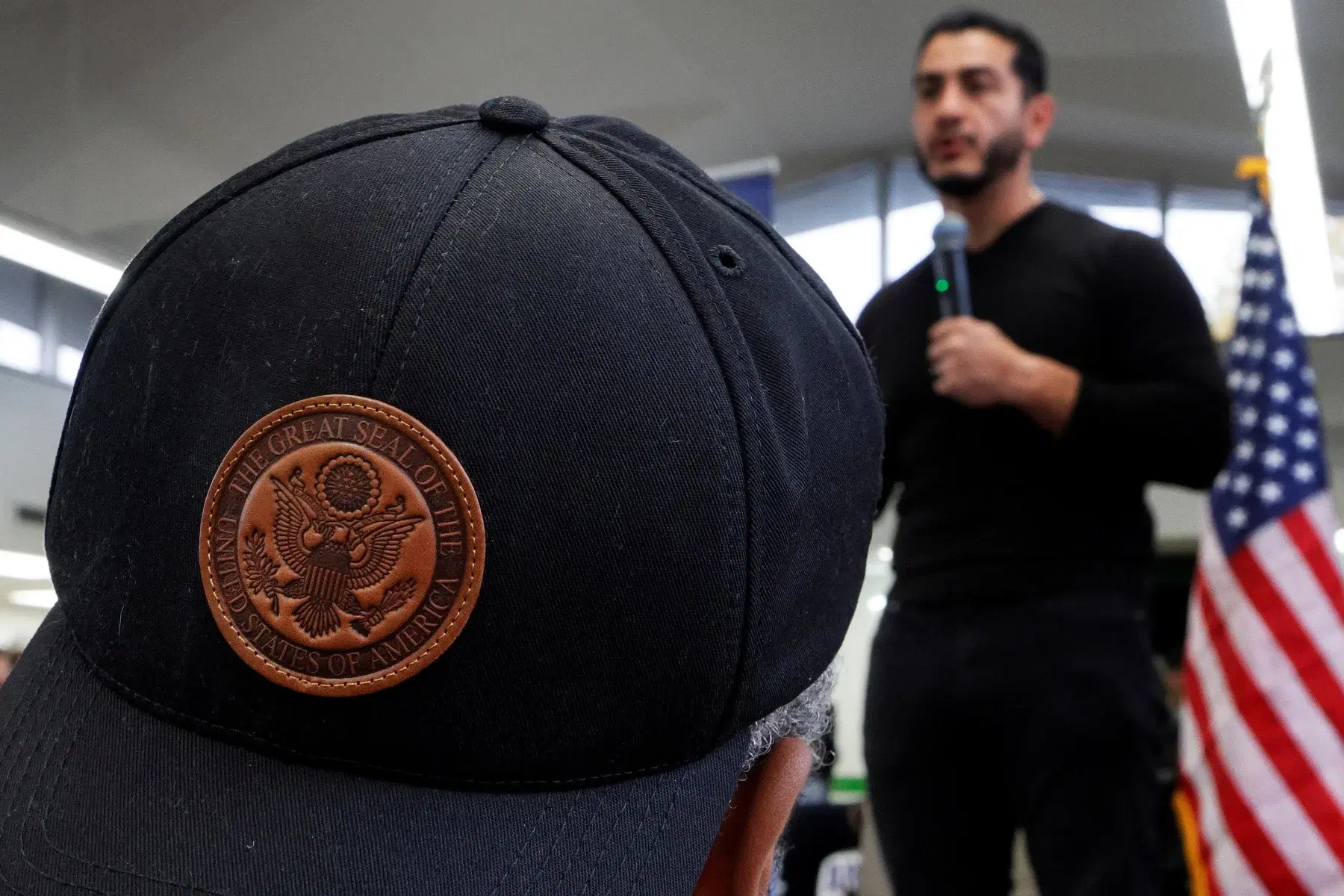
Throughout the campaign, Republicans led by Trump pursued a scorched-earth policy, portraying Democrats as "communists" and labeling Abdul (Abdulrahman) El-Sayed, who could become the first Muslim senator if elected in Michigan, a "terrorist."
However, one of the latest developments in the election campaign may weaken the chances of Democrats winning a majority in the Senate, where the competition appears more intense than in the House of Representatives.
Democratic Representative Haley Stevens announced on Sunday her support for the Republican candidate in Michigan, Mike Rogers, against El-Sayed, who had defeated her in the Democratic Party primary, a move welcomed by Trump.
In contrast, Senate Democratic leader Chuck Schumer considered this move to be a "shameful betrayal," noting that control of the chamber could be decided by a margin of just one seat.
To win a majority in the Senate, Democrats are counting on the victories of Talarico in Texas and Hamilton in Kansas.
The elections include all seats in the House of Representatives. While this battle seems to favor the Democrats, the race remains undecided in the Senate, where the election involves only a third of its seats.
- Democratic Lead -
After lagging in earlier stages, polls now indicate that the Democrats' chances of controlling the Senate are no less than those of the Republicans.
The "Decision Desk HQ" foundation, which specializes in election forecasting, expects the Democratic Party to win the majority in the Senate (52 seats to 48 for the Republicans), and also to control the House of Representatives with a comfortable majority of 241 seats to 194.
The final poll by the New York Times and the Siena College Research Institute showed that Democrats are leading in the seven most competitive Senate races.
About 54 million people cast their votes before election day, a record number.
The midterm elections saw about $11 billion spent on advertising, a large portion of which came from wealthy individual donors.