Official opening in the presence of the Minister of Culture's delegate:
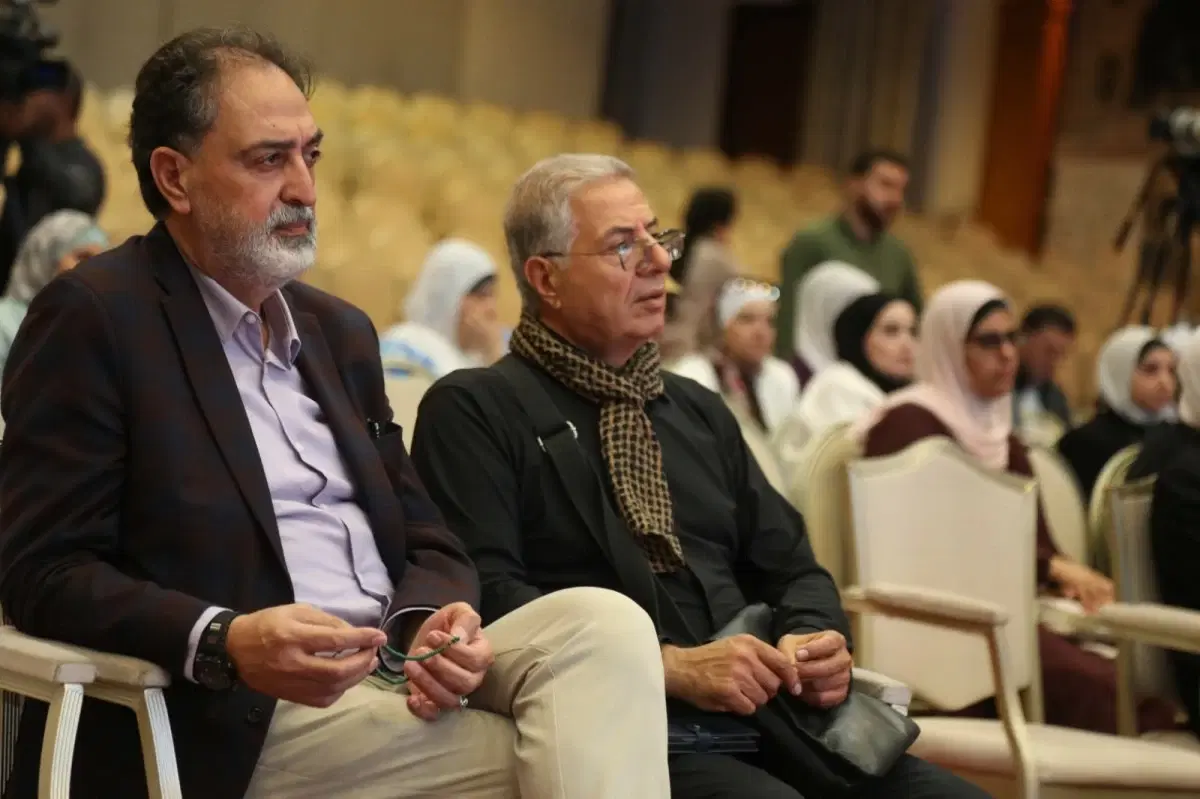
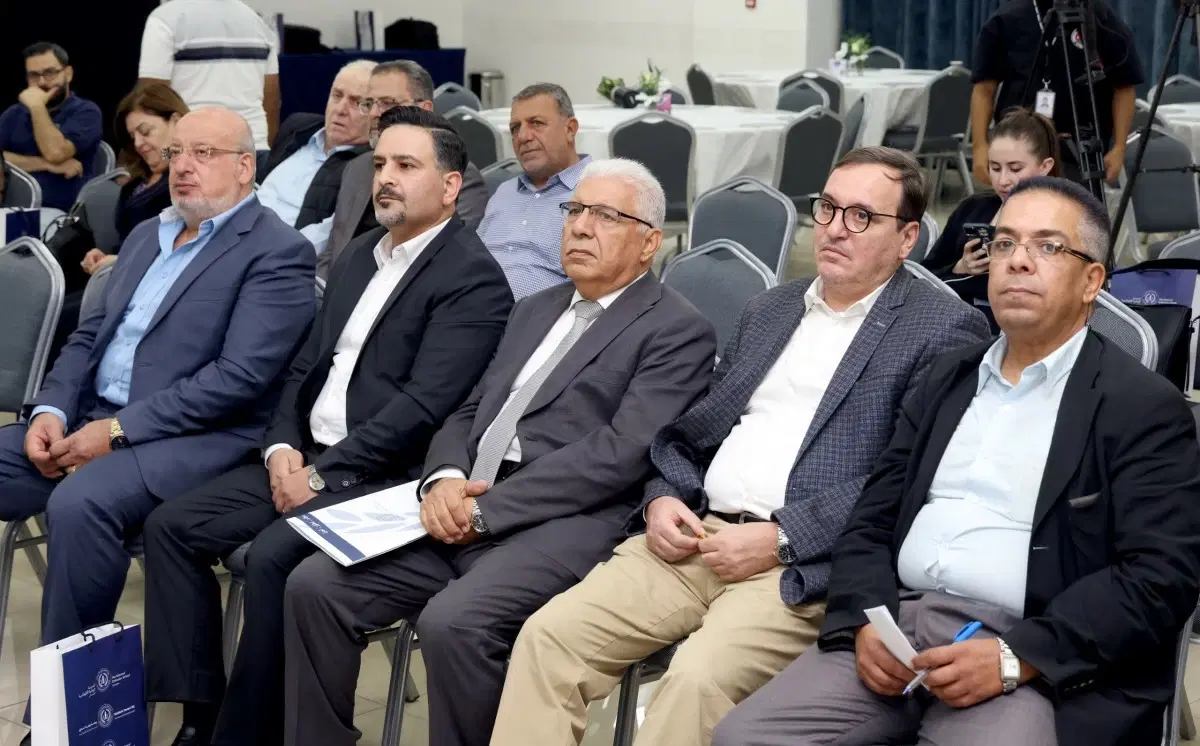
The conference proceedings began in the presence of the delegate of His Excellency the Minister of Culture, His Excellency Prof. Dr. Nidal Al-Ayasrah, Secretary-General of the Ministry. The opening ceremony began with the Royal Anthem and the recitation of verses from the Holy Quran by Mr. Abdul Rahim Abdul Salam, followed by a minute of silence by the attendees for the souls of the victims of the attack that targeted Hamoud Church in Karak Governorate.
Dr. Imad Abu Eid, President of the Conference and President of the Jordan Library and Information Association, delivered a speech in which he welcomed the participants, emphasizing the importance of choosing the Jordanian Narrative as the subject of the conference, and the resulting national, scientific, and professional responsibility in documenting Jordan's history and memory and preserving its cultural and civilizational heritage. He also stressed the pivotal role played by information institutions, including libraries, archives, and museums, in collecting, organizing, preserving, and making sources of national memory available to generations.
Mr. Mohammad Musa Salah, a member of the Association’s Administrative Board, also delivered a speech on behalf of the participants, in which he expressed his appreciation for the scientific and professional role played by the Association in developing the capabilities of workers in the library and information sector and upgrading their professional practices.
For his part, the delegate of the Minister of Culture, His Excellency Prof. Dr. Nidal Al-Ayasrah, emphasized the importance of the "Jordanian Narrative: The Story of the Land and the Human" project, and the efforts made by the Ministry with the participation of an elite group of scientists, academics, and researchers in defining the various aspects of the Jordanian Narrative and documenting its historical, cultural, and civilizational components. The opening ceremony concluded with a documentary film that reviewed the most prominent outcomes of the national dialogues organized by the Ministry of Culture regarding the Jordanian Narrative.
Scientific sessions and multi-dimensional national dialogues:
The scientific program of the conference included a group of main and scientific sessions that discussed the subject of the Jordanian Narrative from historical, cultural, media, and cognitive angles, and hosted an elite group of national and academic figures, experts, and specialists.
The first day witnessed the holding of the first main session entitled "The Jordanian Narrative: Concept and Outputs," chaired by Dr. Baker Khazer Al-Majali, and with the participation of His Excellency the Minister of Culture, Mr. Mustafa Al-Rawashdeh, represented by His Excellency Prof. Dr. Nidal Al-Ayasrah, alongside His Excellency Prof. Dr. Zeidan Kafafi, Chairman of the Main Technical Committee for the Jordanian Narrative, His Excellency Dr. Muhannad Al-Mubaidin, Professor of History at the University of Jordan and former Minister of Government Communication, and Her Excellency Prof. Dr. Hind Abu Al-Shaar, Chair of the Islamic and Ottoman History Committee of the Jordanian Narrative. The session formed a rich scientific space to discuss the concept of the Jordanian Narrative, its components and outputs, its historical, cultural, and civilizational dimensions, and the role of scientific research and national institutions in rooting, documenting, and presenting it to generations.
The first day also witnessed the holding of the second main session, chaired by Prof. Dr. Ahmed Battah, entitled "The Role of Information Institutions in Documenting and Preserving National Memory," with the participation of His Excellency Mr. Firas Al-Darabseh, Director General of the National Library Department, His Excellency Engineer Ihab Ammarin, Director General of the Jordan Museum, Prof. Dr. Mujahed Thneibat, Director of the University of Jordan Library, and Prof. Dr. Mohammad Al-Manasir, media figure and historian. The session addressed the roles of national institutions concerned with libraries, museums, and information in collecting, documenting, and preserving national memory, and highlighting their responsibility in safeguarding cultural and historical heritage and making it available to future generations through various institutional and professional experiences.
The first day also included the third scientific session, chaired by Prof. Dr. Omar Al-Hamshari, under the title "Scientific Papers of the Conference," which witnessed the presentation and discussion of five scientific papers that addressed various topics related to the conference themes, including: museum libraries and their role in preserving national memory, the role of sustainable tourism paths in achieving local development, Jordanian children's literature and its role in enhancing national identity, content analysis of social studies books in primary education in light of national identity dimensions, in addition to the role of artificial intelligence in documenting and preserving Palestinian heritage through an analytical study of heritage and memory institution websites. The scientific papers reflected the diversity and integration of research approaches in addressing issues of memory, heritage, and national identity, and anticipating the role of modern technologies in serving cognitive and cultural documentation.
The second day witnessed the holding of the second main session entitled "The Role of Media and Digital Culture in Preserving National Memory," chaired by Dr. Adnan Al-Toubasi, and with the participation of His Excellency Dr. Zeid Al-Nawaisa, Secretary-General of the Ministry of Government Communication, Prof. Dr. Omar Al-Ghoul, Professor of Archaeology and member of the Main Technical Committee for the Jordanian Narrative, and Dr. Faisal Al-Ghuwain, researcher and academic, and member of the Jordanian Narrative committees. The session addressed the role of media and digital platforms in shaping awareness of national memory, and the importance of employing modern tools and technologies in preserving, documenting, and making the historical and cultural narrative available, in addition to the responsibility of media professionals, intellectuals, and researchers in providing reliable national content that reflects the Jordanian identity.
The program also included a fifth scientific session for research papers, chaired by Dr. Mohammad Al-Shboul, during which a group of studies and scientific papers were presented that addressed the Jordanian Narrative as a national necessity, the role of educational scientific research in rooting it and directing curricula to preserve identity and develop learning outcomes, knowledge management and institutional memory sustainability, as well as the role of oral history in building and rooting the Jordanian Narrative. The papers presented reflected the diversity of scientific and research approaches, and the importance of integration between academic, educational, cultural, and information institutions in building documented and sustainable national knowledge.
Honoring pioneering community initiatives in preserving cultural memory:
Within the framework of appreciating community and institutional experiences that contribute to preserving cultural and urban memory and enhancing the Jordanian cultural scene, the conference dedicated a portion of its activities to honoring four distinguished community initiatives and institutions: Darat al Funun – The Khalid Shoman Foundation, the Amman Armat Museum, the King Hussein Street Cultural Complex, and the Duke’s Diwan/Mr. Mamdouh Bisharat. This honoring came in recognition of what these initiatives represent as effective models in safeguarding heritage and cultural memory, preserving material and moral evidence, reviving community memory, enhancing the presence of culture in public space, and highlighting the role of civil and community initiatives as a primary partner for official institutions in protecting national heritage.
Specialized workshop on document management and artificial intelligence:
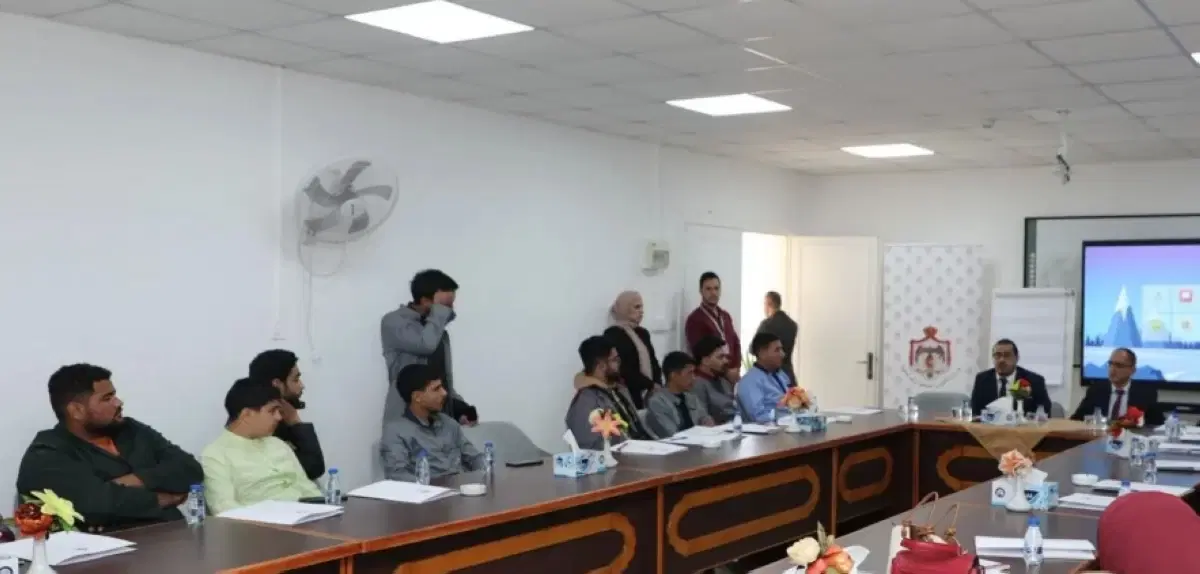
The conference was preceded by the organization of a specialized training workshop entitled "Document Management in the Age of Artificial Intelligence," in which 25 members of the Association participated. It addressed the transformations witnessed by document management in light of the rapid development of artificial intelligence technologies, and the possibilities they provide for developing document management, organization, preservation, and retrieval processes, which enhances work efficiency in information institutions and raises the readiness of their workers to keep pace with digital transformations. This workshop comes within the Association's trend to link the intellectual and professional issues discussed by its conferences with continuous training and qualification programs for its members and workers in the sector.
Conference recommendations and future work prospects:
At the conclusion of its proceedings, the conference emphasized the importance of moving from scientific dialogue about the Jordanian Narrative and national memory to sustainable practical and institutional paths, based on enhancing integration and coordination between information institutions and cultural, academic, and media entities, and developing mechanisms for documenting, preserving, and making sources of national memory available.
The conference outcomes also focused on the importance of supporting the role of libraries, archives, and museums in preserving documentary, material, and oral heritage, and employing digital transformation and artificial intelligence in knowledge management and institutional memory, while taking into account the requirements of reliability, authenticity, and intellectual rights, enhancing scientific research and oral history, and building the professional capabilities of workers in information institutions.
The conference stressed the necessity for the recommendations to be actionable, measurable, and followable, by identifying the concerned entities and their responsibilities, and strengthening institutional partnerships, ensuring the transformation of the conference outcomes into practical initiatives and practices with sustainable impact.
The Association: The conference is a continuous national and professional responsibility:
At the conclusion of the conference, the Jordan Library and Information Association expressed its deep appreciation and pride for the support provided by the Ministry of Culture, affirming that this support reflects the importance of the partnership between professional institutions and national entities in serving culture and knowledge and preserving the national memory.
The Association also valued the participation of speakers, researchers, academics, participating entities and institutions, honored community initiatives, organizing, scientific, and technical committees, and all members and volunteers who contributed to the success of the conference proceedings.
Dr. Imad Abu Eid, President of the Association and the conference, emphasized that holding this conference is an extension of the Association's mission to develop the library and information sector and enhance its role in cultural and knowledge development, pointing out that the responsibility of information institutions is no longer limited to collecting, organizing, and making knowledge sources available, but has extended to actively contributing to preserving the national memory, safeguarding cultural identity, and consolidating awareness of national history.
The events concluded with the announcement of the final statement and recommendations, and the honoring of the working committees, marking the end of the conference, which affirmed that national memory is not merely a recollection of the past, but a fundamental pillar for building the present and anticipating the future, and that information institutions are an authentic national partner in preserving, protecting, and transmitting it to future generations.