Launch of the 24th National Conference of the Library and Information Association
Amman6 min read
Share
«The Jordanian Narrative and National Culture»
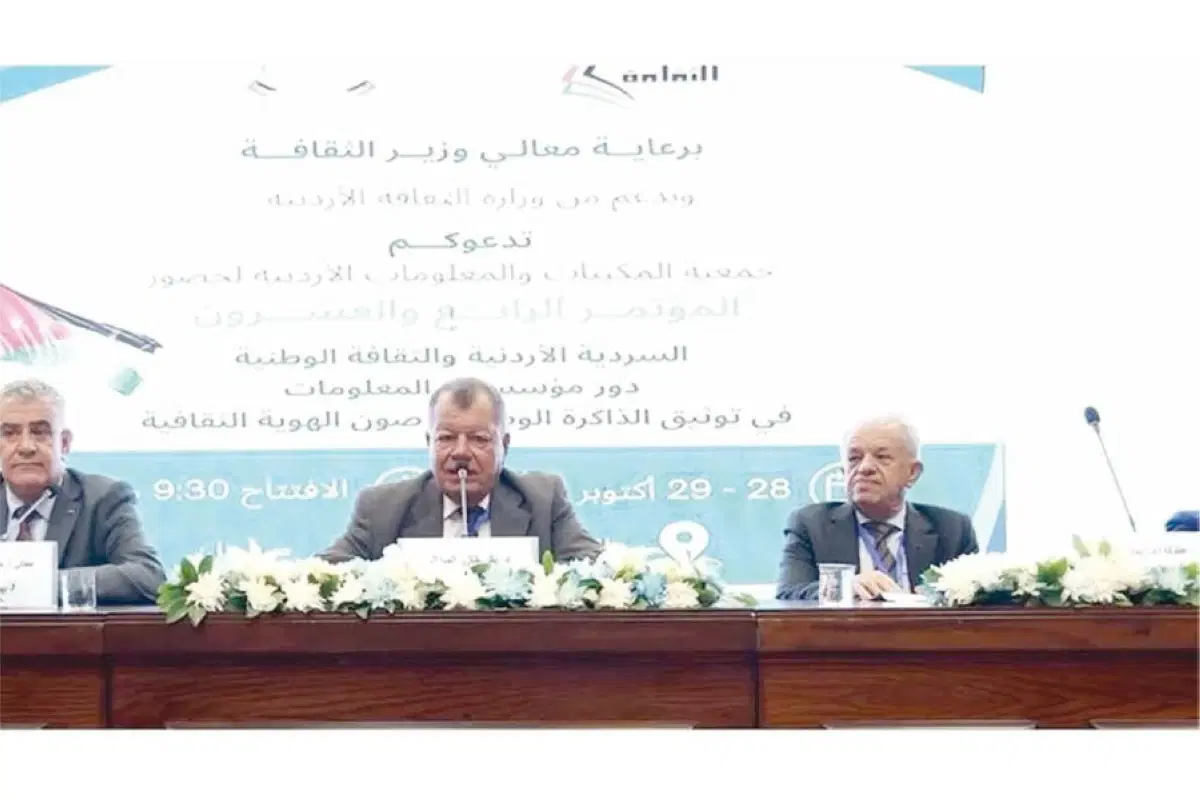
The proceedings of the 24th National Conference of the Jordanian Library and Information Association kicked off at the Royal Cultural Center on Wednesday, under the title «The Jordanian Narrative and National Culture: The Role of Information Institutions in Preserving National Memory and Safeguarding Cultural Identity». The event features the participation of academics, researchers, and specialists in history, culture, libraries, and information, and is held under the patronage of Minister of Culture Mustafa Al-Rawashdeh, represented by the Ministry's Secretary-General, Dr. Nidal Al-Ahmed.
The Secretary-General of the Ministry of Culture, Dr. Nidal Al-Ahmed, who inaugurated the conference representing the Minister of Culture, emphasized the vital role played by libraries, information institutions, and archives in documenting the Jordanian narrative, preserving national memory, safeguarding cultural identity, and transmitting Jordan's civilizational heritage to future generations.
He pointed out that traditional and digital libraries represent a knowledge wealth that contributes to protecting intellectual output from loss and extinction by documenting, preserving, and making accessible documents, manuscripts, and works, thereby connecting the past with the present and opening horizons for foreseeing the future.
He explained that choosing the Jordanian narrative as the theme of the conference reflects the Association's alignment with the national project launched by His Royal Highness Crown Prince Al Hussein bin Abdullah II to document the Jordanian narrative as the story of the land and the human being.
He pointed out that the Ministry of Culture is working to consolidate this project as a participatory cultural and civilizational effort, in cooperation with cultural, research, and academic institutions and society. He noted that the Ministry has organized dialogues across the Kingdom's governorates on the concept of the Jordanian narrative, its historical extensions, and the role of the governorates in documenting their cultural heritage, values, customs, and traditions.
He added that the Ministry launched the «Stories from Jordan» platform, which allows individuals and institutions to contribute to documenting national memory by uploading documents, manuscripts, photographs, and films, thereby enhancing community participation in heritage preservation and providing sources for researchers, graduate students, and decision-makers.
Al-Ahmed stressed the importance of developing documentation, preservation, and knowledge management tools, and leveraging digital transformations and artificial intelligence applications in safeguarding and providing access to heritage. He underscored the necessity of integrating the efforts of libraries and information institutions with cultural and national institutions to support the project of documenting the Jordanian narrative and consolidating national identity.
For his part, the President of the Jordanian Library and Information Association and Head of the Conference, Dr. Eyad Abu Eid, said that discussing the Jordanian narrative transcends intellectual and documentation discourse to become a national responsibility represented in preserving the nation's memory and identity, connecting generations to their history, and enhancing their awareness of the Jordanian state's journey and the achievements and sacrifices of its people.
He added that Jordan, with its rich civilizational and human heritage, deserves a documented national narrative that preserves the evidence of its history and transmits its heritage to future generations. He noted that the role of libraries, archives, and documentation centers is not limited to preserving books and documents, but extends to ensuring the authenticity, reliability, and sustainability of national memory sources, especially in light of digital transformation and the rapid evolution of artificial intelligence technologies.
He emphasized that the Association seeks, through the conference, to enhance the role of information institutions in documenting the Jordanian narrative, consolidating cultural identity, supporting scientific research, and building effective partnerships that make the preservation of national memory a sustainable project. He expressed hope that the working papers and discussions will yield practical recommendations and qualitative initiatives that keep pace with digital developments and deliver national memory to new generations using modern tools.
In a speech delivered on behalf of the participants, Mohammad Salah emphasized the vital role played by knowledge curators and workers in information institutions in preserving the nation's story and documenting the achievements and sacrifices of its people. He noted that public, specialized, and school libraries, alongside the National Library, information institutions, and digital platforms, contribute to safeguarding national memory and making it accessible to generations.
He stressed the need to enhance cooperation between information institutions and educational, cultural, and media entities to produce reliable content that goes beyond preserving documents and narratives to firmly embedding them in collective consciousness and transforming them into present knowledge within curricula, culture, and the national psyche.
The first main session, titled «The Jordanian Narrative and National Culture: Concept and Outputs», discussed concepts related to national memory, the history of the Jordanian state, and the outputs of the narrative committees. It featured participation from Minister of Culture Mustafa Al-Rawashdeh, Head of the Main Technical Committee for the Jordanian Narrative Prof. Dr. Zaidan Kafafi, Professor of History at the University of Jordan and former Minister of Government Communication Dr. Muhannad Mubaidin, and Head of the Islamic and Ottoman History Committee in the Jordanian Narrative Prof. Dr. Hind Abu Al-Shaar, with Dr. Bakr Khazer Al-Majali moderating.
The conference sessions examine the role of information institutions in documenting and preserving national memory, with the participation of representatives from the National Library Department, the Jordan Museum, and the University of Jordan Library, alongside historians, researchers, and specialists. The working papers also address the role of museum libraries in preserving national memory, sustainable tourism pathways and local development, Jordanian children's literature and the enhancement of national identity, the content of social studies books, and the use of artificial intelligence in documenting Palestinian heritage. The conference proceedings will continue on Thursday with sessions discussing the role of media and digital culture in preserving national memory, the transformations brought about by digital platforms in documenting and providing access to historical and cultural narratives, and the challenges associated with protecting national content and enhancing its reliability and sustainability.
The second day's sessions also address the Jordanian narrative as a national necessity, the role of educational scientific research in establishing its roots, knowledge management and the sustainability of institutional memory, the importance of oral history in building it, alongside honoring community initiatives that contribute to preserving, documenting, and making local heritage accessible.
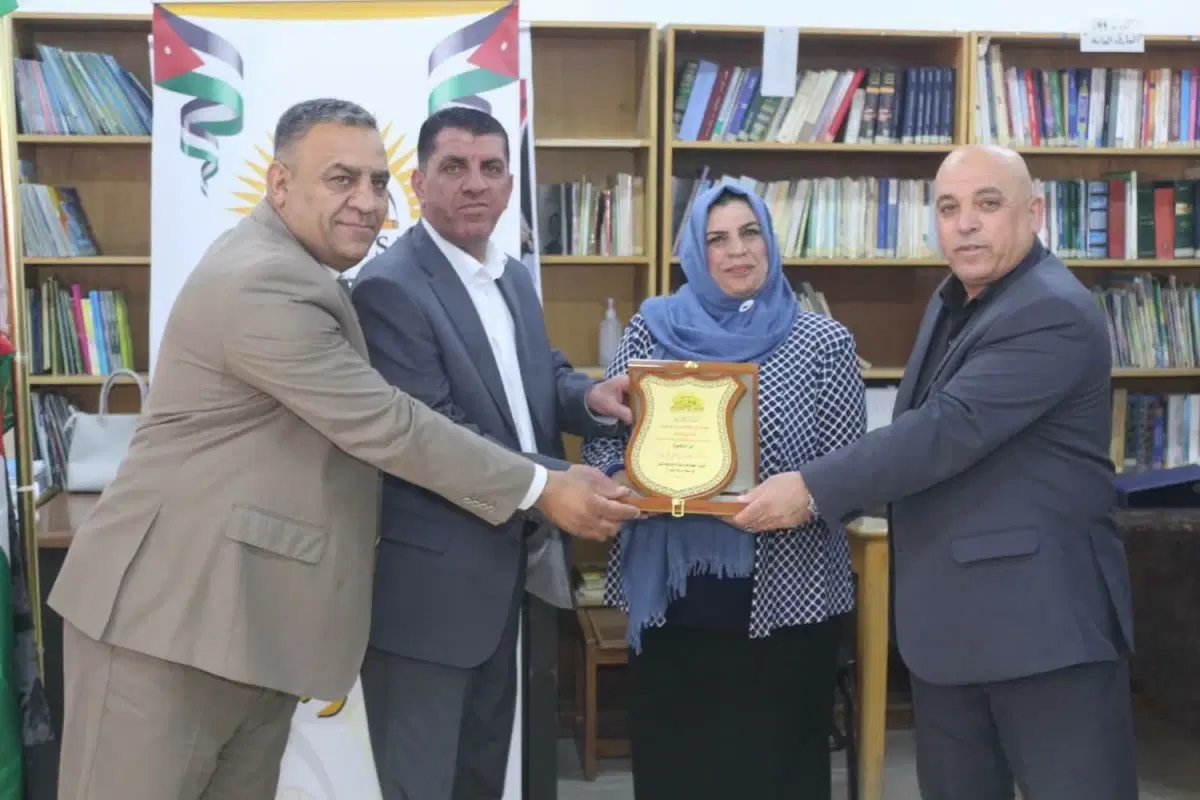
The conference proceedings are scheduled to conclude on Thursday with the announcement of the final communiqué and strategic recommendations, as well as the honoring of working committees and organizing bodies.
The conference comes within the framework of efforts aimed at enhancing the role of information institutions in preserving national memory, developing documentation, archiving, and knowledge management tools, and leveraging digital technologies and artificial intelligence in safeguarding and providing access to heritage, thereby supporting scientific research and enhancing awareness of Jordanian cultural identity.