Launch of the 24th National Conference on Libraries and Information on documenting the Jordanian narrative
Amman4 min read
Share
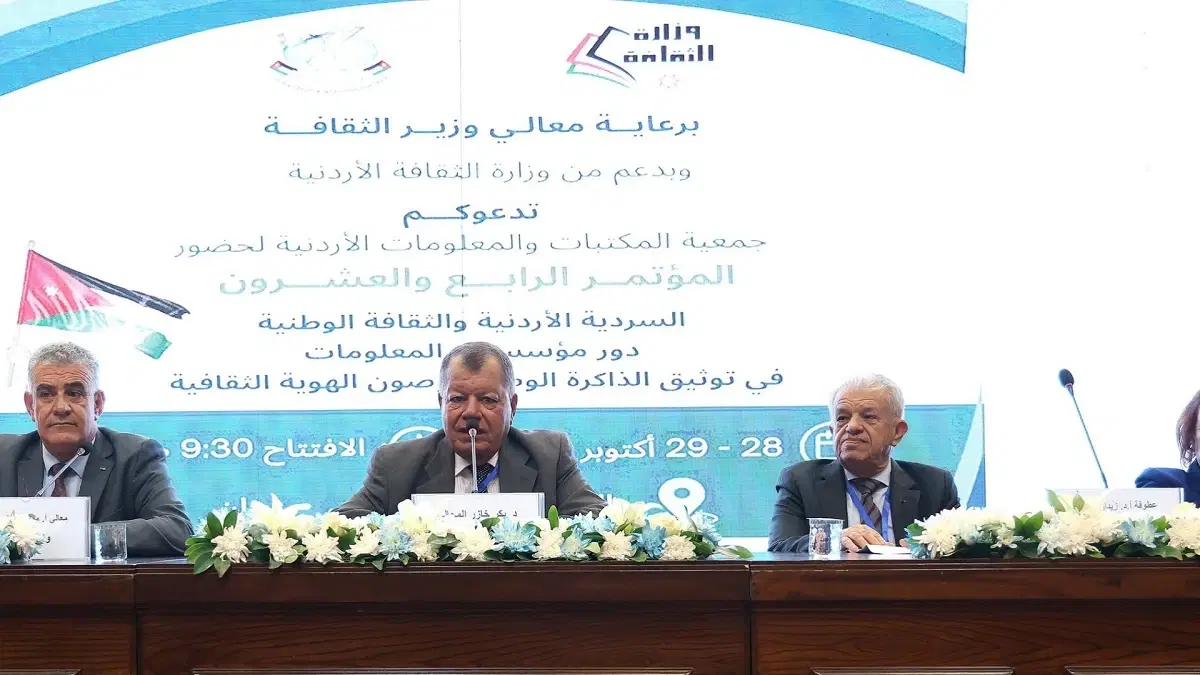
The 24th National Conference of the Jordanian Library and Information Association kicked off today, Wednesday, at the Royal Cultural Center, under the title "The Jordanian Narrative and National Culture: The Role of Information Institutions in Documenting National Memory and Preserving Cultural Identity," with the participation of academics, researchers, specialists, and representatives of cultural and information institutions.
The Secretary-General of the Ministry of Culture, Dr. Nidal Al-Ayasrah, representing the Minister of Culture, Mustafa Rawashdeh, emphasized that the conference highlights mechanisms for preserving national memory and safeguarding Jordanian cultural identity, and underscores the role of libraries, archives, and information institutions in documenting civilizational heritage, developing digital libraries, and keeping pace with transformations in the fields of artificial intelligence and knowledge management.
Al-Ayasrah stated that traditional and electronic libraries represent a knowledge wealth that contributes to protecting human output from loss, connecting the past with the present, and anticipating the future, stressing the importance of transforming documents, manuscripts, and works into knowledge sources accessible to generations, researchers, and decision-makers.
He added that choosing the Jordanian narrative as the title of the conference aligns with the national project launched by His Royal Highness Crown Prince Al Hussein bin Abdullah II in Tafilah Governorate to document the story of the land and the people, noting the Ministry of Culture's efforts in implementing the project in partnership with cultural bodies, research and academic institutions, and the local community.
He explained that the Ministry organized dialogues in various governorates that addressed the concept of the Jordanian narrative, its historical extensions, and the values, customs, and traditions that characterize the governorates.
It also launched the "Stories from Jordan" platform, which allows individuals and the community to upload documents, manuscripts, films, and photos, thereby enhancing documentation efforts and making these materials available to researchers, students, and decision-makers.
Al-Ayasrah expressed his hope that the conference's outcomes would contribute to developing mechanisms for documenting the Jordanian narrative, benefiting from the expertise of librarians and information institutions, and keeping pace with digital transformations in a way that strengthens national identity.
For his part, the conference president and head of the association, Dr. Imad Abu Eid, emphasized in his opening speech the importance of the role of libraries, archives, museums, and documentation centers in preserving national memory and safeguarding Jordanian civilizational heritage and passing it on to future generations, stressing that documenting the Jordanian narrative is a shared national responsibility that requires the integration of efforts by institutions, researchers, and society.
He pointed out that the responsibility of information institutions is not limited to collecting and preserving documents, but also includes documenting oral narratives, maintaining manuscripts, photos, and records, verifying information sources, making them available, and protecting them from loss and distortion, in addition to employing technology and artificial intelligence in preserving national memory, while ensuring the reliability and sustainability of its sources.
He explained that the association seeks through the conference to enhance the role of information institutions in consolidating cultural identity, supporting scientific research, and coming up with practical recommendations and initiatives that keep pace with digital transformations and contribute to conveying national memory to new generations.
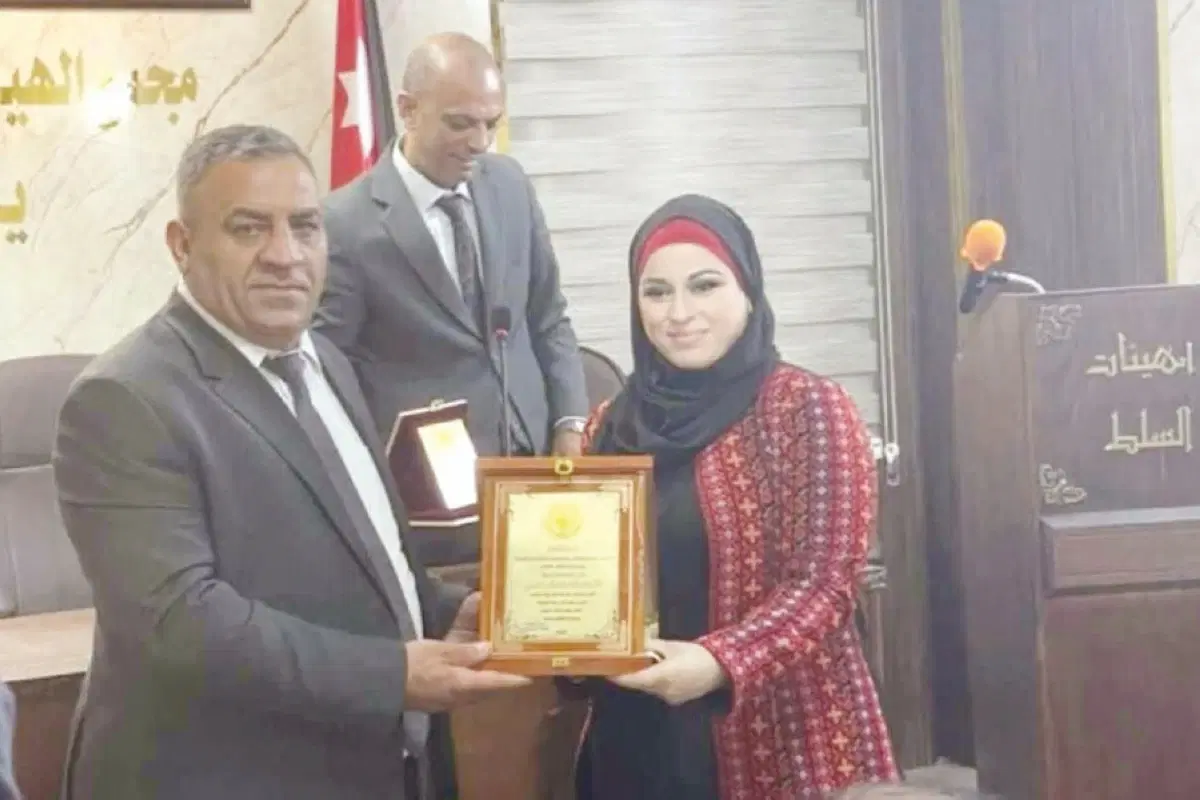
In turn, member of the association's administrative board, Mohammad Musa Salah, expressed his appreciation for the association's role in developing the scientific and professional aspects of those working in the library and information sector, enhancing their expertise, and upgrading professional practices.
The first main session was attended by the Secretary-General of the Ministry of Culture, Dr. Nidal Al-Ayasrah, archaeologist and former President of Yarmouk University, Dr. Zeidan Kafafi, Professor of History at the University of Jordan, Dr. Muhannad Al-Mubaidin, and Head of the Committee for Islamic and Ottoman History in the Jordanian Narrative, Dr. Hind Abu Al-Shaar, and the session was moderated by Dr. Bakr Khazer Al-Majali.
The opening ceremony concluded with a film screening that addressed the most prominent outcomes of the dialogues organized by the Ministry of Culture regarding the Jordanian narrative and the issues and ideas it addressed within the framework of building a national narrative based on knowledge, documentation, and scientific research.
The conference proceedings will continue until tomorrow, Thursday, through sessions discussing the dimensions of the Jordanian narrative and national culture, and the role of information, media, and digital culture institutions in preserving national memory and safeguarding cultural identity.