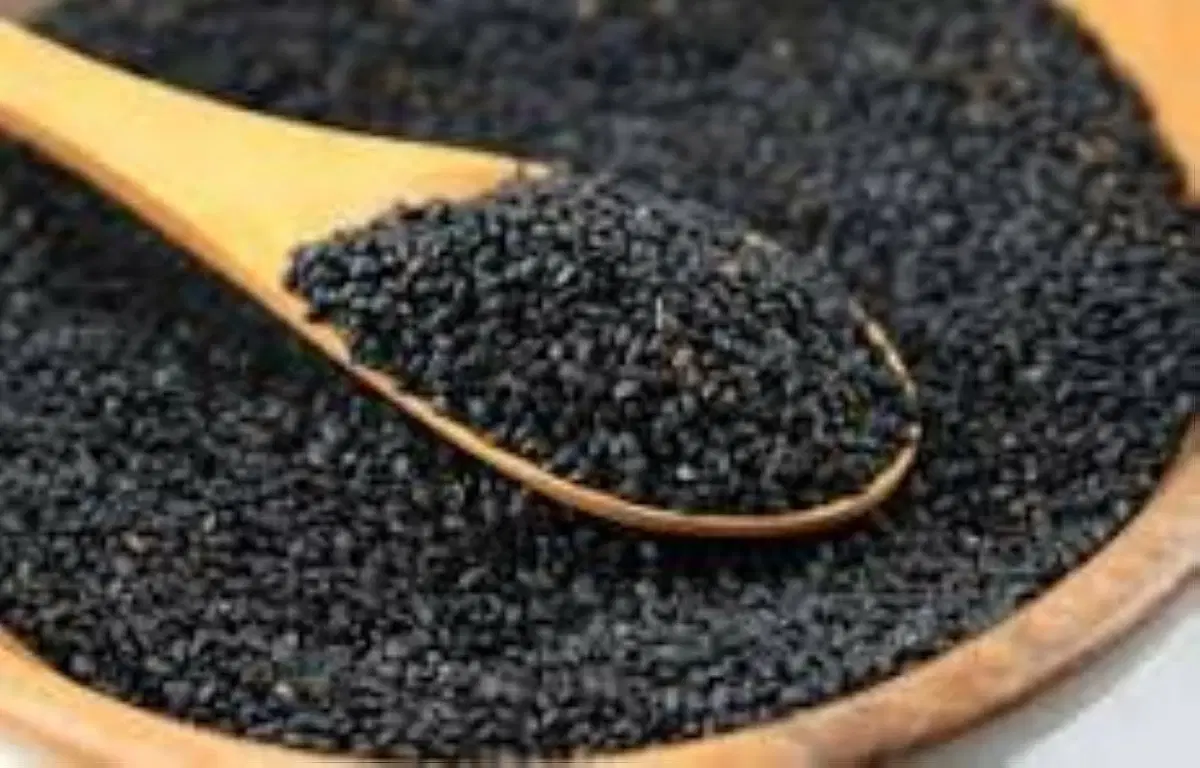
Basil seeds: Potential health benefits starting from digestion and not ending with cholesterol
Amman4 min read
Share
Despite the many benefits attributed to them, the strength of scientific evidence varies from one benefit to another, and some potential effects still require broader and more precise human studies.
Fiber is one of the most prominent nutritional components of basil seeds, as soluble fiber absorbs water within the digestive system, which may help soften stool, facilitate bowel movements, and reduce the chances of constipation.
These fibers can also slow down the digestion process and prolong the feeling of fullness after eating, making soaked seeds a suitable addition to yogurt, oats, and some beverages.
However, enhancing satiety does not necessarily mean weight loss; the available evidence remains limited regarding the ability of basil seeds to directly reduce weight, and it does not support considering them an independent means for slimming.
Soluble fiber may contribute to slowing the absorption of carbohydrates, which may limit the rapid rise in blood sugar levels after meals.
However, most of the encouraging results regarding the effect of basil seeds on blood sugar are derived from laboratory research or animal studies, while human evidence remains insufficient to prove their effectiveness in controlling sugar levels or preventing diabetes.
Accordingly, they should not be relied upon as a substitute for medications or the diet prescribed for diabetics.
A small study involving 60 adults with high cholesterol showed encouraging preliminary results; consuming 5 or 10 grams of basil seeds daily for 90 days was associated with a decrease in total cholesterol, LDL cholesterol, and triglycerides, along with an increase in HDL cholesterol and improved blood pressure readings.
These results may be linked to the seeds' content of fiber and plant fats, including alpha-linolenic acid, an omega-3 fatty acid, as well as antioxidant plant compounds.
However, the small size of the study limits the ability to generalize its results, and it is not enough on its own to prove that basil seeds are a treatment for high cholesterol or blood pressure. There remains a need for larger human trials to determine their effectiveness and long-term safety.
The seeds can be prepared by soaking a tablespoon of them in a cup of water for approximately 15 minutes, or until they swell and a gelatinous layer forms around them, then adding them to yogurt, oats, or beverages.
It is recommended to start with a small amount and increase it gradually according to tolerance, because a sudden increase in fiber may cause gas or bloating. It is also necessary to drink enough water and avoid eating the seeds dry, especially for people who have difficulty swallowing.
Basil seeds represent a nutritional option that can add fiber, some plant fats, and antioxidant compounds to the diet. Their potential benefits for digestion and satiety seem more related to the properties of fiber, while their effects on blood sugar, cholesterol, and blood pressure still need stronger clinical evidence.
In conclusion, including these seeds in a balanced diet may be beneficial, but it is important to distinguish between known nutritional value and therapeutic claims that have not yet been scientifically settled.