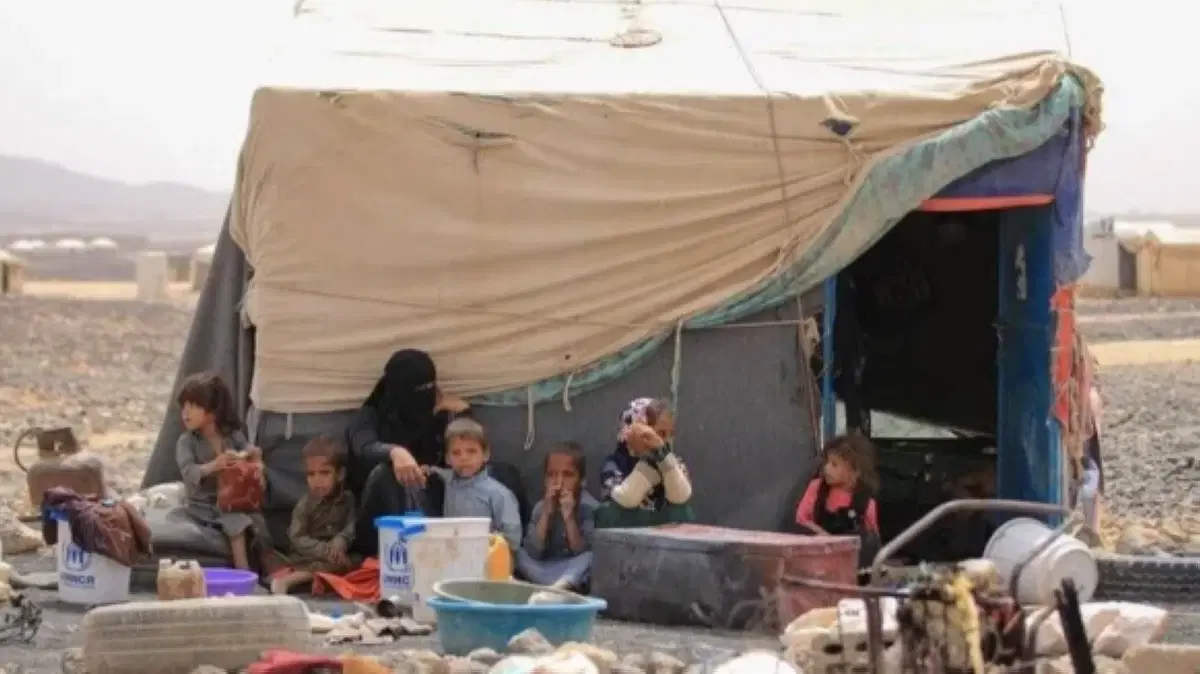
He stressed that the reconstruction process in the south is essential to ensure the return of residents to their villages, calling on the European Union to contribute to this process, which Lebanon cannot undertake alone, noting that the Lebanese government is taking appropriate measures to facilitate the return of residents.
Aoun briefed the Finnish minister on the situation in the south and the destruction caused by Israeli attacks in southern villages and towns, noting that he had personally inspected the scale of the destruction that had erased the landmarks of the targeted villages, in addition to the casualties, especially children, women, relief workers, civil defense personnel, the Lebanese Red Cross, and journalists.
He affirmed that the Lebanese Army, which has strengthened its deployment in non-occupied villages, especially in other southern areas, is performing its duties fully in maintaining security, preventing armed manifestations, and helping residents return to their villages, denying the validity of Israeli allegations that the army is failing to perform its duties.
He pointed out that the military personnel are carrying out their tasks throughout Lebanon, including controlling the eastern and northern borders, combating terrorism, and maintaining civil peace, despite limited resources, explaining that Lebanon has requested brotherly and friendly countries, especially European ones, to support the military institution with equipment and gear to enable it to carry out the tasks required of it.
Aoun noted that this matter will be a subject of discussion during the meeting scheduled for next Thursday in Paris, in preparation for the international conference to support the army and the Internal Security Forces.
For his part, the Finnish Defense Minister expressed his happiness to be in Lebanon, noting that the Finnish contingent operating within the United Nations Interim Force in Lebanon (UNIFIL) has been present since 1982, and that about 17,000 officers and personnel of the Finnish Army have served within it, establishing strong relationships with the people of the villages where they were deployed.
Häkkänen stressed Finland's support for Lebanon and its aspiration to strengthen relations between the two countries in various fields, especially the military field, confirming that his country views positively the achievement of what Lebanon wants in the post-UNIFIL mandate period at the end of the current year, and that it is in alignment with European Union countries regarding any decision these countries take in this regard.
For his part, Aoun welcomed any country wishing to keep its forces in the south after the end of the UNIFIL mandate, and also welcomed the French-Italian initiative to form a European force to assist the Lebanese Army after its deployment up to the international borders, provided that an appropriate legal formula for this participation is found.
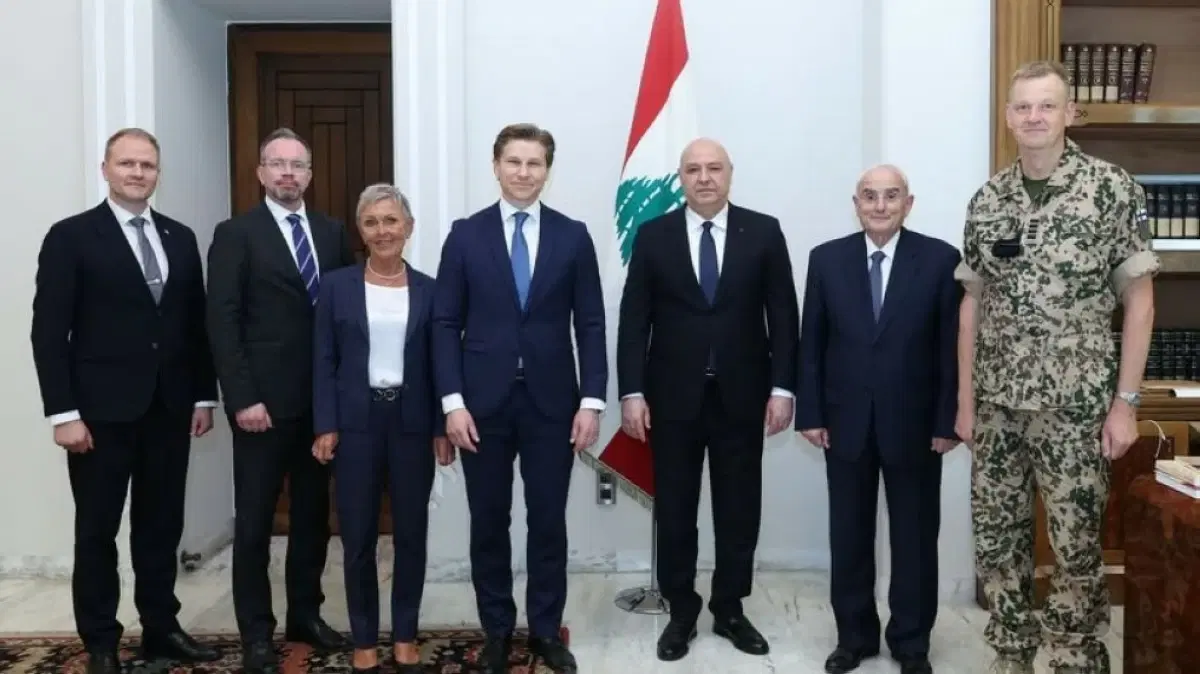
Aoun had received the Finnish Defense Minister and the accompanying delegation, in the presence of Lebanese Minister of National Defense Major General Michel Mansa and the Finnish Ambassador to Lebanon Anne Meskanen, as part of the Finnish minister's visit to inspect his country's forces operating in the south within UNIFIL and to hold talks with his Lebanese counterpart on cooperation between the two countries.
Aoun also thanked the Finnish minister for his visit to Lebanon in light of the difficult circumstances the south is going through as a result of the continued Israeli attacks and the occupation of a number of southern villages and towns, appreciating Finland's contribution to UNIFIL since 1982 and the sacrifices made by Finnish soldiers during their work to maintain security and stability on the southern border.
On June 26, Lebanon and Israel concluded a framework agreement after 5 rounds of negotiations under American auspices, which provides in particular for the disarmament of Hezbollah, the gradual withdrawal of Israel from the territories it occupies in southern Lebanon, and the deployment of the Lebanese Army starting from "pilot areas."
The framework agreement provides for a reciprocal and gradual process by which the Lebanese Army regains effective sovereign authority over all Lebanese territory, in conjunction with the disarmament of non-state armed groups and the dismantling of their infrastructure, allowing the Israeli occupation army to redeploy outside Lebanese territory according to security arrangements and verification mechanisms organized by a security annex with American support.
Hezbollah absolutely rejects direct negotiations with Israel and giving up its weapons.
Israel maintains forces in southern Lebanon under the name of a "security zone" that reaches a depth of ten kilometers along its border, and continues to carry out strikes and massive demolition and destruction operations.
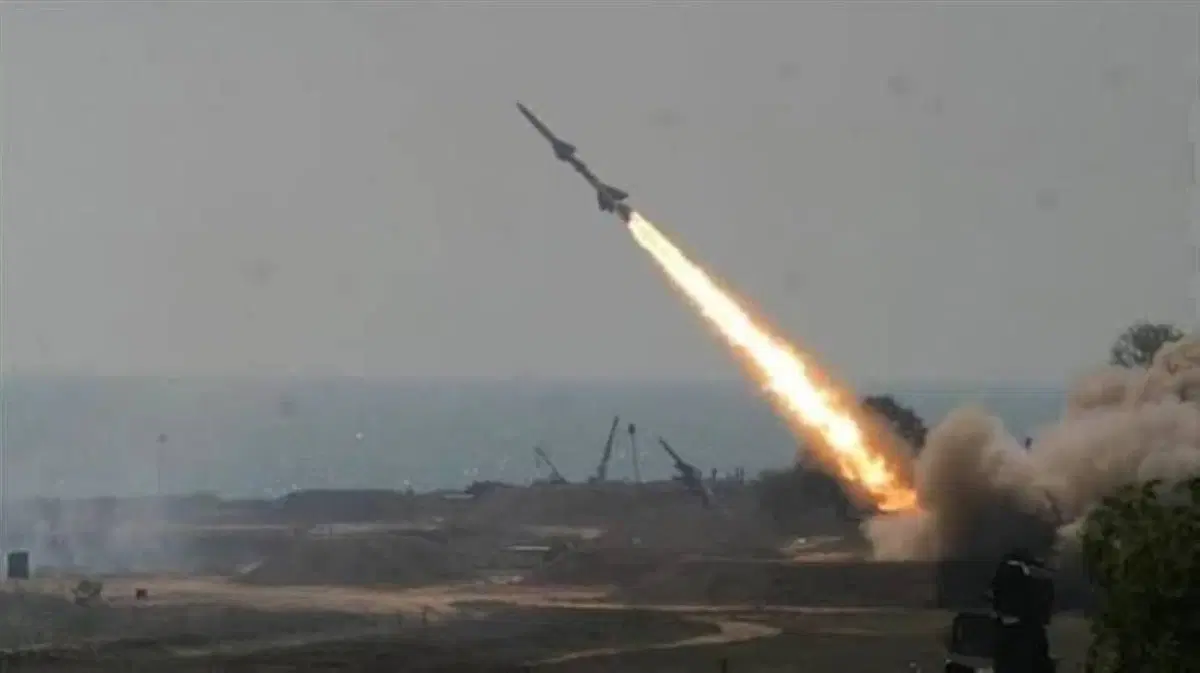
The latest war broke out after Hezbollah launched missiles toward Israel in response to the killing of Iranian leader Ali Khamenei at the beginning of the American-Israeli attack on Iran.