Al-Khozaleh said that human beings in Al-Zyoudi's poetry are present «as a son of the earth and its memory» pointing out the connection of his experience to place, particularly his village Al-Alok, which transformed in his poetry into a living organism that grants the poem its warmth and specificity, moving personal memory into a shared memory.
He added that sadness in Al-Zyoudi's poetry was not merely a complaint, but transformed into a poetic energy that restores humanity and the earth, noting that his final collection «Clouds over Al-Alok» presents a calm existential vision of life and death.
Al-Khozaleh explained that the Jordanian narrative in Al-Zyoudi's poetry is based on overlapping levels, most notably place, human, time, love, dignity, and death, affirming that his experience combined aesthetic depth with popular roots, and recalled images and symbols from the Jordanian environment, alongside national and historical figures that contributed to expanding the national memory.
For his part, Dr. Hekmat Al-Nawaiseh addressed Al-Zyoudi's poetic experience from various angles, pausing at his relationship with Amman and the Jordanian place, comparing his poem «Ya Hanna Ala Hanna» with Said Akl's poem «Jordan, Land of Resolve» which was sung by Fairouz, pointing out that Al-Zyoudi wrote from within the Jordanian consciousness and with the conscience of the collective.
Al-Nawaiseh spoke about Al-Zyoudi's experience in panegyric (praise poetry), affirming that the poet wrote with sincerity. He also touched upon his relationship with Jordanian poetic symbols, and his quest to establish his poetic independence away from the label of being merely «the successor of Arar» pointing to his material and moral generosity with his colleagues and poets.
As for Dr. Mohammed Wasef, he addressed the musical aspect of Al-Zyoudi's experience, affirming that the poet was «a singer by instinct» and that his poems possessed, since their inception, a high susceptibility to turn into songs echoed in the collective memory.
He explained that Al-Zyoudi constructed his poem with an innate rhythmic sense, using easy language close to the recipient while simultaneously capable of reaching high symbolic levels.
He defended his use of popular vocabulary as part of the details of Jordanian rural and Bedouin life and a means to root it in the collective memory, affirming Al-Zyoudi's mastery of Classical Arabic in prominent poems.
Wasef pointed to the presence of «a hidden melody» in Al-Zyoudi's texts, granting them a rare susceptibility to turn into a musical refrain, pointing to rhythmic and musical elements that contributed to giving his poems their capacity for singing and dissemination.
Wasef expressed his regret over what he described as weak institutional attention given to Habib Al-Zyoudi, as one of the prominent names in the Jordanian cultural and national narrative.
For her part, Dr. Reem Al-Mrayat said that the symposium came to celebrate the memory of a poet who «filled the country with love», and formed a Jordanian cultural state that settled in the collective consciousness through the poem and the song.
Al-Mrayat recalled her memories with the late poet during her studies at the University of Jordan in the 1980s, pointing to the beginnings of his poetic talent which resonated across the university's amphitheaters and evenings, and what his experience carried in terms of expressing the issues of his generation and society.
She affirmed that Al-Zyoudi's sung poems embodied authentic Jordanian values and contributed to cementing his presence in the cultural and national memory.
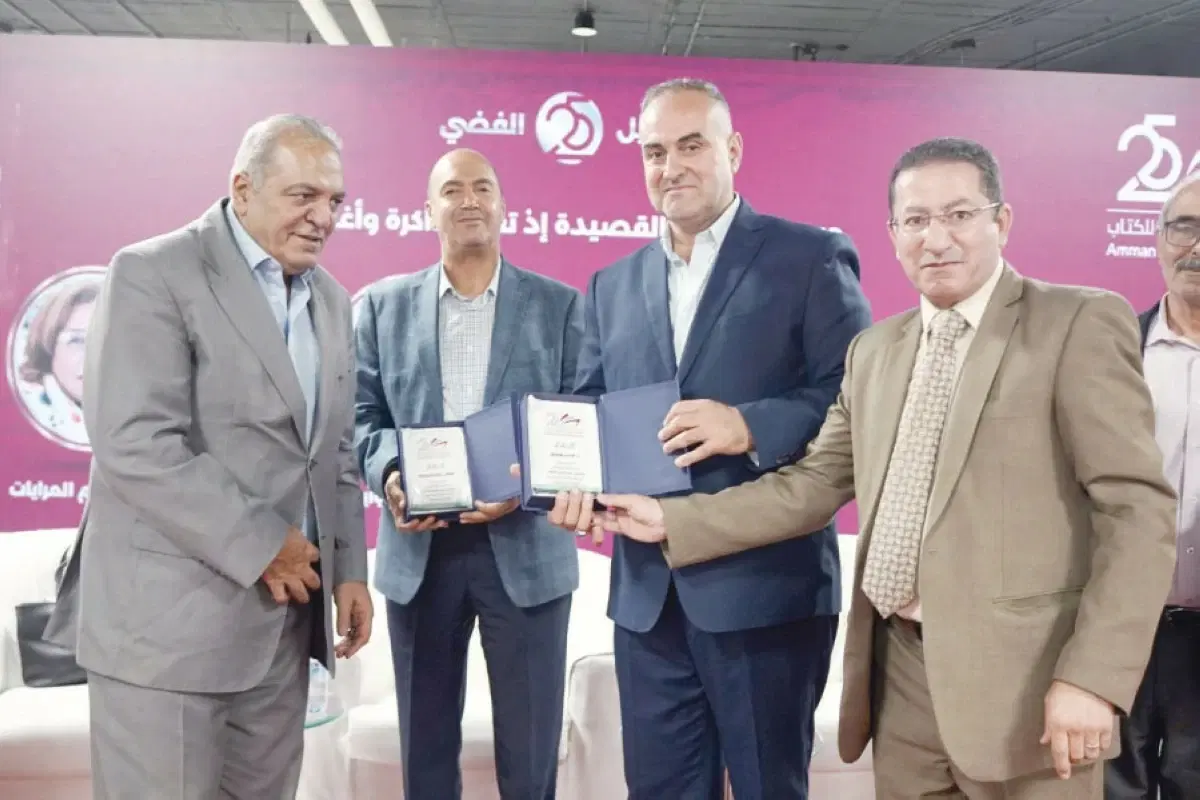
At the conclusion of the symposium, the Head of the Cultural Committee of the Amman International Book Fair, Jaafar Al-Aqili, and the Head of the Artists Syndicate, Dr. Hani Al-Jarrah, honored the participants in the symposium in appreciation of their participation in enriching the cultural program of the fair.