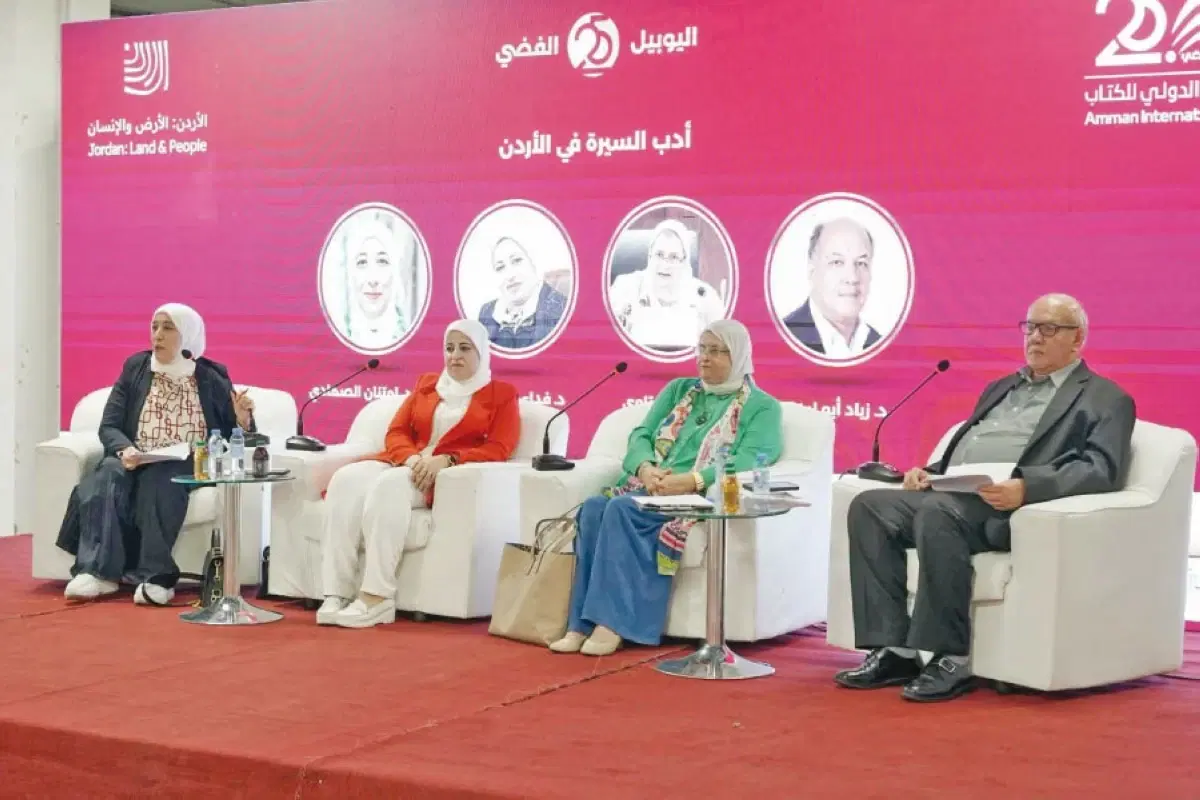
The participants emphasized that Jordanian biographical literature has managed to achieve its artistic independence, moving from direct oral documentation to broader spaces connected to identity and self-disclosure, intersecting in some of its experiences with the art of the novel.
Abu Laban reviewed the historical trajectory of Jordanian biography, noting its transition from oral storytelling and travel literature to writing the biography of society and the nation, and tracking the transformations of the twentieth century through the writing self.
He pointed to the presence of three times in the construction of biography: the time of the event, memory, and writing, while the place transforms from a geographical framework into a spiritual space that contributes to reshaping identity and confronting oblivion.
Anabtawi addressed the manifestations of feminist biography and its role in providing space for women to express themselves and confront societal restrictions and pressures, reviewing the experience of the late novelist Laila Al-Atrash, and the transition her writing witnessed from "masked biography" to explicit disclosure, ultimately viewing biography as an act of survival and resistance against oblivion and death.
In turn, Abu Farda presented a reading of the experience of writer Dr. Rashid Issa through his novel "Li Dunakum Ahlun," focusing on the employment of personal experience and the wounds of displacement within the spaces of orality, fantasy, and modern vagabondage, alongside the "Wolf's Fang" technique as a wondrous narrator that reshapes the familiar and grants memory and family a different presence in the text.