Al-Rawashdeh: Qatrana Cultural Festival is a celebration of the memory of the place, the fragrance of history, and the authenticity of the human being
Held in the courtyard of Qatrana Castle
Amman6 min read
Share
Minister of Culture Mustafa Al-Rawashdeh affirmed that cultural and artistic festivals play a pioneering role in introducing the aesthetics and history of a place, its creators and intellectuals, and in stimulating cultural movement, in addition to their role in highlighting heritage and national identity, developing societal awareness, and stimulating the economy through the development of creative cultural industries.
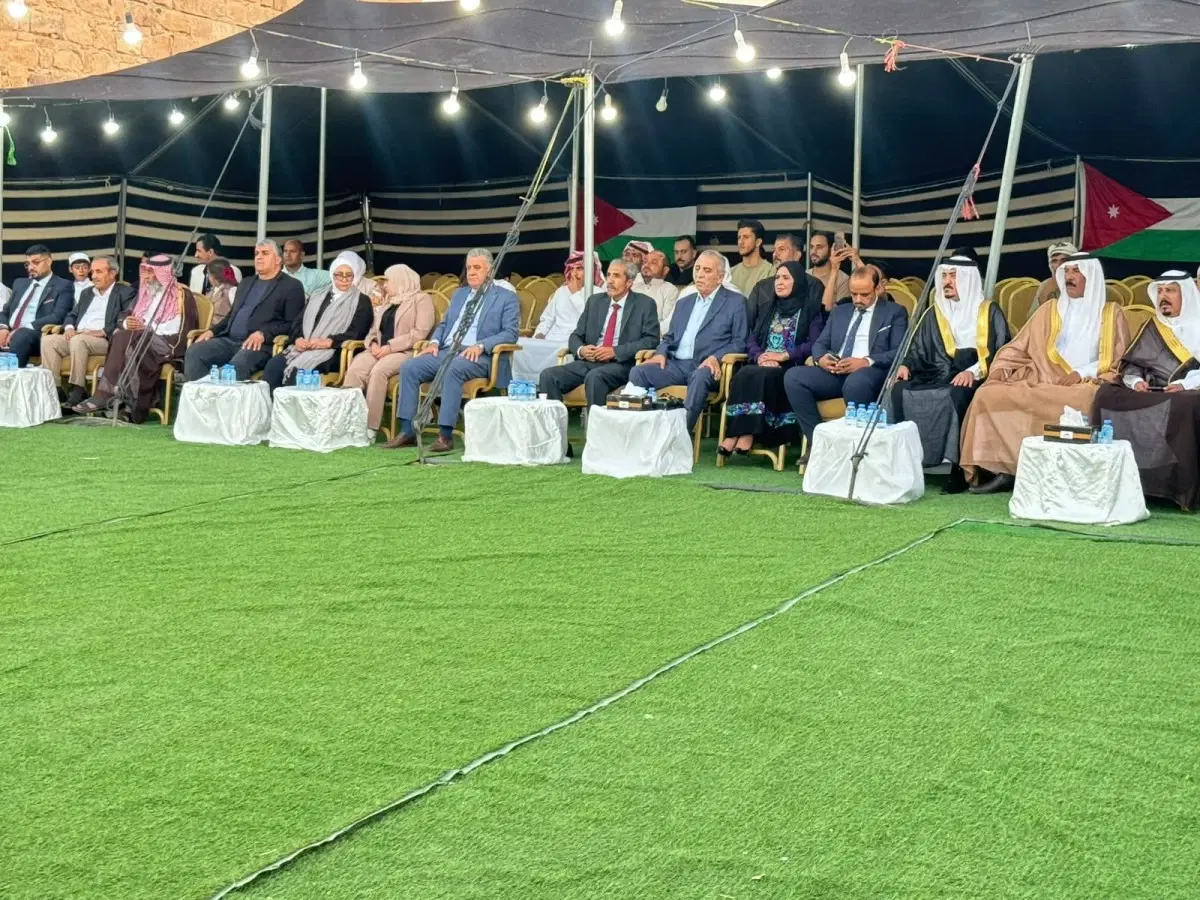
This came during Minister Al-Rawashdeh's patronage of the launch ceremony of the first Qatrana Cultural Festival, organized by the Ministry of Culture in partnership with cultural and community actors in the Qatrana District. The event was attended by District Administrator Rakan Al-Adwan, members of parliament, sheikhs, dignitaries, residents of the region, and cultural and community figures, as part of the Ministry's trend to expand cultural movement in the governorates and choose historical and heritage sites as incubators for it.
The Minister added in his speech: "In this festival, which is held in the embrace of (Qatrana Castle), the authenticity of the past meets with the values of generosity and courage, with all the fragrance of history, human values, pride, and loftiness that the place carries, and the culture of its people, which is linked to the details of the place and its extension into the depths of the desert."
He pointed out that the castle courtyard, which has witnessed eras since the sixteenth century and was a haven for travelers between the Levant and the Arabian Peninsula, and an umbrella for protecting the Levantine Hajj route and securing water for caravans and pilgrims, has become part of the architectural heritage and some of the stories and tales that the ancestors lived in the place and its surroundings.
He noted that the function of the castle has changed after the government restored it last year, as it was rehabilitated and transformed into a tourist station that reflects its historical and strategic value. It has also become a title for cultural tourism and a spatial space for arts, heritage, and poetry that embodies the spirit of the nation, its voice, its discourse, and the bearer of its values and the record of its heroism, where the beauty of the place, the vigor of the human, and the fragrance of time meet in the poem, documenting the "Jordanian narrative.. the story of the land and the human."
The Minister continued that the castle is an important station and a center for promoting local products, handicrafts, and heritage industries associated with the desert environment that characterizes the region, including textiles, leather, and popular food, which represents part of the components of the community's cultural identity.
The Minister appreciated the Qatrana Festival's attention to involving the local community by organizing exhibitions for handmade and popular products, as a step that contributes to supporting productive families and enabling the people of the region to showcase their heritage and creativity.
MP Arwa Al-Hajaya said: "We meet in Qatrana not only to celebrate the memory of a place, but to confirm that Jordan, which respects its history, is capable of creating its future," stressing that Qatrana is a page from the history of the Jordanian state and a site linked to the human, the road, caravans, and trade, and a witness to the succession of civilizations over time.
She pointed out the importance of moving from preserving history to investing in it, and from telling the story to manufacturing a product, following the directives of His Majesty King Abdullah II, who made the development of tourism and maximizing the economic and cultural value of Jordan's assets part of his vision to build a more diversified economy and to enhance the country's position on the global tourism map.
Al-Hajaya expressed her pride in the ongoing government efforts to support development paths, saying: "We look forward to this vision reaching every site that possesses a story, identity, and opportunity, just like Qatrana, which does not seek to repeat an existing tourism product, but aspires to create a new product with its own identity and story that combines history, culture, the human, and the place, and contributes to empowering youth and enhancing their role in creating the future and transforming their energies into real opportunities in line with the vision of His Royal Highness Crown Prince Al-Hussein bin Abdullah II."
In turn, MP Bani Attia said that this festival is not just a fleeting cultural occasion, but a real space to highlight the ancient cultural heritage possessed by the people of Qatrana, which reflects an authentic aspect of the cultural and social identity and capabilities and talents that deserve support and attention.
He added that holding this festival with its diverse activities is an opportunity to shed light on the cultural diversity that distinguishes the Qatrana District, and to show the true image of its people who have preserved their heritage, traditions, and authentic values and passed them from generation to generation, pointing to the role of the festival in highlighting the heritage crafts and handmade items that express the identity of the place and the human and carry in their details the stories of ancestors, children, and mothers, which requires preserving and developing them.
He emphasized that supporting artisans, talented people, and creators, and expanding the holding of cultural and heritage exhibitions and events would transform culture and heritage from mere seasonal occasions into a sustainable cultural state that contributes to strengthening national identity and providing economic opportunities for the local community, especially youth, women, and small business owners.
Bani Attia called for concerted official and community efforts to work on conveying the bright cultural image of the Qatrana District, presenting creators in a manner worthy of them, and opening the way for them to participate in cultural events held at the governorate and kingdom levels.
The opening ceremony included poems by poets Mohammed Fanatel Al-Hajaya and Abdul Basit Bani Attia, and performances by the Al-Hajjana band, followed by a poetry evening in which poets Dr. Atallah Al-Hajaya, Suleiman Bani Attia, and Abdullah Bani Attia participated, presenting a collection of their poems that sang of the homeland and its leadership and highlighted the region's heritage and authenticity. Artist Bashar Al-Sarhan also presented a collection of his national and heritage songs, while the Al-Hajaya Youth Al-Samer band presented folkloric and singing performances.
The festival's activities also included holding an exhibition of craft products, handmade items, and popular foods produced by the women and associations of the region, in addition to allocating a space for children that included various cultural activities.