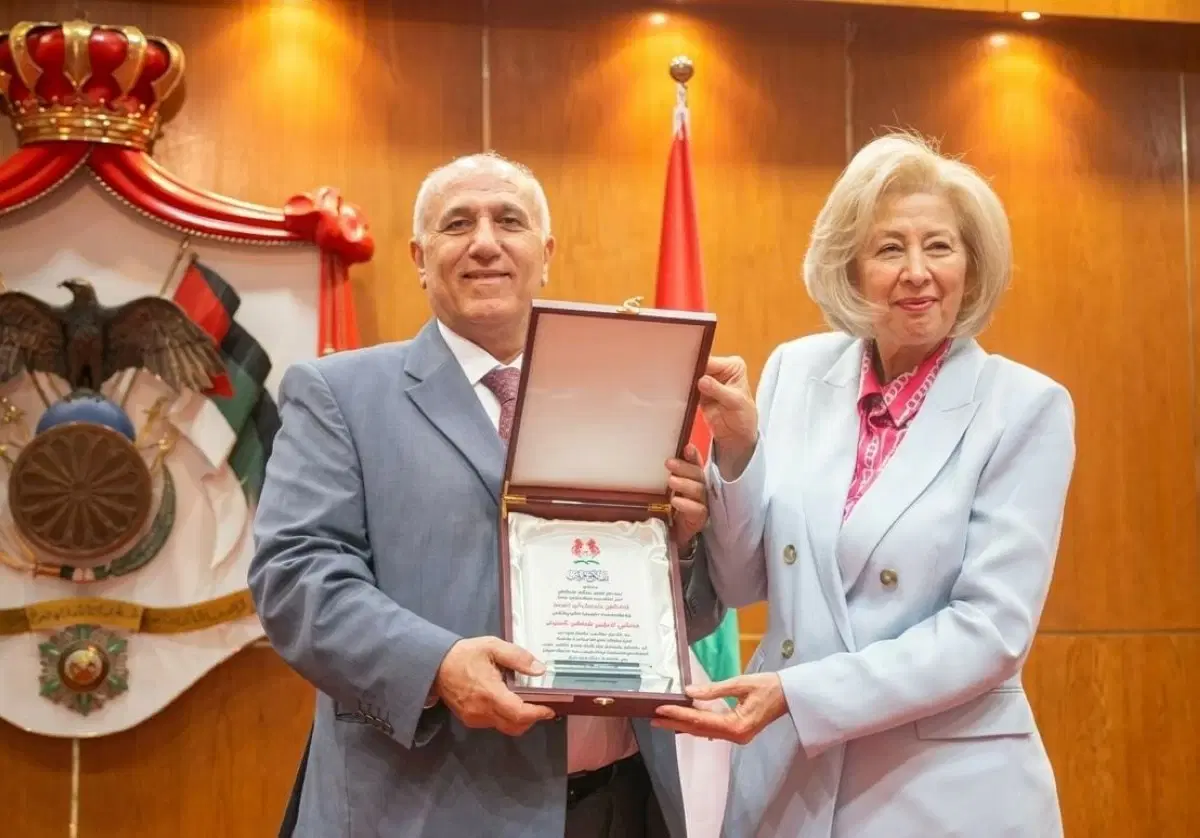
The former Minister of Culture, Hayfaa Al-Najjar, spoke about the topic of the Arabic language and the importance of restoring its status, and the philosophy of cultural and national identity contained therein, proposing a number of academic and cultural solutions and among the youth to present the Arabic language as a bright national and civilizational face, emphasizing the conscious educational aspect in this field.
For his part, the former Minister of Culture, Engineer Samir Al-Habashneh, spoke about the topic of the national personality, starting his speech by stating that Jordan is a strong counterpart to Palestine and its national rights. He said that the Jordanian national personality was not formed in a vacuum, but is the result of a deep and interconnected achievement of giving, and an extended Arab heritage in culture, literature, politics, and public work, affirming that this steadfast personality derived its solidity and continuity from the Arab identity, with its civilizational and cultural dimensions.
Al-Habashneh touched on the establishment of the Jordanian state and the challenges of the political situation in the region and the world at that time, and the national renaissance that was based on thought and work for the benefit of the Arabs and Palestine, and on the diversity of the national component, which was an element of enrichment throughout Jordan's journey and its rise to its national, Arab, and humanitarian duties and responsibilities.
Meanwhile, the audience watched excerpts from the Oscar-winning Palestinian film "No Other Land," directed by Basel Al-Adrah, and Dr. Muhammad Wahid Al-Ja'abri spoke about the eightieth Independence Day of the Hashemite Kingdom of Jordan, and the Mayor of Khallat Al-Miyah and the President of the Yatta Council spoke about the current reality of "Yatta Traveler," in addition to a contribution from the political and media writer Hamada Fara'nah about Palestinians of the interior in 1984, followed by the honoring of the speakers and creators.