
Al-Eisawi: The King considers the citizen the core of the national project
Al-Eisawi: The Crown Prince supports the royal effort and enhances the translation of the royal vision in construction and achievement
Follow Al Rai

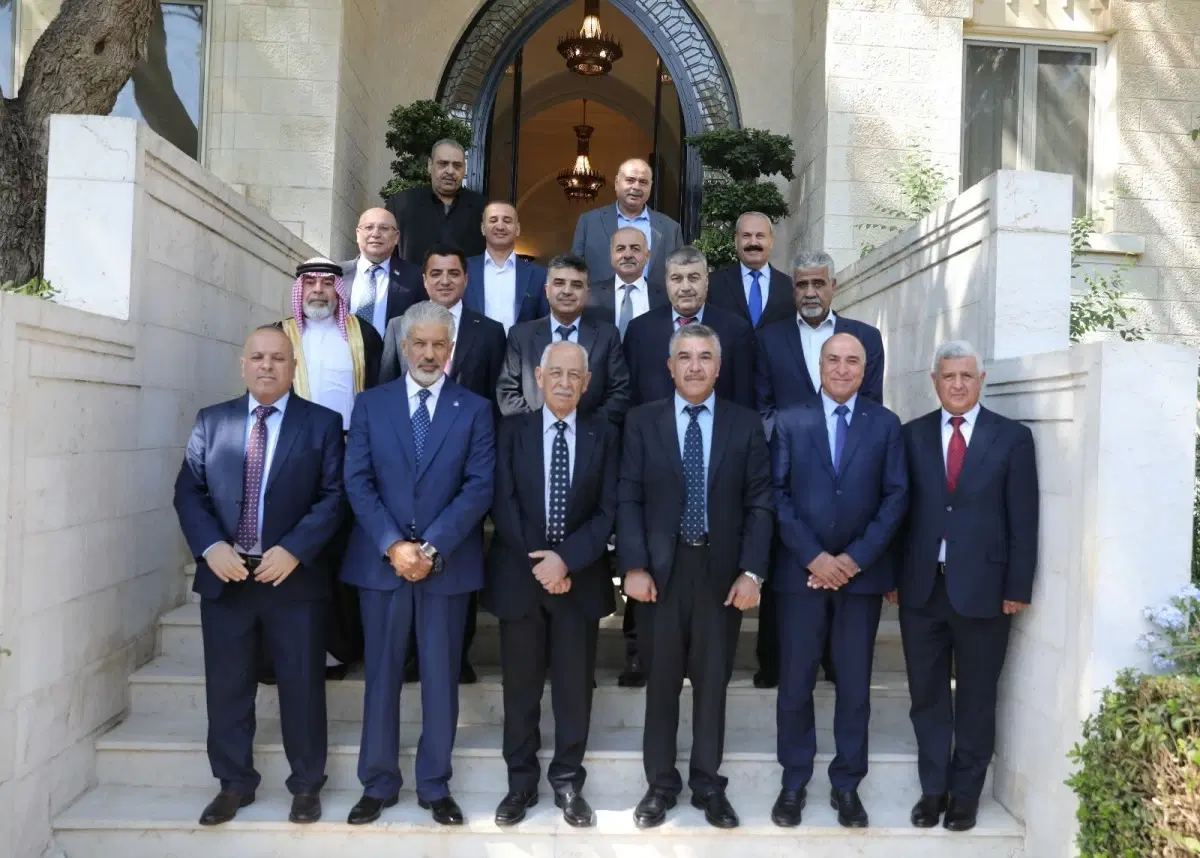
During his meeting with a delegation from Mafraq Governorate
Al-Eisawi: The King considers the citizen the core of the national project
Al-Eisawi: The Crown Prince supports the royal effort and enhances the translation of the royal vision in construction and achievement
Speakers: The King's international presence and Jordan's global status are a source of pride for Jordanians
Speakers value the role of the Crown Prince in the march of construction and modernization and his interest in youth and their empowerment in national work paths
President of the Hashemite Royal Court, Yousef Hassan Al-Eisawi, affirmed that the speech of His Majesty King Abdullah II before the United Nations General Assembly reaffirmed the image of Jordan, its position, and its principles before the world, and reflected the steadfastness of Jordanian positions in a region where crises are crowded and transformations are accelerating.
Al-Eisawi said, during his meeting today, Thursday, in the Hashemite Royal Court with a delegation from the Mafraq Governorate Forum, that the royal speech renews the emphasis on the strength of Jordan under its Hashemite leadership and its solid institutions and the cohesion of its people, and its ability to protect its land, borders, interests, and safeguard its independent national decision.
He pointed out that His Majesty's affirmation that any threat to Jordan's borders or its water security is a threat to national security, and that Jordan will protect its security, water, and the interests of its people, carries a clear message reflecting the Hashemite leadership's keenness to protect the homeland, its capabilities, and the interests of its people, and to deal with the surrounding challenges with vigilance and responsibility.
Al-Eisawi explained that His Majesty put the international community before its responsibilities, stressing that the implications of the royal speech were clear in rejecting selectivity in the application of international law, and in affirming that peace cannot be achieved under policies that undermine its chances.
He said that the royal positions on regional issues reflect a steady Jordanian approach based on wisdom, dialogue, and the pursuit of peace, while adhering to national rights and interests and just causes, foremost of which is the Palestinian cause.
He pointed out that the Hashemite custodianship of Islamic and Christian holy sites in Jerusalem represents a historical trust that His Majesty continues to bear and defend, noting that the royal positions also affirm the rejection of any solutions that may come at the expense of Jordan's sovereignty or national interests.
On the domestic front, Al-Eisawi said that one of the important implications of the royal speech was that the crises of the region, no matter how difficult they are, do not stop Jordan's march in building its future, strengthening its economy, modernizing its administration, developing education, qualifying youth, and investing in technology.
He stressed that the Jordanian citizen forms the core of the national project led by His Majesty the King, and that the success of plans, programs, and reforms is measured by their impact on the citizen's life, improving his standard of living, and providing opportunities for him.
He said that indicators and figures gain their importance when they turn into job opportunities, better services, income that preserves the dignity of the family, education, health care, and infrastructure that meet the needs of citizens, and real opportunities that enable youth to build their future in their homeland.
Al-Eisawi praised the role played by His Highness Crown Prince Hussein bin Abdullah II in supporting the royal effort and enhancing the presence of youth in the modernization march, through his interest in education, technology, skills, and youth empowerment.
He pointed out that the efforts of His Highness the Crown Prince contribute to translating the royal vision for the future and enhancing the confidence of youth in their role in construction and achievement, linking the experience of state institutions with the aspirations of the new generations.
Al-Eisawi also valued the efforts of Her Majesty Queen Rania Al-Abdullah in serving the Jordanian people, and her interest in education, family, childhood, women's empowerment, and community development, which enhances the building of a cohesive and productive society.
Al-Eisawi affirmed that what His Majesty constantly emphasizes about the importance of social cohesion and unity represents a source of strength for Jordan, pointing out that Jordanians have proven through various circumstances their ability to differ without division, and to prioritize the interest of the homeland over anything else.
He said that dialogue, respect for the law, and recourse to the national interest form the main pillars in preserving the strength and cohesion of society.
Al-Eisawi emphasized that His Majesty's speech to the world presented a clear picture of Jordan; a state that believes in peace and does not compromise on its rights, and realizes that peace is not built by force or by imposing fait accompli, and proceeds with confidence in protecting its present and building the future of its children.
At the end of the meeting, Al-Eisawi expressed his appreciation for the national positions expressed by the people of Mafraq Governorate, and what their interventions carried of pride in Jordan and its Hashemite leadership and support for the efforts of His Majesty the King, affirming that these positions reflect the authenticity of Jordanians and the depth of the relationship that binds the Hashemite leadership with the people.
For their part, the speakers affirmed their pride in the leadership of His Majesty the King, and in the positions expressed by His Majesty in various regional and international forums in defense of Jordan's interests and the issues of the nation, noting that His Majesty's speech before the United Nations General Assembly carried clear and firm messages affirming the strength of Jordan, the steadfastness of its positions, and its ability to protect its security, borders, and capabilities, alongside its adherence to its firm positions towards the Palestinian cause, Jerusalem, and the rights of the Palestinian people.
They said that the positions of His Majesty reflect a steady Hashemite approach based on wisdom, moderation, and clarity in defending national and Arab issues, affirming that His Majesty's international presence, and the respect and status enjoyed by Jordan, are a source of pride and pride for Jordanians, and enhance their confidence in their homeland, institutions, and ability to face various challenges.
The speakers valued the role played by His Highness the Crown Prince in the march of construction and modernization, and his interest in youth and their empowerment and enhancing their participation in various paths of national work, affirming that His Highness's efforts reflect the Hashemite leadership's keenness to invest in the energies, capabilities, and preparation of youth for the future.
They also expressed their appreciation for the efforts of Her Majesty the Queen and her initiatives in the fields of education, community empowerment, and support for the Jordanian people, and her contributions to highlighting the civilized image of Jordan and enhancing the opportunities of its people in education, excellence, and giving.
The speakers affirmed that the strength of Jordan is based on the unity of its people, the cohesion of its internal front, and its confidence in its leadership and state institutions, stressing that Jordanians of all origins and backgrounds form a single national fabric, united by the values of loyalty, belonging, and concern for the security, stability, and achievements of the Kingdom.
They expressed pride in the Jordanian Armed Forces - the Arab Army and security agencies, and in their role in protecting the borders of the homeland, safeguarding its security and stability, affirming that His Majesty's confidence in the armed forces and its men is a source of pride for Jordanians, and that the people of Mafraq Governorate have always been present in the ranks of the army, security agencies, and various fields of national service, and have offered martyrs and contributed to the march of state building and defense.
The speakers affirmed their pride in the steadfast Jordanian position led by His Majesty the King towards the Palestinian cause, and His Majesty's continuous defense of the rights of the Palestinian people, Jerusalem, and the holy sites, noting the importance of the role played by Jordan in conveying the truth of what is happening to the international community and affirming the need to bear its responsibilities towards the suffering of the Palestinian people and their legitimate rights.
They pointed out that Mafraq Governorate represents an integral part of Jordan's history and march, with its strategic location on the northern and eastern borders, and its wealth of human capabilities, agricultural, water, and industrial potential, in addition to the contributions of its people in the armed forces, education, public service, and various fields of construction and giving.
The speakers affirmed that the people of Mafraq, with all their components, valleys, and regions, will remain loyal to their homeland and Hashemite leadership, keen on the security, stability, and unity of Jordan, and adhering to the values of solidarity, communication, and belonging that have always been the pillars of Jordanian society.
Know more about this story?Send us a tip
Ask about this report — answers stay grounded in its text.




