Met them, the Chief of the Royal Hashemite Court
Under the umbrella of "Abshir Sayedna".. 3,000 of the nation's sons and daughters flock to the Hashemite Diwan's guesthouses expressing pride in their Hashemite leadership and loyalty to the homeland
Follow Al Rai

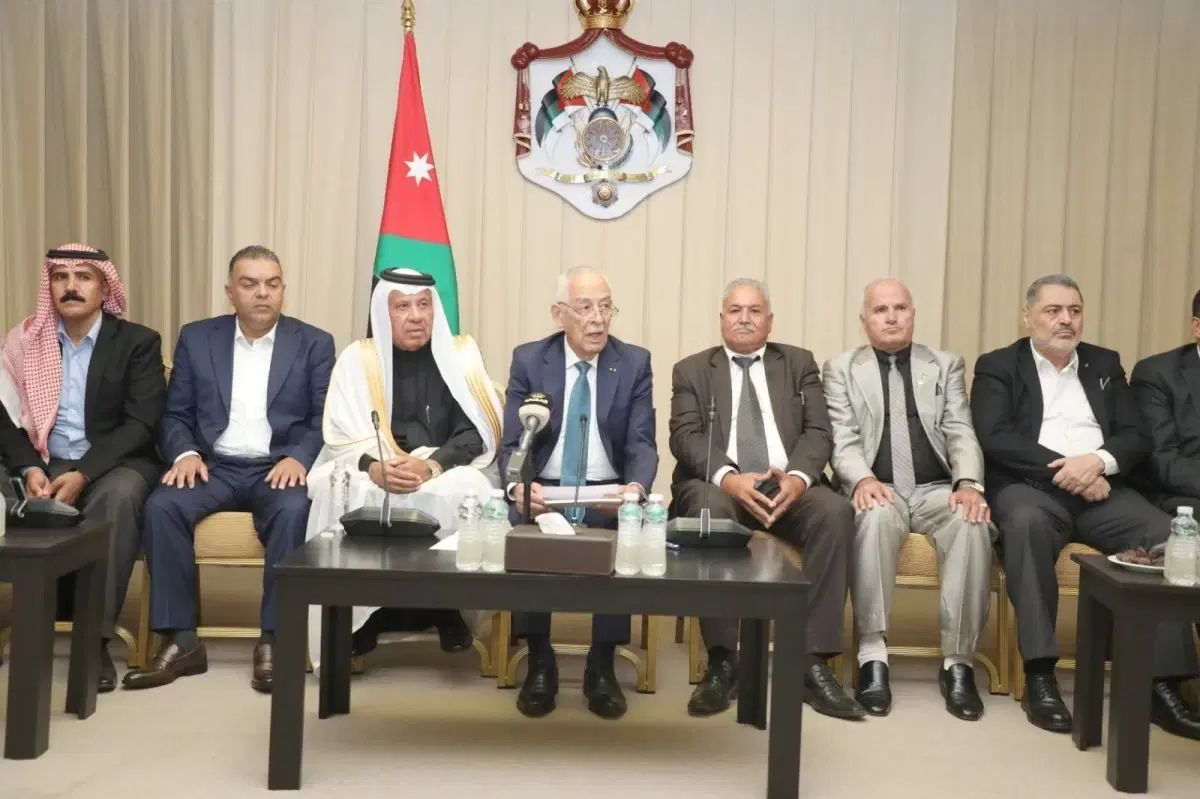
Met them, the Chief of the Royal Hashemite Court
Under the umbrella of "Abshir Sayedna".. 3,000 of the nation's sons and daughters flock to the Hashemite Diwan's guesthouses expressing pride in their Hashemite leadership and loyalty to the homeland
Al-Issawi: The King's speech combined political wisdom with firmness in protecting Jordan
Al-Issawi: The Crown Prince gives renewed momentum to the modernization process and links state expertise with the ambitions of its youth
Speakers: Jordan is a homeland that has inhabited us before we inhabited it, and the pledge to it and its Hashemite leadership remains unchanged
Speakers: The King's courageous stances express the conscience of Jordanians and the constants of their state
Speakers: The Crown Prince embodies the ambitions of the youth and the continuation of the building and modernization process
Speakers: The King's positions towards Palestine and Jerusalem embody the honor of the Jordanian stance
Some 3,000 sons and daughters of the nation—including dignitaries, young men, women, and ladies from various governorates of the Kingdom, operating under the umbrella of "Abshir Sayedna"—flocked today, Saturday, to the Hashemite guesthouses at the Royal Hashemite Court, carrying Jordanian flags to express their pride in their Hashemite leadership and their loyalty to the homeland.
They were received by the Chief of the Royal Hashemite Court, Youssef Hassan Al-Issawi, who conveyed to them the greetings of His Majesty the King and His Royal Highness the Crown Prince, along with their pride in them and in all the sons and daughters of the nation. He emphasized that Jordanians, in their various positions and governorates, constitute the true support for the state's path, and that their unity and rallying around their wise Hashemite leadership and their homeland will remain a source of strength for Jordan in facing various challenges.
Speaking during the meeting, Al-Issawi said that His Majesty the King’s speech before the United Nations General Assembly reaffirmed the image of a Jordan confident in its stances, steadfast in its institutions, and keen on its security, sovereignty, and the interests of its people, at a time when the region is witnessing unprecedented and rapid crises and transformations.
Al-Issawi added that the messages carried in the Royal speech reflect a steadfast Hashemite approach in dealing with challenges, based on wisdom, responsibility, and openness to political and diplomatic solutions, alongside firmness in protecting Jordan's security and national interests.
He explained that His Majesty the King's affirmation to the world that any threat to Jordan's borders or water security is a threat to its national security carries a clear indication of the priority of protecting Jordan, its resources, and the interests of its citizens, reflecting the vigilance of the Hashemite leadership regarding what is happening in the region and its ability to read transformations and deal with them responsibly.
Al-Issawi pointed out that one of the most prominent national implications of the Royal speech is that Jordan's preoccupation with regional challenges does not mean stopping the domestic building process, noting that His Majesty the King's vision is based on dealing with present challenges while simultaneously preparing for the future.
He said this vision is manifested in continuing work to strengthen Jordan's position in the fields of trade, industry, technology, and investment, alongside administrative modernization, educational development, youth rehabilitation, and creating an environment capable of generating new economic opportunities.
Al-Issawi stressed that what His Majesty the King constantly emphasizes is that the strength of the state lies in protecting its borders and security, its ability to provide a decent life for its citizens, improving their living standards, and expanding job and production opportunities for them.
In this context, Al-Issawi commended the role played by His Royal Highness Prince Al Hussein bin Abdullah II, the Crown Prince, in supporting the Royal efforts and translating the Royal vision regarding youth and the future into new initiatives and areas of work.
He said that the presence of His Royal Highness reflects his keenness to ensure that youth are at the heart of the modernization process, and that they possess the skills and tools that enable them to compete and create opportunities.
He added that the efforts led by His Royal Highness the Crown Prince give renewed momentum to the modernization process, contribute to linking the expertise of state institutions with the ambitions of the new generation, and enhance the youth's confidence in their ability to be active partners in building the future of their homeland.
Al-Issawi also praised the efforts of Her Majesty Queen Rania Al Abdullah in serving the Jordanian individual, and Her Majesty's focus on education, family, childhood, women's empowerment, and community development, noting that these efforts reinforce the human and developmental dimension of the state's path and support building a strong society starting from the family, school, knowledge, and opportunity.
He added that national unity does not mean identical views or the absence of disagreement, but rather that disagreement remains within the framework of care for the homeland, dialogue is the means to deal with differences, the law is the reference for everyone, and the national interest is an umbrella uniting all Jordanians.
Al-Issawi praised the care and attention given by His Majesty the King to the Jordanian Armed Forces - the Arab Army and security agencies, emphasizing that the continuous royal support these institutions receive reflects His Majesty's appreciation for their role in protecting the homeland and safeguarding its security and stability.
Al-Issawi also pointed out that His Majesty the King, in his speech, placed the international community before its political, legal, and humanitarian responsibilities, stressing that the implications of the speech were clear in rejecting the double standards in applying international law, and in warning against the continuation of crises and postponing their solutions until temporary realities turn into permanent facts that are difficult to change.
He indicated that the Royal speech reaffirmed the steadfastness of the Jordanian stance, which has not changed with changing circumstances, and His Majesty's adherence to a just peace and political and diplomatic action, alongside the resolute defense of Jordan's interests and the just causes of its nation.
Al-Issawi said that the Palestinian cause has remained, as His Majesty the King affirmed in various forums, a cause of right and justice, pointing out that His Majesty re-placed the world before the reality of what the Palestinian people are subjected to, and the danger of policies that seek to impose new facts in the West Bank and Gaza and undermine the chances of establishing an independent and viable Palestinian state.
He noted that the Hashemite Custodianship over Islamic and Christian holy sites in Jerusalem will remain at the core of the Royal efforts to defend the sanctities and protect their Arab, historical, and legal identity.
He stressed that the message carried by His Majesty the King before the world presented a clear image of a Jordan that believes in peace and dialogue, does not compromise on its rights or interests, and deals with the crises of its surroundings with wisdom and vigilance, without allowing these crises to disrupt its national project or limit the ambitions of its citizens.
For their part, the speakers—representing the sons and daughters of the nation from various cities, badia regions, and villages, as well as representatives of popular, youth, and women's activities—affirmed their pride in the steadfast and courageous positions of His Majesty the King, which express the conscience of Jordanians and embody the state's constants in defending Jordan's interests, national issues, safeguarding its security, sovereignty, borders, water rights, and interests, alongside defending the Palestinian cause and the legitimate rights of the Palestinian people.
They said that His Majesty the King's speech before the United Nations General Assembly carried Jordan's voice and clear stance to the world, and embodied the steadfastness of the Hashemite leadership in defending Jordan's interests and constants, defending the Palestinian right, and countering attempts to impose a new reality at the expense of the Palestinian people and their rights, affirming that His Majesty's positions express firm Jordanian constants that do not change with changing circumstances or pressures.
They expressed their pride in His Royal Highness Prince Al Hussein bin Abdullah II, the Crown Prince, for what he represents as an extension of the Hashemite approach in serving Jordan and its people, supporting the building and modernization process, and enhancing the presence of youth and their role in shaping the future of the homeland.
They stressed that Jordan's security, sovereignty, borders, rights, and national interests are not subject to bargaining or testing, and that any infringement upon them will be met by Jordanians standing as one unified rank behind their leadership, armed forces, and security agencies, emphasizing that Jordan's strength stems from the cohesion of its domestic front, the robustness of its institutions, the awareness of its citizens, and their rallying around their homeland and Hashemite leadership.
They said that Jordan, despite the regional crises and turmoil surrounding it, has remained strong, steadfast, and cohesive through the wisdom of its Hashemite leadership, the solidarity of its people, and the robustness of its institutions.
They stressed that the current phase requires further cohesion, national unity, and rallying around the Hashemite leadership and state institutions, foremost among them the Jordanian Armed Forces – the Arab Army and security agencies, expressing their pride in the brave personnel of the army and security agencies and their role in protecting the borders of the homeland and safeguarding its security and stability, and affirming that Jordanians will remain a support for their homeland, army, and Hashemite leadership.
The speakers commended the continuous efforts exerted by His Majesty the King in regional and international forums to defend Jordan's interests and enhance its standing, and the movements and contacts undertaken by His Majesty to open broader horizons for the national economy, attract investments, and enhance development opportunities, affirming that the ultimate goal of these efforts is the elevation of the homeland, improving the lives of citizens, and securing a better future for coming generations.
They affirmed that loyalty to the Hashemite throne and belonging to Jordan is a pledge deeply rooted in the consciousness of Jordanians, and that the people of the tribes, refugee camps, cities, villages, and badia—men, women, and youth—unite in their love for the homeland and loyalty to its Hashemite leadership, and that the diversity of their origins and locations only increases their adherence to Jordan's unity and inclusive national identity.
They said that Jordan is not merely a geographical space, but rather a history, an identity, dignity, a memory, a future, and a homeland "that has inhabited us before we inhabited it," affirming that its responsibility does not lie with any single institution or group, but is the responsibility of every Jordanian, each in their position, in protecting the achievements of the homeland, preserving its security and stability, and contributing to its elevation and progress.
The speakers expressed their readiness to sacrifice everything precious in defense of Jordan, its security, dignity, and sovereignty, affirming that Jordanians will remain, as they have throughout the state's history, a unified front in times of adversity, unwavering against any infringement upon the nation's soil, borders, or resources.
Regarding Arab stances, foremost among them the Palestinian cause, the speakers affirmed their pride in Jordan's steadfast position, led by His Majesty the King, in defending the legitimate rights of the Palestinian people, and rejecting displacement, the liquidation of the Palestinian cause, or the imposition of any new reality at the expense of the Palestinian people, their land, and their rights.
They added that His Majesty's affirmation that a just and comprehensive peace cannot be achieved by force, by imposing a fait accompli, by displacing peoples, and by confiscating their lands, but rather by restoring rights and respecting international law, reflects Jordan's steadfast position calling for a just solution to the Palestinian cause that leads to the establishment of an independent, sovereign Palestinian state on the June 4, 1967 lines with East Jerusalem as its capital.
The speakers affirmed their rallying around His Majesty the King in bearing the trust of the Hashemite Custodianship over Islamic and Christian holy sites in Jerusalem, stressing that it will remain a steadfast title in protecting the identity of Jerusalem and its holy sites, preserving the historical and legal status quo therein, and supporting the steadfastness of the Palestinian brethren and their legitimate rights.
A number of speakers recalled, through national poems and verses, the meanings of pride in Jordan, its Hashemite leadership, its army, and its people, renewing the pledge of loyalty to the homeland and steadfastness in its positions, and affirming that its flag will remain high with the determination of its sons, their cohesion, and their rallying around their Hashemite leadership.
Know more about this story?Send us a tip
Ask about this report — answers stay grounded in its text.