Abu Al-Samam inspects Dead Sea bridges and southern roads projects
Amman4 min read
Share
Minister of Public Works and Housing, Engineer Maher Abu Al-Samam, inspected on Tuesday a number of Dead Sea road bridges and road projects in the Southern Jordan Valley, Karak, and Tafilah, and directed to raise the readiness of roads, bridges, and water facilities in the southern governorates, intensify preventive maintenance works, and review traffic safety elements, especially in locations prone to torrents.
During a field tour, Abu Al-Samam pointed out that the roads in the southern governorates, foremost among which are the Dead Sea road and the roads connecting the governorates, constitute vital axes for the movement of citizens and economic and tourism activity, which requires maintaining their efficiency, sustainability, and raising their readiness continuously, especially with the approaching rainy season.
He stressed that the ministry's work is not limited to addressing damages after they occur, but is based on preventive and continuous maintenance of roads, bridges, and water facilities, which contributes to extending their operational life, protecting national investments in infrastructure, and enhancing the safety of road users.
In the Dead Sea area, Abu Al-Samam followed up on the status of a number of bridges and the maintenance and rehabilitation works carried out, where the completion rate of the Zarqa Ma'in bridge works ("Bridge No. 4") reached about 100
percent, and at the Mujib bridge ("Bridge No. 7") about 100 percent.
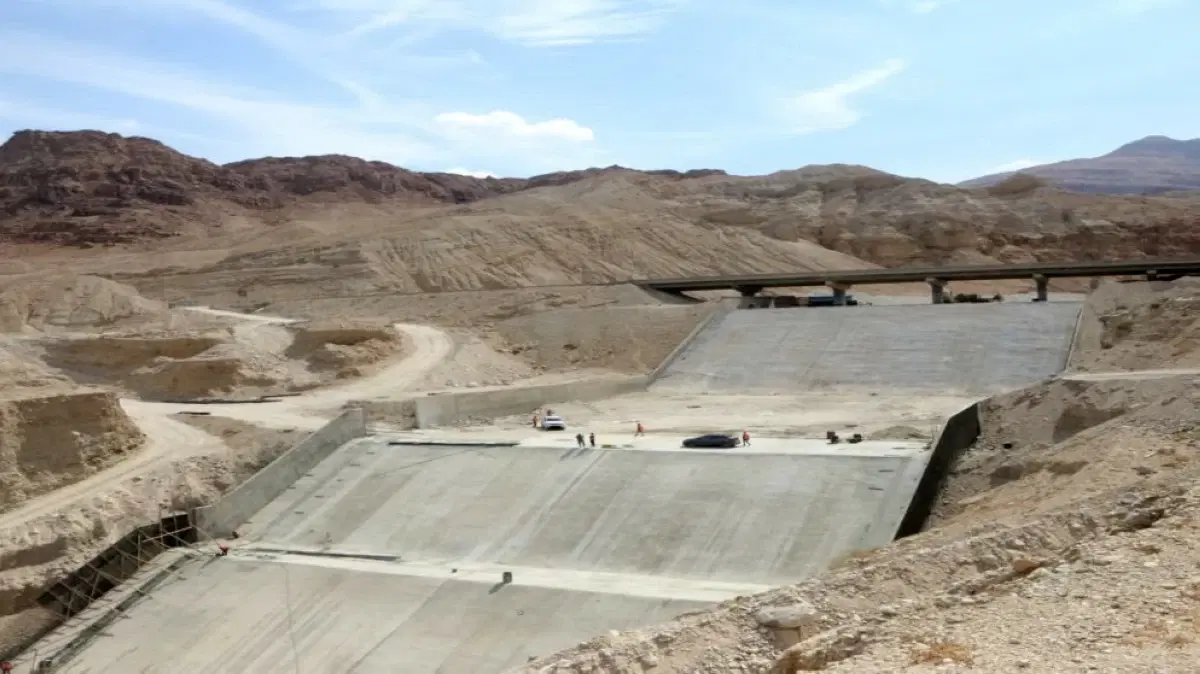
The Minister reviewed at Wadi Al-Shaqeeq bridge ("Bridge No. 8") the executed works, which included cleaning the wadi course, diverting it, completely removing the debris beneath the bridge, executing gabion works, treating the concrete slabs for the bridge course and outlet, in addition to replacing damaged expansion joints, which enhances the capability of the bridge and its related facilities to handle high water flows, as the completion rate reached about 95 percent.
Abu Al-Samam emphasized the necessity of preserving roads and their affiliated facilities, and enhancing monitoring to curb practices and violations that cause damage to the infrastructure and affect the operational life of roads, stressing the need to review traffic safety elements and maintain them periodically and continuously.
In the Southern Jordan Valley, the Minister inspected the Al-Samar culvert and the ongoing construction works in it, aimed at maintaining the smoothness of the natural wadi course and raising its capacity to absorb water quantities and torrents formed as a result of rain before the beginning of the rainy season, where the completion rate in the project reached about 80 percent.
Abu Al-Samam also followed up on the progress of work in the Kathraba road construction project, within the tender for maintaining a number of roads in the southern region, where the completion rate in the project reached about 65 percent, directing to continue work according to the schedule and approved technical specifications.
He was briefed on the ongoing maintenance works on the Mujib bridge, which include asphalt layer scraping and asphalt mix implementation, and traffic safety works such as paint and road studs, contributing to raising the efficiency of the road surface and enhancing traffic safety for its users.
The tour also included the King's Highway: "Karak - Tafilah", where he reviewed the works carried out by the ministry to address the damage sustained by the road as a result of the depression that affected the Kingdom at the beginning of this year, which included the implementation of retaining walls, concrete protections, and treating damaged sites.
At the end of the tour, Abu Al-Samam stressed the importance of continuous field follow-up for projects under implementation, adherence to technical specifications and specified time schedules, periodically reviewing roads, bridges, water facilities, and traffic safety elements, and addressing remarks first-hand, to ensure the sustainability of the road network, maintain its efficiency, and the safety of its users.