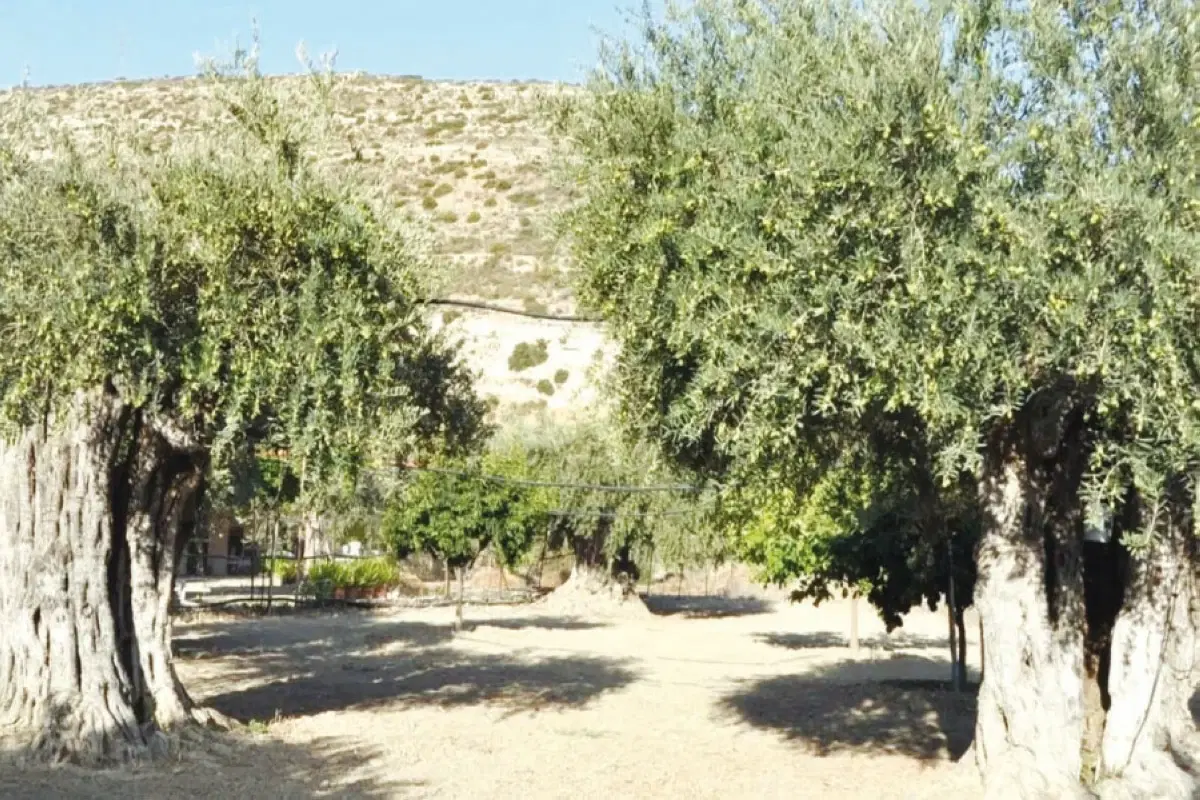
60 thousand tons is Irbid's expected olive production
Harvesting, pressing, and transportation wages boost the governorate's economy
Amman3 min read
Share
The economic feasibility of the olive season in Irbid Governorate constitutes the main lifeline driving commercial and service activity in the north of the Kingdom; with the launch of harvesting and pressing operations, which last for about 60 working days, an integrated economic wheel moves, with direct and indirect values exceeding tens of millions of dinars, extending its financial impact and nourishing the livelihoods of families and supporting sectors throughout the year.
The Director of Agriculture of Irbid Governorate, Dr. Abdul Hafez Abu Orabi, revealed the digital reading and comprehensive economic analysis of the blessed season's outputs, confirming that the olive sector represents an investment pillar and food and social security that casts its positive shadow over the entire governorate.
He explained that the area planted with the blessed trees in the governorate reaches about 200 thousand dunums, with a density of about 15 trees per dunum, noting that official estimates show that the governorate's production of fruit will record 60 thousand tons this season. He indicated that the investment and manufacturing benefits of these quantities are distributed such that 25% of the total fruit is set aside for pickling purposes, while 75% of the fruit—approximately 45 thousand tons—is directed to presses for oil extraction, where it is expected to produce about 12 thousand tons of pure oil.
Abu Orabi pointed out that the operational feasibility of the season reflects a huge investment volume, during which the sector absorbs about 10 thousand daily workers working over two months, as the value of cash liquidity circulating in wages and services exceeds tens of millions. By calculating the average harvesting wage at 20 piasters per kilogram, the total value of "picking" wages reaches about 11 million dinars.
The total pressing fees for the mills also amount to 8.4 million dinars, of which about 2 million dinars are spent as salaries and wages for operational labor inside the mills. This cycle is completed by stimulating the transport sector with wages reaching 1.2 million dinars for transporting fruit and products, in addition to reviving the movement of tin container factories by providing 750 thousand tins worth 1.875 million dinars (at two and a half dinars per tin), in parallel with the noticeable activity in operating water tankers and service and maintenance networks.
Dr. Abu Orabi confirmed that the economic return of the olive tree also extends to manufacturing industries and alternative energies, as the "pomace" resulting from pressing constitutes about 40% of the weight of the pressed fruit (out of 45 thousand tons of fruit directed for pressing). This provides huge quantities that are utilized as a primary source for heating, biofuel, and operating pressing factories, so that the economic cycle of the sector continues and ensures the sustainability of the financial return to the governorate throughout the year.