Yemen: Escalation in Taiz and Hodeida, airstrikes in 4 governorates, and displacement of 12,000 families
Anadolu6 min read
Share
Yemeni fronts witnessed a military escalation on Tuesday, marked by aerial bombardment concentrated in the governorates of Taiz and Hodeida, reaching the areas of Dhu Bab and Al-Mandeb, coinciding with the displacement of more than 12,000 families in 6 governorates during the recent escalation, and warnings of exhausting the health system "to a point where recovery is difficult".
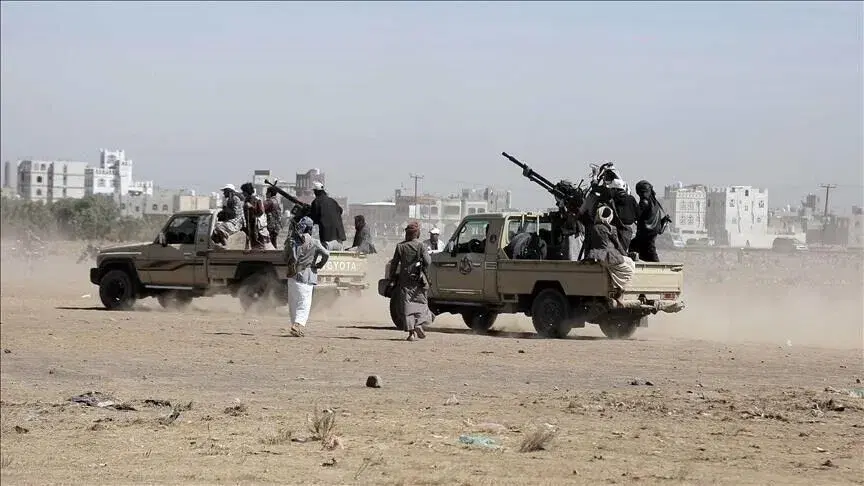
The escalation in Taiz, near the Bab al-Mandeb Strait in western Yemen, included mutual attacks between government forces and the Houthi group, resulting in a number of deaths and injuries, according to the group, following a relative calm in the governorate.
Meanwhile, the Houthi group reported 52 airstrikes targeting sites in the governorates of Al-Jawf, Al-Bayda, Sa'ada, and Amran over the past 24 hours.
In the meantime, Tuesday saw calm in the governorates of Marib (central) and Al-Jawf (northern), with no significant escalation observed, according to Anadolu Agency.
The control map in Yemen has recently witnessed significant field changes, with the Houthis advancing on the western coast and taking control of directorates and strategic sites in the governorates of Hodeida and Taiz, in addition to islands in the Red Sea, including Mayun located in the Bab al-Mandeb Strait.
Conversely, government forces have made progress in Al-Jawf governorate towards the city of Hazm, the center of the province, while confrontations continue on the fronts of Marib, Al-Dhale', and Al-Bayda, alongside government airstrikes targeting Houthi sites and movements in Al-Mokha and its vicinity, Taiz, Lahij, and Al-Dhale'.
For his part, Houthi military spokesman Yahya Saree, in a statement on Tuesday, reported 52 airstrikes targeting sites in the governorates of Al-Jawf, Al-Bayda, Sa'ada, and Amran over the past 24 hours.
The Al-Masirah satellite channel, the mouthpiece of the Houthi group, briefly reported on Tuesday that Saudi Arabia targeted the government complex in the directorate of Khader, under the control of the group, in Taiz governorate.
It reported news of casualties due to the airstrikes, without details.
For its part, the Ministry of Health in the Houthi government (not recognized) stated in a statement on Tuesday that 3 people were killed by airstrikes on the directorates of Dhu Bab and Muqbana in Taiz governorate.
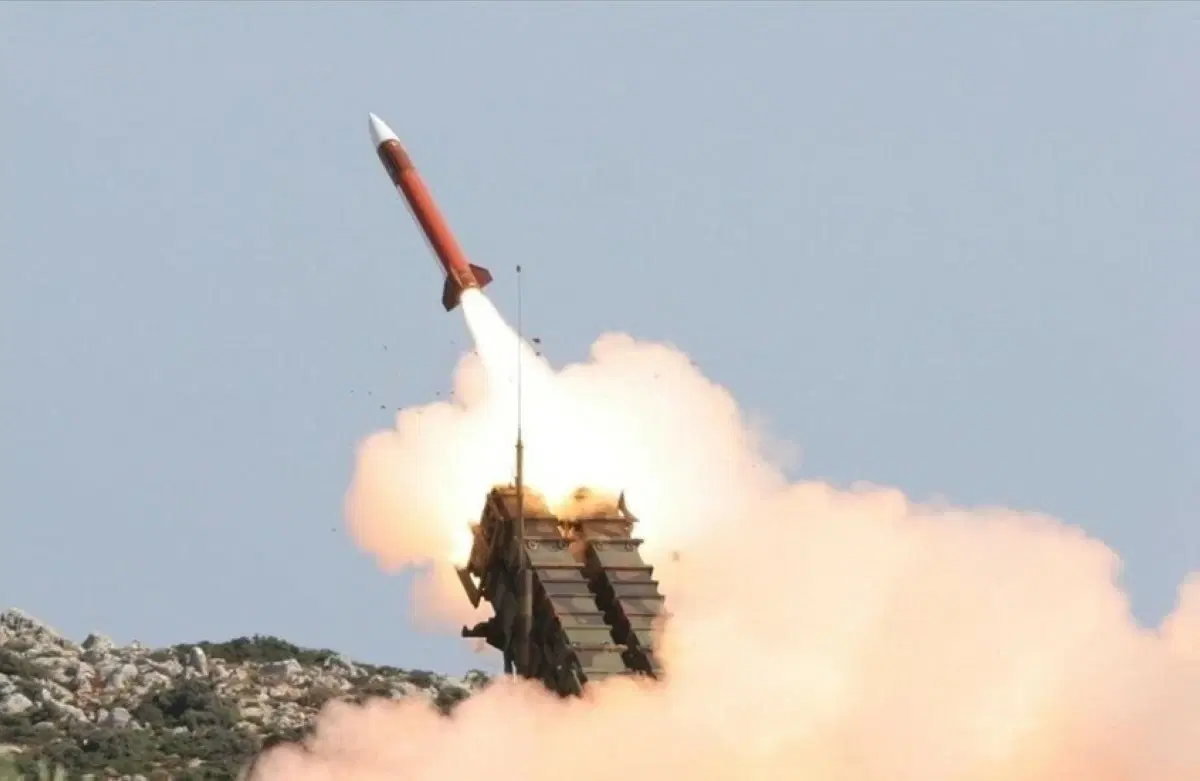
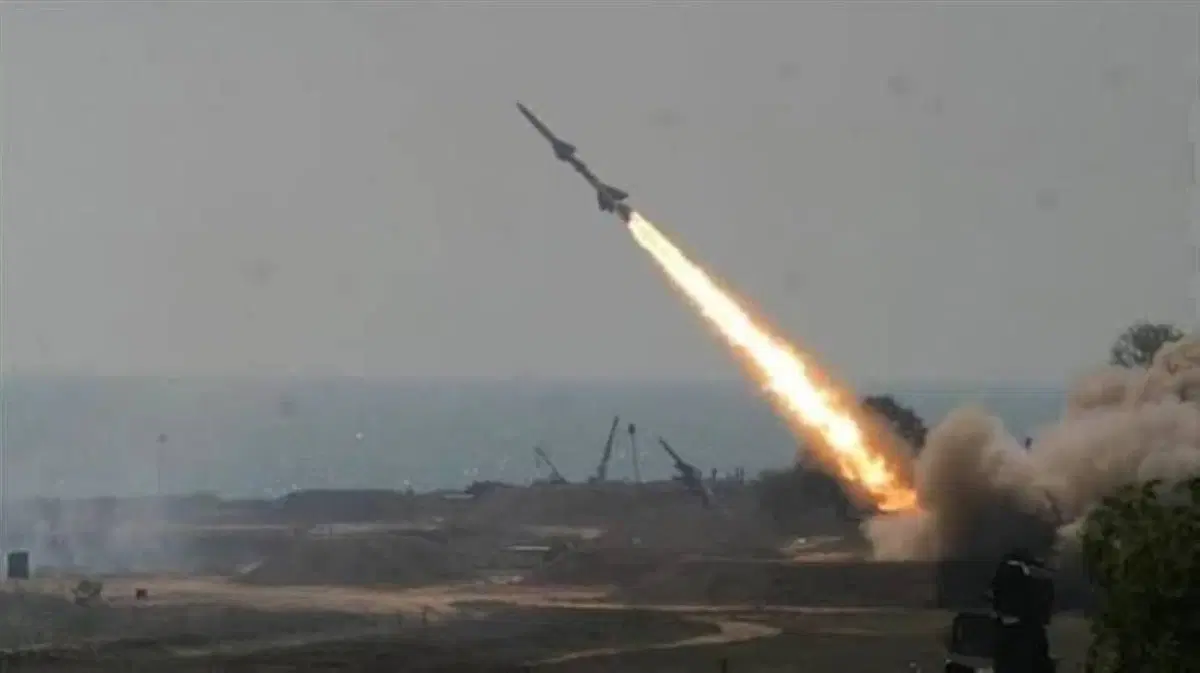
In the latest developments, the Yemeni army announced on Tuesday that its warplanes targeted a ballistic missile launch platform of the Houthis at Taiz Airport in the southwestern part of the country.
This came in a statement by the Taiz Military Axis affiliated with the army, published on its account on the American platform "X"
The statement did not provide details about the results of the bombing, and the Houthis did not issue an immediate comment.
Taiz Airport was one of the most important Yemeni airports before the war, but it has been out of operation since 2015 due to the conflict between government forces and the Houthis.
In the context, the spokesman for the government's "Giant Brigades" Aqeel Al-Saqladi announced the execution of "airstrikes on the Houthis in the areas of Hays, Al-Mokha, Dhu Bab, and Al-Mandeb in western Yemen"
While the Yemeni Armed Forces Media Center stated in a statement on Tuesday that the air force targeted Houthi supplies and sites in the areas of Al-Mokha and Dhu Bab in Taiz governorate, and Al-Khawkha in Hodeida governorate in western Yemen.
The organization "Doctors Without Borders" warned on Tuesday that the ongoing fighting in Yemen could push the already exhausted health system in this country to "a point where recovery is difficult".
"Doctors Without Borders" said in a statement that the recent escalation in Yemen has led to "an increase in the number of wounded and pressure on a health system that is already suffering from exhaustion", coinciding with thousands of families being forced to leave their homes.
As an indication of the pressure, the Al-Jumhouriya Hospital in the temporary Yemeni capital of Aden received more than 60 wounded people due to the military escalation in the western coast since September 10, according to the organization.
The Yemeni government announced on Tuesday the registration of 12,597 families displaced in 6 governorates due to the recent wave of displacement resulting from the military escalation in the country, while the local authority in the temporary capital of Aden formed a humanitarian response cell to face the repercussions of the escalation.
Minister of Planning and International Cooperation Muhammad Al-Baqmi said during a meeting with Foreign Minister Afrah Al-Zoubah and representatives of the United Nations and international and non-governmental organizations that 12,597 families in 6 governorates were displaced during the recent escalation.
He added that these families face urgent needs in shelter, food, safe water, health care, and protection services.
The local authority in Aden governorate also announced that Governor Abdul Rahman Sheikh issued a decision to form a humanitarian response cell to face the needs resulting from the military escalation and waves of displacement heading to the city.
In the temporary capital of Aden, the Yemeni Prime Minister Shami Al-Zandani reviewed, on Tuesday, with the Deputy Speaker of the House of Representatives Muhammad Al-Shadidi, the developments of the Houthi military escalation, and the coordination between the executive and legislative authorities to "unify the national position and strengthen the cohesion of state institutions in the face of current developments".
The meeting discussed "Houthi violations against civilians and displaced people, the necessity of conveying their truth to the international community and holding it responsible for these crimes, in addition to the priority of supporting the fronts, and caring for the displaced and affected people", according to the government agency "Saba"
Earlier, the United Nations announced late on Monday that 125,000 people had been displaced due to the escalation in Yemen since the beginning of September.
Confrontations between government forces and the Houthis have escalated since the beginning of July 2026, after years of relative calm.
Yemen has been witnessing a war since the Houthis took control of the capital Sanaa and several governorates in September 2014, before the intervention of a Saudi-led Arab coalition in March 2015 in support of the internationally recognized Yemeni government.