Yemen.. Continued escalation amid intensive raids, and the government says the battle is not decided
Anadolu10 min read
Share
Military escalation between Yemeni government forces and the Houthi group continued on Saturday on several fronts in the country, coinciding with an increase in the pace of airstrikes on Houthi sites and gatherings.
The escalation comes after days of rapid field changes on the West Coast, during which the Houthi group announced it had made progress and taken control of a number of areas, including the city of Mocha in western Yemen and its port, while the Yemeni government confirmed that recent developments do not mean the battle has been decided, and that it is working to reorganize its efforts and regain the initiative.
These developments coincided with human rights reports of hundreds of violations against civilians in areas that witnessed a change in control, in addition to civilian casualties during waves of displacement from conflict zones.
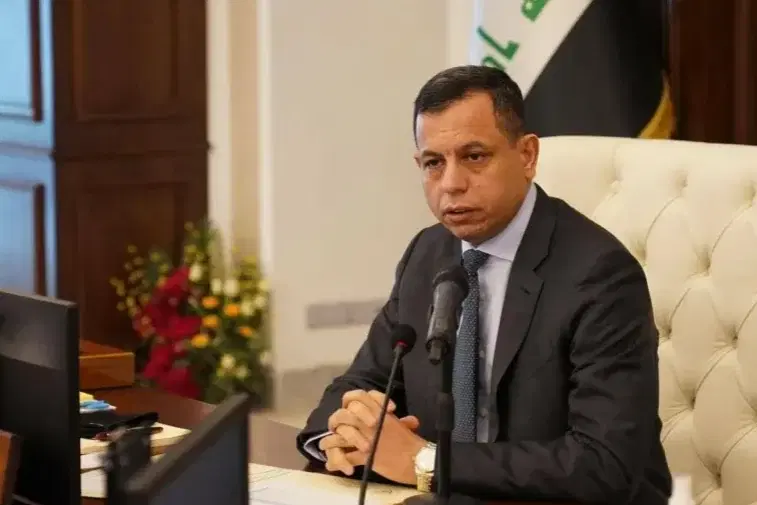
Yemeni Prime Minister Shayea Al-Zandani said on Saturday that the difficult field developments witnessed by the country over the past few days "do not mean the end of the confrontation or the determination of its course."
Al-Zandani's statements came on the sidelines of a Cabinet meeting held in the interim capital, Aden, to discuss the repercussions of the Houthi escalation, according to the official Yemeni news agency "Saba".
Al-Zandani emphasized that "battles are not measured by the result of a single day or a change in a location, but rather by the state's ability to reorganize its efforts, mobilize its resources, support its forces, maintain the cohesion of its institutions, and regain the initiative."
He stressed that the Houthi escalation, despite its seriousness, "will not turn into confusion in the state's work or a vacuum that the Houthi militia and those behind it can exploit."
He explained that the government is not dealing with the developments from the military side only, but is also working to protect citizens, maintain basic services, secure their needs, and deal with the economic and humanitarian effects of the escalation.
He said that the government "is present alongside the citizens and among them, working around the clock and fulfilling its responsibility," reassuring Yemenis in various governorates that their security and safety are its top priorities.
He added that "the Houthi escalation is broad and dangerous, and its dimensions go beyond the Yemeni arena and are connected, according to him, to an "Iranian agenda that uses Yemen and its strategic location to threaten the security of the region and international navigation."
He continued that "the government's responsibility is to manage this phase with the mind of the state, away from exaggeration, denial, or leaving room for rumors and inaccurate estimates."
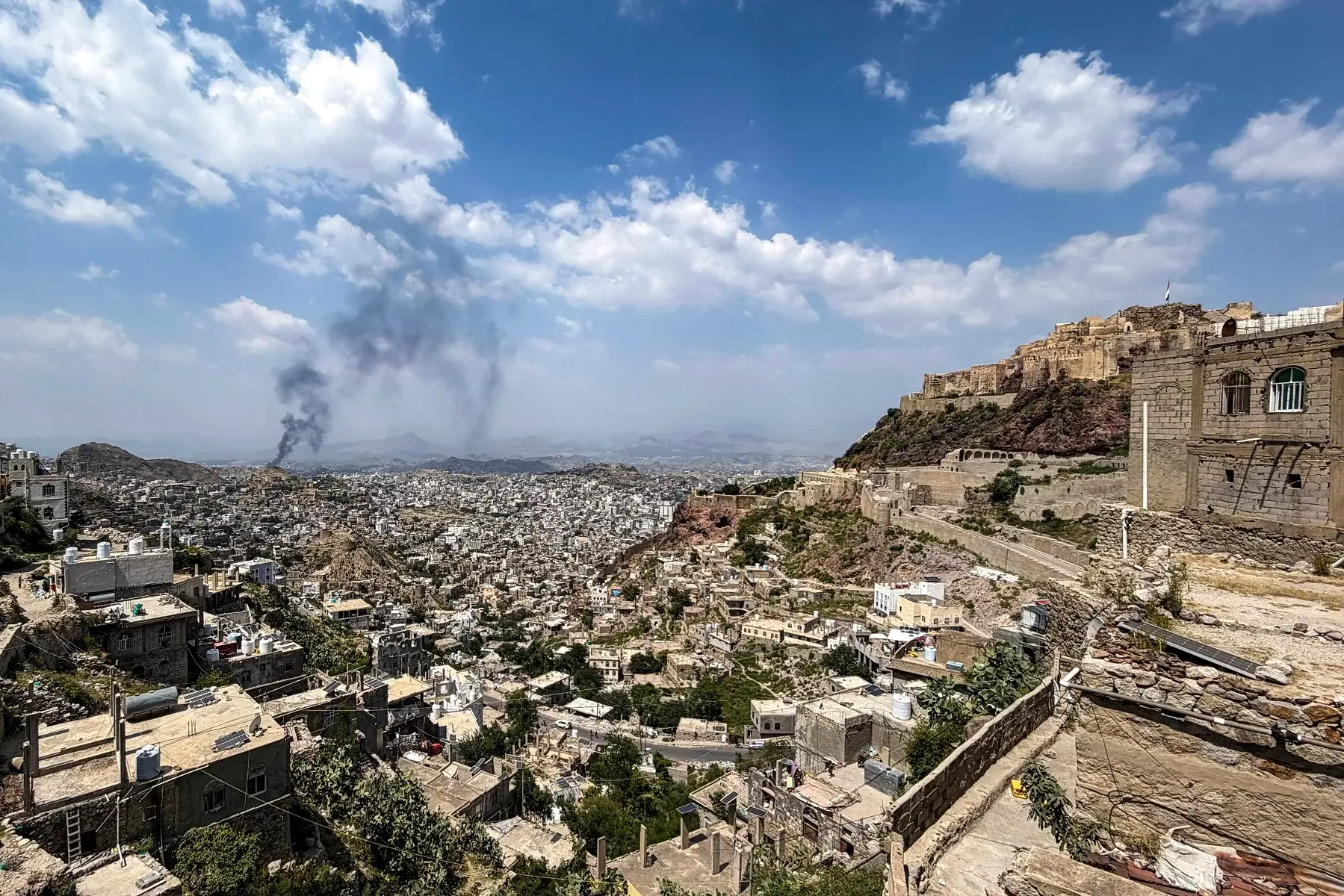
Militarily, the Yemeni army announced on Saturday that its warplanes targeted dozens of trucks belonging to the Houthis, explaining that they were loaded with weapons, military ammunition, and missiles, and were on their way from Taiz Governorate to the capital, Sanaa, which is controlled by the group in the north of the country.
This came in a statement issued by the "Taiz Axis" of the Yemeni army, which it published on its Facebook page.
The statement said that "warplanes are targeting dozens of Houthi tankers (large transport trucks) loaded with weapons, ammunition, missiles, and equipment on the Sixty Street north of Taiz, which were heading from (the city of) Mocha to Sanaa."
There was no immediate comment from the Houthis regarding this matter.
These strikes come a day after the Houthis announced they had advanced in the west of Taiz Governorate and taken control of the city of Mocha and its port overlooking the Red Sea, a military development that brought the West Coast back to the forefront of the field scene.
The Yemeni army announced following that the start of shelling areas located within what it called the "killing box," which includes the city of Mocha and its surroundings, calling on civilians to avoid using a number of roads until further notice.
In the center of the country, the Yemeni army announced on Saturday that it had inflicted heavy losses on the Houthis as a result of more than 20 raids it launched on several districts in Al-Bayda Governorate, in the center of the country.
The army said in a statement that more than 20 airstrikes targeted Houthi sites, gatherings, vehicles, missile platforms, and a communications system in Al-Bayda Governorate.
It explained that the raids were concentrated in the districts of Al-Zahir, Dhi Na'im, Al-Sawadiyah, and Mukayras, and inflicted "heavy losses" on the Houthis.
Al-Bayda is considered one of Yemen's most important governorates, as it shares borders with 8 Yemeni governorates, and the Houthi group controls most of the governorate.
For its part, the Houthi group in Yemen said on Saturday that 7 governorates were subjected to 129 airstrikes during the past 48 hours, vowing to respond to them.
This came in a statement by the group's military spokesman, Yahya Saree.
Saree said that the raids were distributed across the governorates of Taiz (southwest), Marib (east), Hodeidah (west), Al-Jawf (northeast), Saada (north), Amran (north), and Hajjah (northwest).
Saree vowed to respond to the raids, saying that "these attacks on our people will not pass without a response and punishment."
Saree claimed that those raids were carried out by "Saudi planes."
Saudi Arabia confirms that it has no forces inside Yemen, and that its role is limited to supporting the legitimate government forces and securing its borders.
On the humanitarian front, the Yemeni Network for Rights and Freedoms announced on Saturday that it had documented 958 crimes and violations committed by the Houthi group in the governorates of Taiz and Hodeidah in the west of the country since September 3.
The non-governmental network stated in a statement that it had documented "during the period from September 3 to 11, 958 crimes and violations committed by the Houthi group in the districts of Hays and Al-Khokha in Hodeidah Governorate, and the districts of Al-Wazi'iyah, Mawza, Mocha, and Dhubab in Taiz Governorate," which are the districts that matching media and Houthi sources stated the group had taken control of in recent days.
There was no immediate comment from the Houthi group on the human rights organization's statement, although the group has tried in recent days to send reassuring messages to the residents of the districts it has taken control of.
The human rights network's statement added that "Houthi violations included killing, injury, arrest, kidnapping, raids, and looting that affected civilians, their property, and civilian facilities."
The statement explained that "these violations came in light of a broad military escalation and excessive use of force and targeting of populated areas, villages, and neighborhoods, which resulted in deaths and injuries among civilians, field executions, arrests, kidnappings, and enforced disappearances, in addition to waves of mass displacement and raids, looting, and confiscation of civilian and humanitarian property and facilities."
The statement pointed out that the network documented among these violations "177 direct murder crimes against civilians, including women and children, in addition to field executions of wounded personnel belonging to the armed forces."
The network also documented "the injury of 212 people by Houthi fire, including children and women who suffered wounds of varying severity, while about 39 wounded are still missing, and it is feared that they are victims of enforced disappearance after being kidnapped from medical facilities," according to the statement.
The network indicated that it also recorded "about 213 crimes of arrest and kidnapping against civilians in the West Coast areas, coinciding with raid campaigns and the deployment of security barriers and checkpoints established by Houthi militias at the entrances and exits of the cities and areas they took control of."
The statement also reported that it was documented that "356 facilities and homes were subjected to storming, raiding, and looting, including 11 government facilities, and 37 homes were completely looted and 282 homes were partially looted, in addition to the looting of 30 cars belonging to civilians and 17 motorcycles."
Regarding civilian casualties, 3 members of one family, including two children, were killed and 3 others were injured by Houthi group gunfire while they were fleeing from Hodeidah Governorate in western Yemen towards the city of Aden in the south of the country, according to Yemeni media on Saturday.
The independent "Al-Masdar Online" website quoted local residents as saying that "the child Akram Abdulghani Razzah and his sister Marina, and their grandfather Hassan Abdo Saleh, were killed by Houthi gunfire," while their mother and her two other children, Manal and Khalil, were injured.
The website added that the family was on its way to the city of Aden when it was fired upon in the Hays district, south of Hodeidah Governorate, without providing details about the circumstances of the incident.
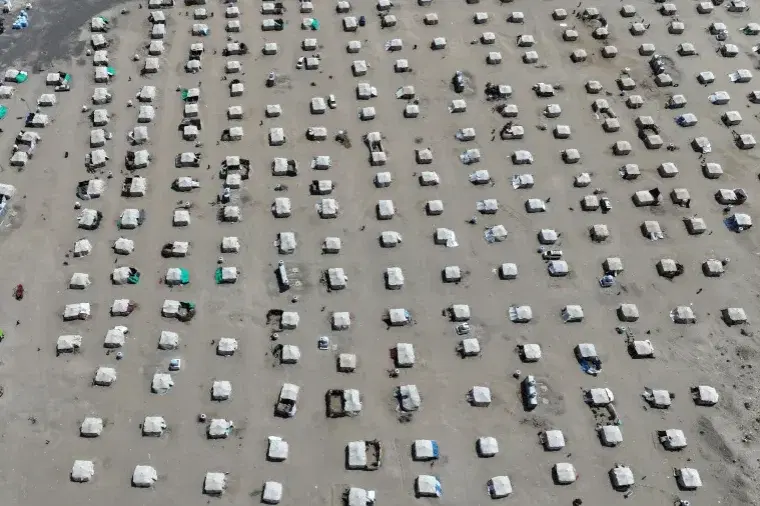
The incident comes at a time when the West Coast areas are witnessing waves of displacement of residents, in the wake of military operations and rapid changes in field control.
In another development, the head of the Houthi-affiliated Prisoners' Affairs Committee in Yemen, Abdul Qader Al-Murtada, said on Saturday that his group had received 210 prisoners after their release from prisons on the West Coast, following the military progress achieved by the group in the region in recent days.
Al-Murtada said, in a press conference whose text was published by the Houthi-affiliated "Al-Masirah" channel, that his group had received 210 prisoners who were "liberated" from prisons he claimed belonged to Saudi Arabia on the West Coast.
He added that "the prisoners were among those who had been agreed upon to be exchanged in the last agreement, in which the enemy was intransigent and caused the failure of that deal," according to his claim.
He also spoke about the issuance of "death and prison sentences" against a number of them.
There was no immediate comment from the Yemeni government regarding what Al-Murtada mentioned.
On May 14, the Yemeni government and the Houthi group signed an agreement in the Jordanian capital, Amman, to release about 1,700 detainees from both sides, following three months of consultations. However, its implementation stalled amid mutual accusations regarding responsibility for the delay.
The map of control in Yemen has witnessed significant changes in recent days, as the Houthis announced the seizure of several districts in the governorates of Hodeidah and Taiz in the West Coast region, in addition to islands in the Red Sea, including Mayun Island located in the Bab al-Mandab Strait, which effectively means control over the strait, one of the most important maritime passages in the world.
According to consistent media and Houthi sources, these districts included Hays and Al-Khokha in Hodeidah governorate, and Al-Wazi'iyah, Mawza, Al-Mukha, Dhubab, and the remainder of Maqbanah district in Taiz governorate.
In contrast, Yemeni government forces announced they had made progress in Al-Jawf governorate, which borders Saudi Arabia, and were approaching the city of Al-Hazm, the provincial capital.
They also reported launching airstrikes on Houthi targets in Al-Mukha and its surroundings, as well as areas in the governorates of Taiz, Lahj, and Al-Dhale, stating that they destroyed military vehicles and weapons, in addition to repelling a major attack on Marib.
Clashes between government forces and the Houthis have escalated since the beginning of July 2026, following years of relative calm.
Yemen has been witnessing a war since the Houthis took control of the capital, Sanaa, and several governorates in September 2014, before an Arab coalition led by Saudi Arabia intervened in March 2015 to support the internationally recognized Yemeni government.