
$42.4 million in funding requirements for the program for the next six months
510,000 students benefit from the school feeding program in refugee camps and host communities
Follow Al Rai

$42.4 million in funding requirements for the program for the next six months
510,000 students benefit from the school feeding program in refugee camps and host communities
230,000 Syrian refugees returned to Syria between December 2024 and September 2026
329,700 Syrian refugees registered with the UNHCR in Jordan as of September 2026
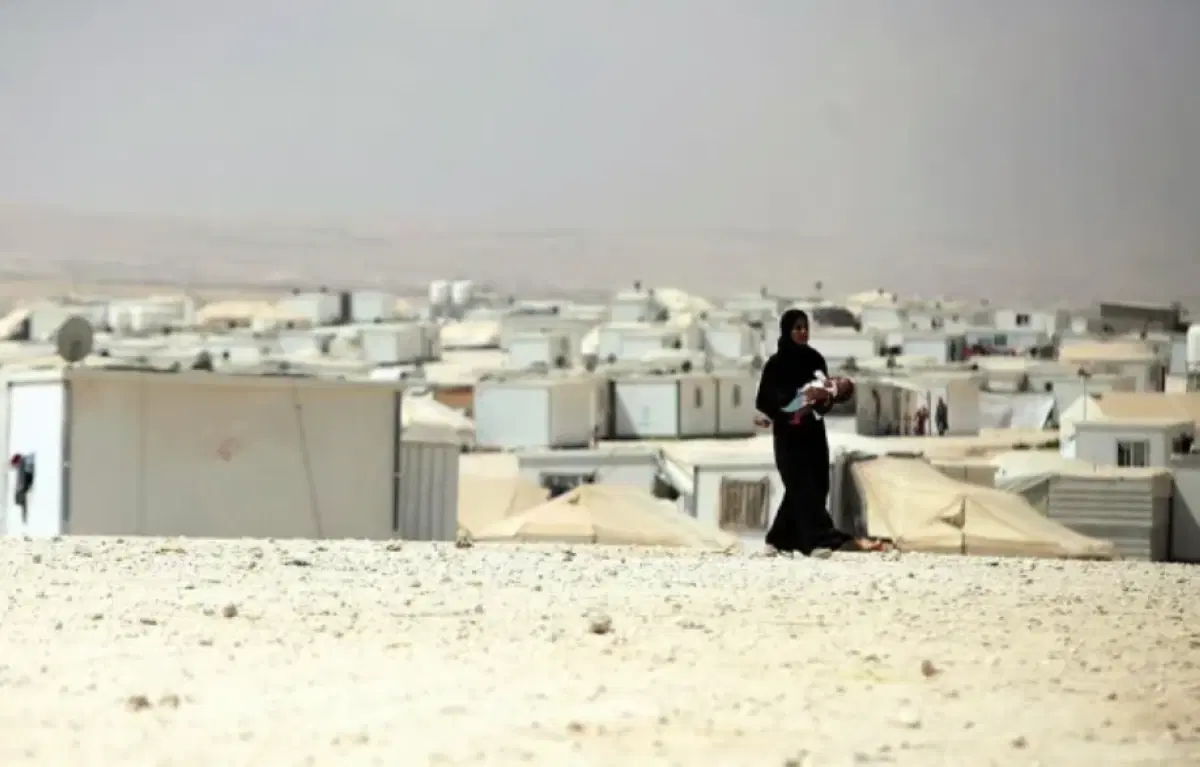
A report by the World Food Programme revealed that the program provided food assistance to about 78,000 refugees in camps in the Kingdom during last September, at a reduced amount of $21, equivalent to 15 Jordanian Dinars per person per month, in light of the funding challenges facing its operations.
According to the report, the current value of the assistance covers only a portion of the beneficiaries' food needs, while the program transferred cash assistance worth $1.2 million during September 2026.
The report explained that the program has begun preparations to temporarily resume monthly assistance, starting from October, to a specific group of the most vulnerable refugee families in host communities, after suspending cash assistance for this category for six months due to a severe funding shortage.
It indicated that the refugees who will be included in the assistance in host communities, along with those residing in the Zaatari and Azraq camps, will receive assistance at the current reduced value of $21, or 15 Jordanian Dinars per person per month.
The report stated that the net funding requirements for the program over the next six months, from October 2026 to March 2027, amount to $42.4 million.
In the education sector, the World Food Programme, in cooperation with the Ministry of Education, resumed the school feeding program with the start of the new academic year, reaching 510,000 students in refugee camps and host communities by providing healthy meals and fortified date bars.
Within the framework of supporting livelihoods and enhancing community resilience, the program continued to provide vocational and technical training in the Azraq and Zaatari camps, where preparations have been completed for the third cohort, which includes 249 participants registered for vocational training in the two camps.
Work is also underway to provide training, post-training pathways, and referrals for 600 participants in host communities, distributed across four governorates.
In the field of food security, the program, in partnership with the Higher Council for Food Security, supported the launch of the first national campaign in Jordan to raise awareness about food waste, under the slogan "Value it, Don't Waste it," aimed at promoting responsible consumption and reducing food waste across the Kingdom.
The report explained that the campaign is based on the results of a national food waste study conducted by the Higher Council for Food Security and the Department of Statistics, and aims to bring about behavioral change and raise awareness of the economic, social, and environmental impacts of food waste.
Know more about this story?Send us a tip
Ask about this report — answers stay grounded in its text.




