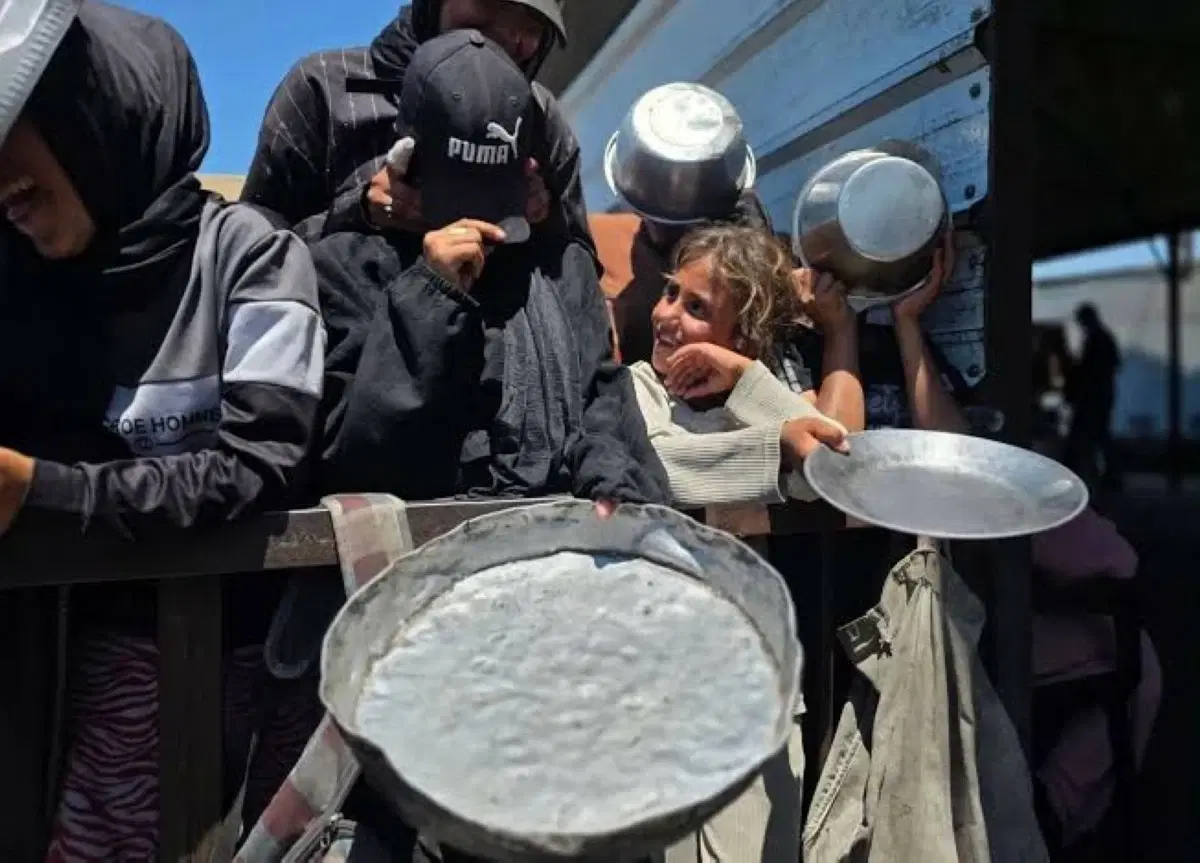
The United Nations World Food Programme (WFP) announced its decision to suspend monthly assistance to 500,000 people in Gaza due to a lack of funding, even though needs remain high in the devastated strip.
Consequently, 1.1 million Palestinians in Gaza, or about half the population, will receive either food or cash assistance from the UN agency in reduced quantities.
The WFP stated that its efforts mitigated the effects of the famine witnessed in Gaza last year, a characterization of the situation that Israel disputes. It warned that conditions have not improved to the extent that would allow for the cessation of aid.
WFP Country Director for the Palestinian territories, Shaun Hughes, stated: "People are not safe... airstrikes continue on a daily basis... people continue to be displaced."
Speaking from the UN agency's office in occupied East Jerusalem, he added: "Almost everyone is still without a permanent home they can live in, and humanitarian conditions are dire."
The latest assessments indicate that 1.4 million people, equivalent to about two-thirds of Gaza's population, still suffer from "acute food insecurity" and require humanitarian aid to survive.
In August of last year, the UN's Integrated Food Security Phase Classification (IPC) reported that Gaza was suffering from famine conditions, a claim described as false by Israel, which has been besieging and attacking the strip since the Hamas attack on October 7, 2023.
The famine classification was lifted in December, two months after a US-brokered ceasefire was announced in Gaza. However, Israel has continued to bomb Gaza since then, vowing to kill anyone involved in the October 7 attack.
Since the ceasefire, the WFP has been able to scale up aid, which has been reaching between 1.5 and 1.8 million people per month.
Hughes said, "That was a lifeline. But now, instead of continuing and increasing this aid, we have to cut it... not because we lack the humanitarian access to deliver food, but because we do not have the funding."
In addition to reducing the number of people receiving aid, the WFP has also been forced to reduce the size of the rations.
The ration for families receiving food assistance is now limited to one food parcel instead of two, and a smaller bag of wheat flour, according to an operational note issued by the WFP.
The 75,000 families receiving cash assistance will see a reduction in the amount provided to them (from $400 to $240) per month.
The WFP receives funding from governments and private donors. It has seen a significant decline in its resources, including following Donald Trump's return to power in the United States and his significant cuts to contributions allocated to UN agencies and bilateral aid.
The agency confirms it needs about $450 million over the next six months for its operations in Gaza and the West Bank, but in 2026, it has only received about half of the usual funding for the Palestinian territories.