West Bank camps under destruction and displacement
Amman5 min read
Share
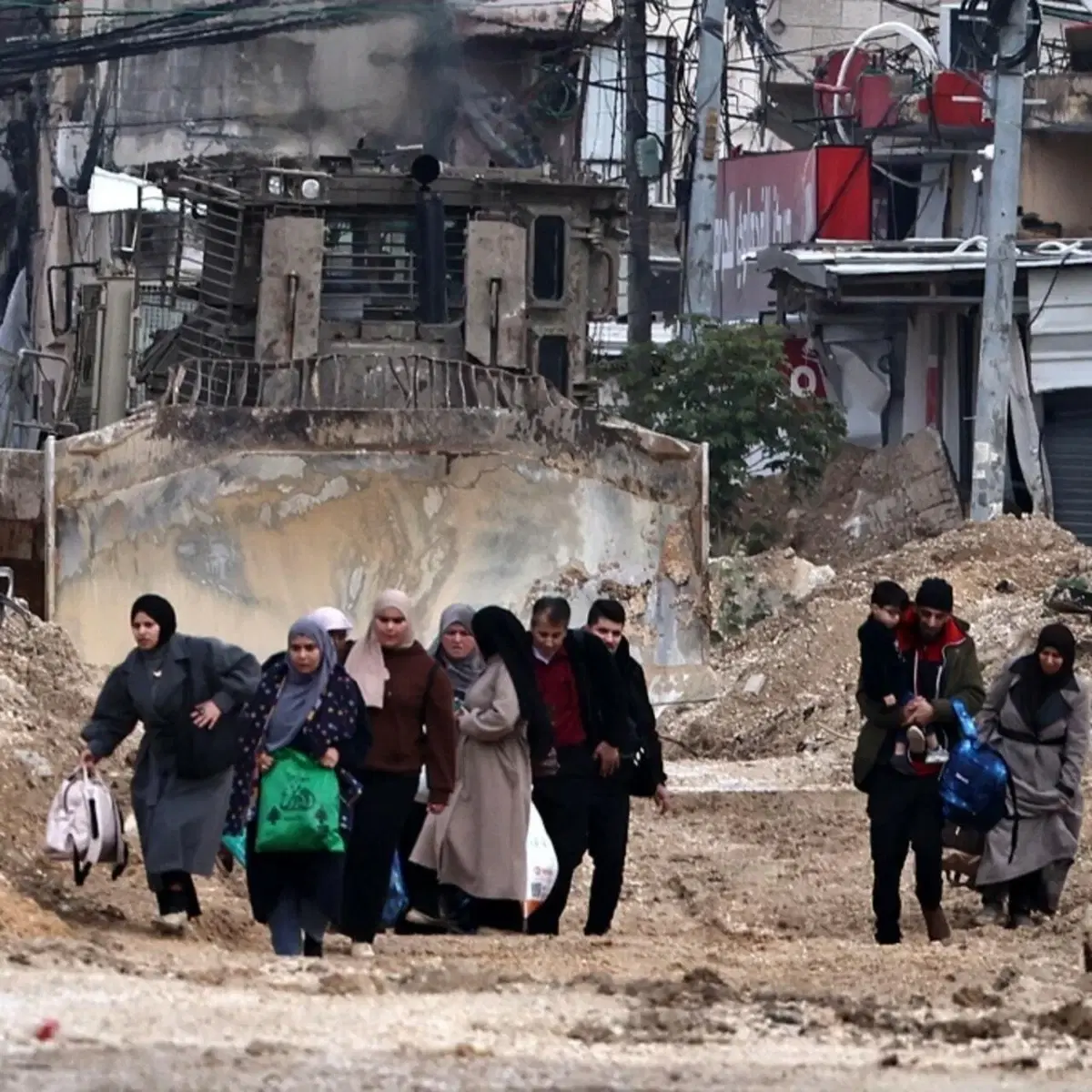
While the world's attention is focused on the Gaza Strip, operations to uproot Palestinian residents from their homes and camps continue in the occupied West Bank, in what the Israeli newspaper "Haaretz" described as ongoing mass displacement that does not receive sufficient attention from public opinion.
The newspaper stated, in an editorial published on its front page, that since the start of Operation "Iron Wall" in January 2025, more than 33,000 Palestinians have been forced to leave the Jenin, Tulkarm, and Nur Shams camps, and they remain prohibited from returning to their homes.
The occupation forces launched the operation in the Jenin camp in January 2025, then in the Nur Shams camp in February of the same year, under the pretext of targeting the infrastructure of armed groups. However, a report by the Office of the United Nations High Commissioner for Human Rights, issued in September 2026, indicated that Israeli forces had imposed control over the three camps and forced their residents to flee.
The displacement was accompanied by widespread destruction that affected homes, roads, and infrastructure. Data as of October 2025 showed that 52% of the buildings in the Jenin camp, 48% of the buildings in the Nur Shams camp, and 36% of the buildings in the Tulkarm camp were destroyed or damaged. The occupation forces used airstrikes, armored bulldozers, and controlled explosions, rendering large areas of the camps uninhabitable.
The measures included cutting off water and electricity and preventing the entry of humanitarian aid, at a time when the report documented the killing of 102 Palestinians, including 21 children, during the period it covers, representing 46% of the total Palestinian deaths in the West Bank during that period.
In February 2025, Israeli Defense Minister Israel Katz issued orders to the army to remain in the three camps, announcing that residents who were forced to flee would not be allowed to return. By July 2026, about 33,362 displaced persons from the three camps remained prohibited from returning, according to the United Nations Relief and Works Agency for Palestine Refugees (UNRWA).
Katz claimed that the camps had turned into "dens of terrorism" where armed groups operate, considering the continued Israeli military presence there necessary. He also spoke of about 40,000 Palestinians leaving the camps, claiming that the military operations contributed to reducing operations in the West Bank by 80%.
He revealed understandings with Prime Minister Benjamin Netanyahu to change the Israeli security concept in the West Bank, moving from a policy of frequent military incursions to permanent stationing inside the camps, in a move that reflects a trend toward entrenching the Israeli military presence there for long periods.
In contrast, "Haaretz" criticized what it described as the manipulation practiced by representatives of the settlement project regarding security considerations, confirming that these considerations do not exempt the state from its legal responsibilities toward the Palestinian population.
The report of the High Commissioner for Human Rights went further, as High Commissioner Volker Türk said that the way Operation "Iron Wall" was carried out raises concerns that its goal is to remove as many Palestinians as possible and make room for more illegal Israeli settlements.
The report warned that the unjustified destruction of homes, roads, and infrastructure, and the resulting changes in the urban and geographical planning of the camps, raise concerns about reshaping them in a way that consolidates the illegal Israeli presence in the West Bank and prolongs it.
It also pointed out that Israel links the return of residents to conditions related to the management of basic services, including preventing UNRWA from providing education and health services inside the three camps, and assigning these services to the Palestinian Authority, similar to what is happening in villages and towns that do not enjoy the status of camps.
The report believes that these measures may aim, within a broader context, to gradually undermine the status and identity of the Palestinian refugee, raising concerns about prejudice against the refugee issue and their rights.
The controversy over the continued prevention of residents from returning escalated after the Israeli Supreme Court issued a decision on October 11, 2026, in which it requested the state to provide a timetable for completing the necessary procedures for their return, and set November 23 as a deadline for a response.
The decision angered Finance Minister Bezalel Smotrich, who also serves as a minister in the Ministry of Defense, so he called on Netanyahu and Katz to issue instructions to the army not to cooperate with the court and not to allow the re-establishment of what he described as "terror camps."
For his part, Katz hinted at the possibility of resorting to the Knesset to enact special legislation that ensures the army's continued presence in the camps, in the event that judicial pressure to return the residents continues.
Haaretz considered that depriving residents of the possibility of returning constitutes forced displacement that falls under war crimes, in light of the continued prevention of tens of thousands of Palestinians from reclaiming their homes and lives in the camps.
Attempts to prevent UNRWA from continuing to provide its services in the camps, according to what was reported by "Haaretz," raise concerns that they are part of a broader effort to undermine the Palestinian refugee issue by targeting the institutions that provide them with services and are linked to the continued recognition of their status and rights.