US disappointment over lack of G20 consensus on combating overproduction
Amman2 min read
Share
The United States, as the current G20 president, expressed "deep disappointment" over the refusal of some member states this week to adopt a statement calling for action against excess industrial production capacity, according to a statement released Friday—a criticism typically targeting China.
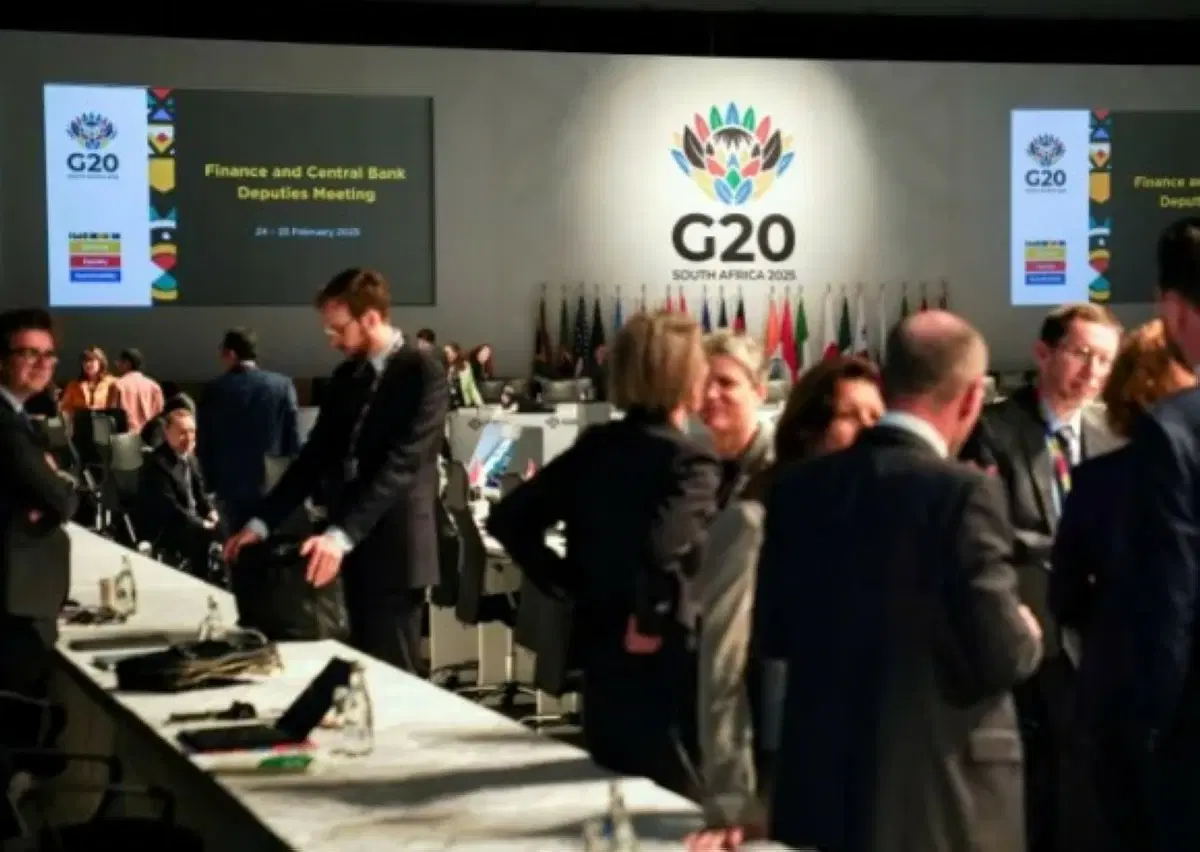
This year, the United States holds the rotating presidency of the G20, which comprises the world's major economies such as China, India, France, Germany, and Japan.
However, the group's trade ministers failed to reach an agreement to combat overproduction and forced labor, following two days of talks in Milwaukee.
US Trade Representative Jamieson Greer stated that a draft statement against excess capacity—which is viewed as a factor leading to unfairly lower costs—"had the support of all members except for a very few."
The draft calls on all countries to take action to eliminate excess production capacity in their economies, alongside taking other measures.
Greer did not specify which countries raised objections, but said in a statement issued Friday that "the US presidency felt deep disappointment over their refusal to approve the statement."
Last September, China had objected to wording in a statement by the group's finance ministers calling on members to "eliminate non-market policies."
Responding to a question on the matter on the sidelines of the G20 talks, Li Chenggang, China's international trade representative, limited his remarks to saying that the participating parties presented their differing viewpoints.
G20 members also failed to reach a unified stance on eliminating forced labor in supply chains, with only Mexico and Argentina joining the United States in issuing a statement on the matter.
Earlier this year, Washington had cited forced labor concerns to impose sweeping tariffs on dozens of economies, including G20 member states.
However, G20 trade ministers "agreed that trade in food and agricultural products should not be used as a tool for economic or political coercion," according to Greer's statement.