UN official: We must refocus on Gaza and the West Bank
Amman5 min read
Share
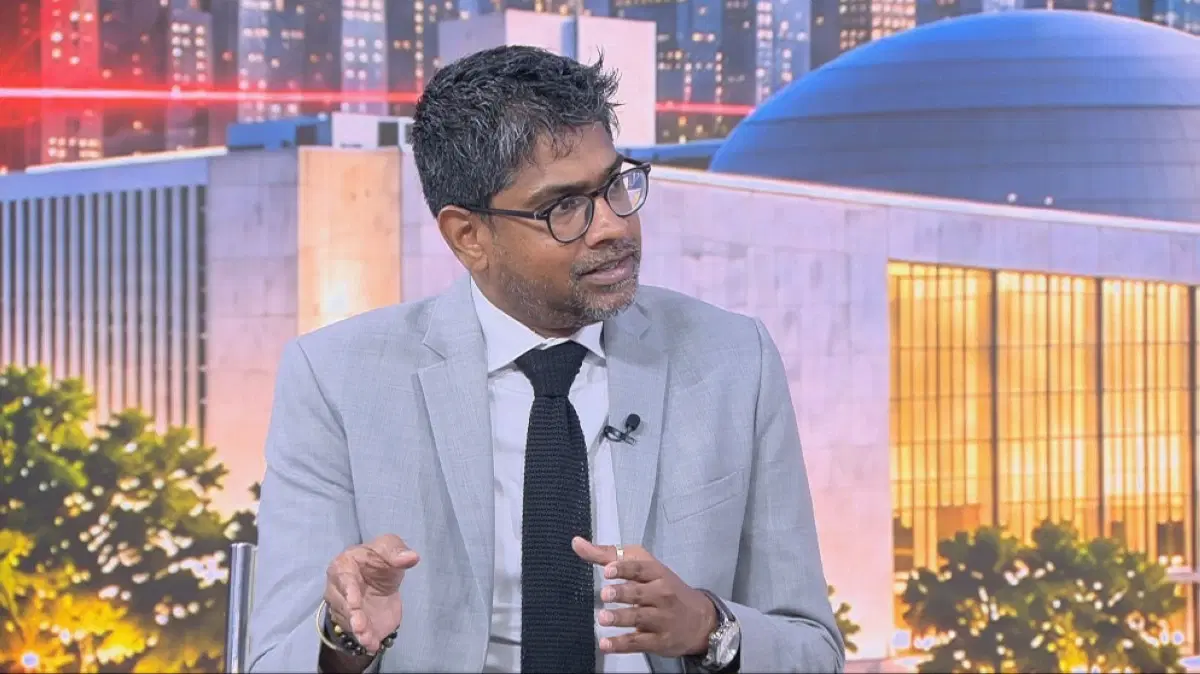
The head of the Office of the United Nations High Commissioner for Human Rights in the Occupied Palestinian Territory, Aajeet Singhai, said on Tuesday that the situation in the Gaza Strip and the West Bank is "very dangerous," calling on the international community to refocus its attention on the occupied Palestinian territories and take action to hold perpetrators of violations accountable.
Singhai added, during television coverage of the 81st session of the United Nations General Assembly, that Palestinians in the West Bank are being evicted from their lands daily, while homes are being demolished and Israeli settlements are expanding, pointing to the allocation of more resources to settlement expansion.
The general debate of the 81st session of the United Nations General Assembly began under the theme "Restoring Trust, Managing Transformation: United Nations for All."
He said that the term "ethnic cleansing" cannot be used frivolously, emphasizing the need to take seriously the statements made by Israeli officials, including Finance Ministers Betzalel Smotrich and Itamar Ben-Gvir, and Defense Minister Israel Katz, regarding the displacement of Palestinians.
Singhai stressed that undermining the importance of the establishment of a Palestinian state cannot continue, calling on the international community to take this matter seriously and act accordingly.
Regarding the use of legal terms to describe what is happening in the Palestinian territories, Singhai said that international law and international humanitarian law were created for a clear reason, pointing to the role of the International Committee of the Red Cross and international courts in applying the rules of international law.
He added that the UN High Commissioner for Human Rights described what is happening as "ethnic cleansing," noting that what is happening includes, according to UN reports, serious crimes, including war crimes and genocide.
Singhai said that one of the main problems in the international system is the lack of a military force for the United Nations, explaining that UN staff and civilians work on the ground to monitor, document, and try to protect Palestinians.
He added that the responsibility for taking action lies with the international community, including the General Assembly and the Security Council, noting that actions may include imposing sanctions and banning dealings with companies linked to settlements.
He continued that the lack of accountability for violations is one of the biggest problems in the Palestinian issue.
He said that blocking and preventing any form of accountability requires action from the Security Council and the Human Rights Council.
Singhai warned that the human rights system, international humanitarian law, and international multilateralism, which was formed after World War II, are facing a "great threat" as a result of their disrespect or non-implementation.
He said that the non-application of international rules may lead other countries to believe that similar acts can be committed without consequences, noting that the United Nations includes member states that have the ability to take action, along with civilian staff working on the ground who report and make recommendations.
He criticized the continued cooperation of some countries with Israel and the supply of weapons to it, saying that these weapons are "used against Palestinians," and called for an end to this.
He pointed out that the presence of a military peacekeeping force in the West Bank is possible, but requires the approval of the Security Council, adding that the United States has voted several times against such proposals.
Singhai said that there are hundreds of companies in Western countries with industries and partnerships linked to settlements, considering these activities to "strengthen and entrench the occupation" and benefit from natural resources.
He called on countries to take action against these companies, stop the supply of weapons that he said are used against Palestinian civilians in Gaza and the West Bank, and prevent the entry of goods made in settlements into the markets.
He considered that taking such measures would have economic repercussions on Israel, but said that it requires "political will" and "courage" from leaders to take steps that ensure respect for human rights and international humanitarian law.
He warned that failure to act to protect these principles and make changes in the international system could lead to more chaos in the world.
Regarding the work of the United Nations High Commissioner for Human Rights, Singhai said that he is in Jordan because Israel, "does not want" his presence in the Occupied Palestinian Territory.
He explained that the Commission has local staff working in the Gaza Strip and the West Bank, who are threatened, making it difficult to document crimes and violations.
He added that the Commission's teams are still in Gaza and the West Bank and are working to document violations, but the lack of international staff being allowed into Palestinian territories limits their ability to do their work.
He said that Israel is working to dismantle the mechanism of human rights and international humanitarian law by preventing the Commission's staff from performing their duties.