Milshtein believes that the Palestinian cause reveals, more than any other issue, the extent to which the Israelis' ability to read reality has been damaged since the October 7, 2023 attacks, and how addiction to illusions and slogans has replaced sober and deep thinking. The issue, according to his analysis, imposes fateful discussion and decisions, but at the same time, it has caused political damage to everyone who deals with it, which led many in the past, and still leads others today, to avoid confronting it.
He points out that this avoidance is taking place despite the conviction that the Palestinian cause represents the core of the conflict in the region, and that the absence of a solution to it makes achieving security and stability in the entire region extremely difficult.
Milshtein describes the current Israeli debate as taking place inside a closed bubble, in light of the continuing repercussions of the October 7 trauma, the conviction in the correctness of the Israeli path, and the belief that international criticism of Israel stems only from anti-Semitism and hypocrisy. As a result, many Israelis treat global public opinion as irrelevant, while the Palestinian position and the interests of the Palestinians are being almost completely ignored.
An analysis of the positions of Israeli parties on the Palestinian cause, according to Milshtein, reveals a shift in the nature of political thinking, which has become governed by factional affiliations and devoid of the fundamental questions that should have been asked, in a repetition of the manifestations of the dysfunction that preceded the October 7 attacks.
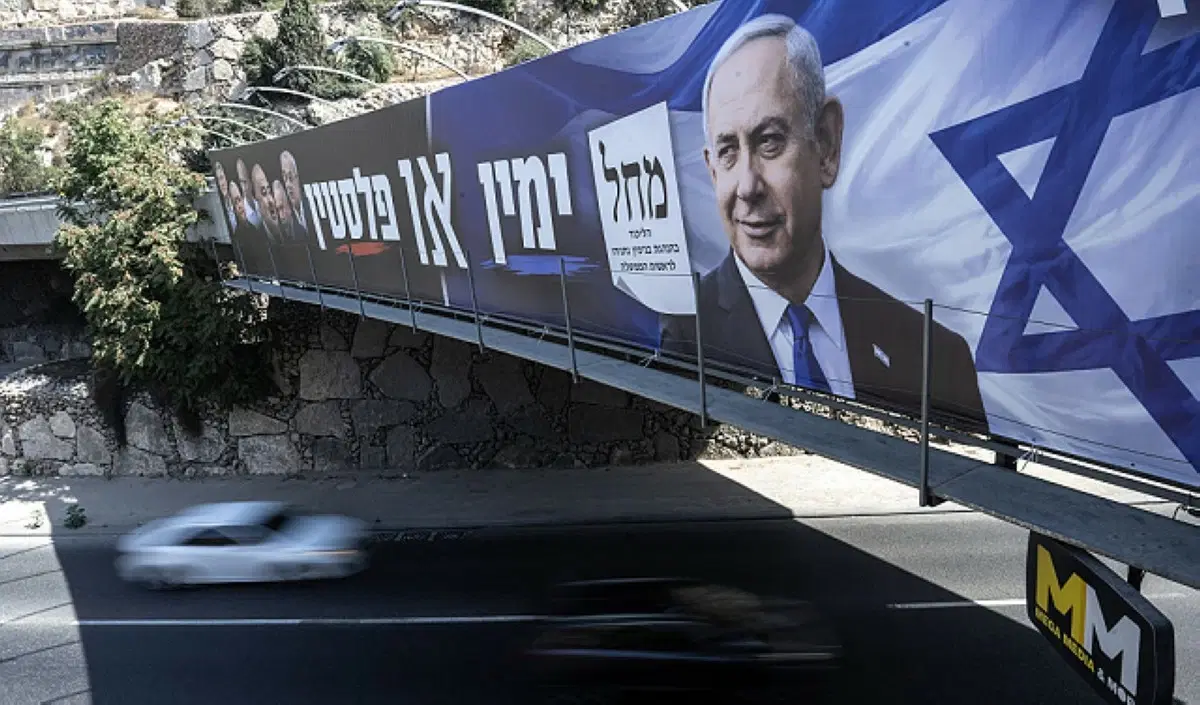
He points out that the majority of Israelis clearly support the continuation and strengthening of settlements in the West Bank, and also practically support, albeit with formal reservations, the project led by Finance Minister Bezalel Smotrich to establish a single state.
In contrast, Israeli parties are almost unanimous in rejecting the establishment of a Palestinian state, while the slogan "destroying Hamas" enjoys broad support, without sufficient clarification of its practical content or the mechanisms necessary to achieve it.
In the midst of this discourse, the most complex questions about the future of the conflict are receding, foremost among them the fate of about three million Palestinians in the event of imposing partial or total Israeli sovereignty over the West Bank, the nature of life in a single state where both peoples live without dividing barriers, as well as how to reconcile the existence of two categories of citizens with different rights in one political entity, and the claim that this system is not based on apartheid.
Milshtein notes that Israeli decision-makers and most opposition forces avoid delving into these dilemmas, especially as the elections approach, as if revealing true positions, if they are clear at all, can be postponed until after the vote.
The paradox, according to the writer, is manifested in the fact that the call to discuss the future of the Palestinian cause, negotiate it, or even dialogue with the Palestinians, has become met with accusations of pessimism, naivety, and failure to learn from the events of October 7, while anyone who talks about establishing a Palestinian state is branded a traitor.
Conversely, ideas of establishing a single state extending from the sea to the river, or what is called "voluntary deportation" of Palestinians, have become more acceptable in Israeli political discourse.
Milshtein does not see these trends as merely a change in foreign and security policy or an attempt to correct previous strategic mistakes, but rather considers them an expression of a deep cultural and value shift, accompanied by attempts to provide religious and moral legitimacy to practices that were previously considered rejected and unacceptable.
This shift, according to his analysis, consists of justifying violence against everyone who stands in the way of achieving Israeli sovereignty and the religious project, including Jews who oppose it, and treating Palestinians as a group that does not deserve rights, which opens the door to seizing their property and crops, including olives, practices for which the writer cites the positions of Rabbi Dov Lior.
It is also manifested in presenting control over the land as a sacred goal that takes precedence over human life, and promoting field adventures that include cross-border incursions and the establishment of settlement outposts.
Milshtein warns that this project, stemming from a religious and factional vision, is being imposed on the wider Israeli society, has already claimed victims, and threatens to deepen internal divisions in the coming phase.
Milshtein concludes with a stern warning that Israel is moving consciously and with increasing speed toward the abyss, in light of ignoring the Palestinian cause on the one hand, and clinging to harmful political illusions on the other, which exacerbates the risks to its future and the stability of the region.
In contrast to this Israeli disregard, a clear Palestinian interest in the upcoming Israeli elections emerges, in another paradox that reveals the difference in priorities between the two sides.
In an article published by the newspaper "Haaretz" titled "Palestinians show great interest in the Israeli elections," journalist Jacky Khoury explains that the elections are not treated by Palestinians as an internal affair of a neighboring state, but rather constitute a subject of daily discussion, given that the results and the decisions of the government emerging from them directly reflect on the lives of Palestinians.
From military operations to restrictions imposed on the movement of individuals and goods through checkpoints and crossings, Israeli policies directly affect freedom of movement, security, and the economy, and even the ability of Palestinians to remain in their homes and on their lands.
Thus, the Israeli elections appear to face a deep political paradox: a Palestinian cause that is receding to the margins of the debate within Israel, despite its existential and strategic repercussions, while Palestinians follow it with great interest, not out of illusions that a radical shift is possible, but out of their realization that its results may determine a fundamental aspect of their daily fate, between the continuation of war and escalation, or a relative decrease in suffering and the opening of a limited window toward change.