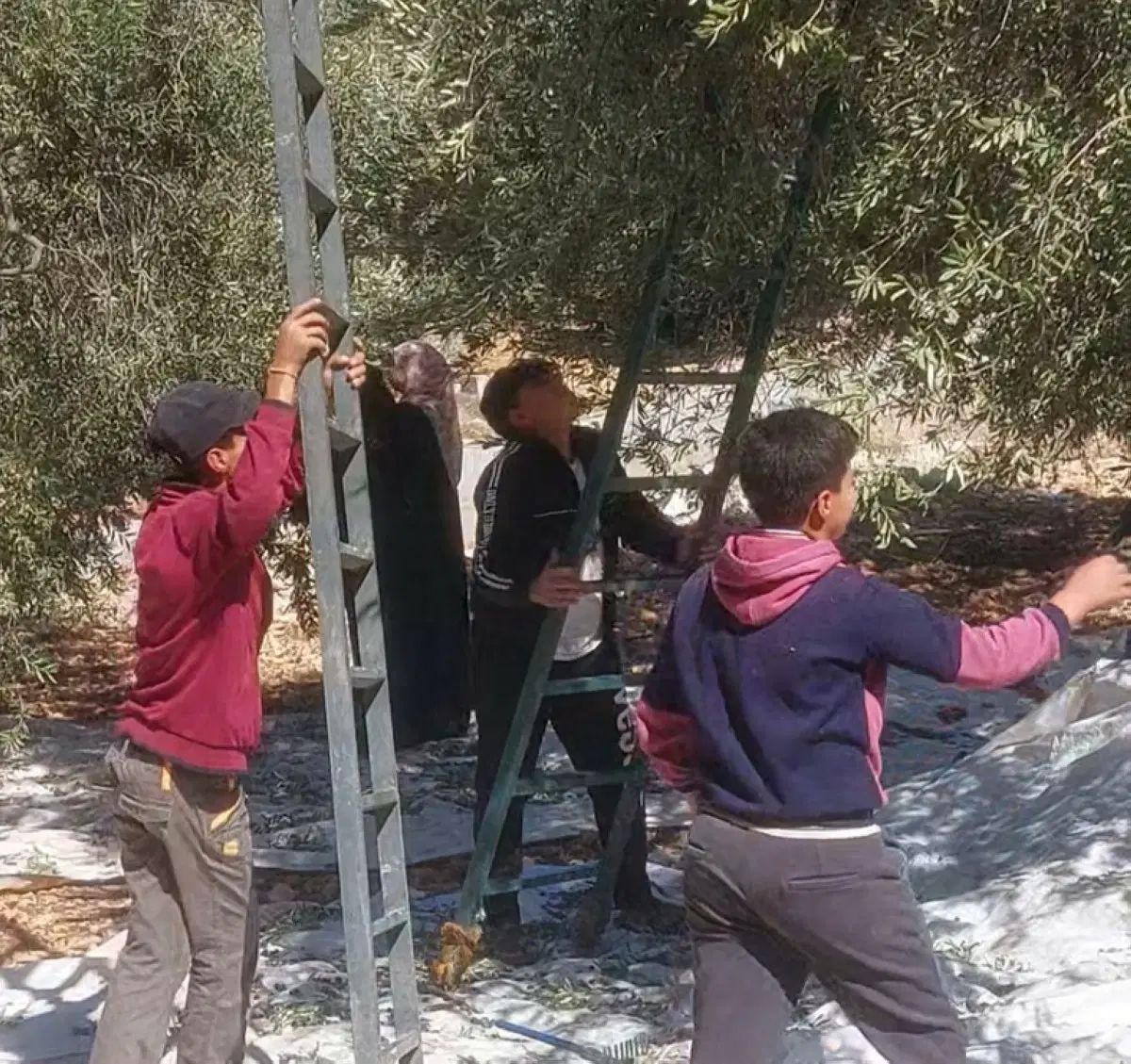
Bani Younis added that families, while working in the vineyards, recall memories of the beautiful past and relive details full of warmth and solidarity, as they share in preparing and eating popular dishes and traditional varieties that are strongly present in the field as fresh breakfast meals; foremost among them are tomato qalayeh, oil and olives, labneh, and hot local bread baked on the saj or tabun, along with tea prepared on wood embers, which adds a special heritage atmosphere that gives the workers energy and joy. He pointed out that this season is the result of a long journey of attachment to the land, and constitutes a vital economic window that many families rely on to improve their income, stimulate the economic wheel, and employ many of the district's residents.
For his part, the Director of the Al-Koura District Agriculture Directorate, Engineer Abdul Ilah Obeidat, indicated in his interview with "$", that the Al-Koura district includes, according to statistics received by the ministry, more than 6,000 perennial trees, confirming that it is one of the most important seasons and varieties that the people of the region rely on, and it is famous for the quality of its fruits and its high quality, and for the presence of old olive presses in the district.
In turn, the researcher in agricultural heritage, Dr. Ahmed Jabr Al-Shuraida, confirmed that the Al-Koura district is considered one of the districts that most embraces olive trees and perennial trees, pointing to the widespread presence of perennial olive trees in the region, which produces varieties of olive oil with wonderful quality and wide fame.