Financing.. International Confidence and Risk Distribution
In an economic analysis prepared by 'Alrai', economic expert Dr. Luay Salehiyah said that the participation of the US International Development Finance Corporation (DFC), through a loan of up to $1 billion and political risk insurance of up to $800 million, carries a significance beyond the value of the financing itself, as it enhances the confidence of financing institutions and investors in the project's ability to attract long-term financing.
He explained that the presence of a development financing institution of this size alongside other international institutions can contribute to reducing the risks involved in financing and investment decisions, while the diversity of funding sources between grants, concessional loans, government contributions, and private financing provides a broader distribution of burdens.
He pointed out that the financial impact of financing is not only measured by its nominal size, but also by its terms, duration, interest rates, and associated guarantees, as long-term financing relieves immediate pressure on the budget, but creates future obligations that must be managed within the country's financial capacity.
Cost.. Energy and Financing at the Heart of the Equation
Salehiyah believes that the final cost of water will be one of the key determinants of the project's economic sustainability, noting that the cost is not only related to desalination, but also includes the energy needed for desalination and pumping, as well as financing, operation, and maintenance.
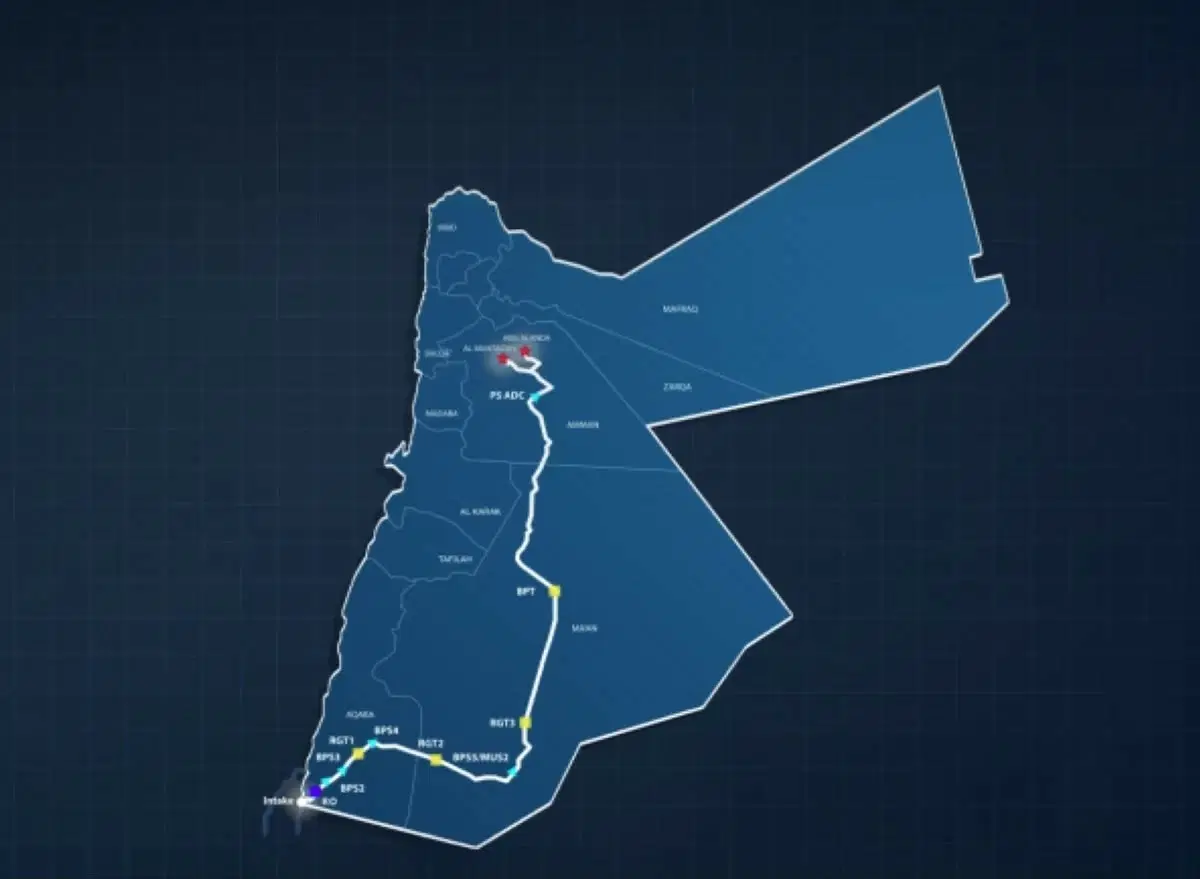
The nature of the project poses an additional challenge, as water will be transported over a long distance with a significant elevation difference, making energy consumption a major factor in operating costs. Financing terms and interest rates can also affect costs over the years of operation.
In this context, Salehiyah explained that the difference between the cost of producing and transporting water and the revenues achieved may appear in the form of government support or other financial obligations, making cost management an important factor in determining the size of the impact on public finances and consumers.
Government Commitment.. The Full Financial Picture
Regarding the government's contribution of about $722 million, Salehiyah said that the multiplicity of funding parties and the partnership with the private sector limit the concentration of investment costs on the treasury.
However, he believes that the financial impact assessment of the project should not stop at the value of the direct contribution, but should include future obligations related to the purchase of water, operation, guarantees, and any potential support, along with financing service, to provide a more comprehensive picture of the cost that public finances may bear over the life of the project.
Implementation.. Controlling Time and Cost
The risks of implementation are no less important than the financing structure, as Salehiyah believes that the magnitude and complexity of the project require precise management of the time schedule and costs.
He explained that any delay could lead to increased costs of materials, services, and financing, as well as delayed arrival of the targeted water and prolonged reliance on other sources and alternatives.
He emphasized the importance of clear contracts and distribution of responsibilities between parties, along with clear mechanisms for controlling costs and dealing with emergencies, to reduce the transfer of construction risks to the operational phase or public finances.
Economic Return.. Water as an Input for Growth
On the other hand, Salehiyah believes that the economic return of the National Carrier goes beyond providing drinking water, as stable supplies can support sectors that depend directly on water, from industry and tourism to advanced agriculture and services.
The existence of a more stable water source can also enhance the ability of investors and economic sectors to plan and expand, and alleviate one of the constraints facing economic activity in the Kingdom, along with reducing pressure on groundwater and traditional sources.
The size of this return remains linked to the efficiency of operation, the stability of supply, and the cost of water, as the economic value of the project is not determined solely by the amount of water produced, but by its ability to provide it reliably and sustainably.
Environmental and Regional Risks
Environmental and regional considerations are not separate from the project, as the process of disposing of the brine resulting from desalination requires careful environmental management, while regional developments may affect supply chains and the cost of some inputs and investments.
Salehiyah believes that dealing with these factors must be part of project management throughout its operational period, especially since the contract's extension to 26 years means its exposure to economic, financial, and environmental variables that cannot be fully resolved at the contracting stage.
As the National Carrier transitions from the financing phase to implementation and operation, the challenge remains in transforming this investment into a project capable of performing its role efficiently and sustainably over decades. The real criterion will be in the good management of the project and its obligations, and in its ability to become a permanent part of the Kingdom's water and economic security system.