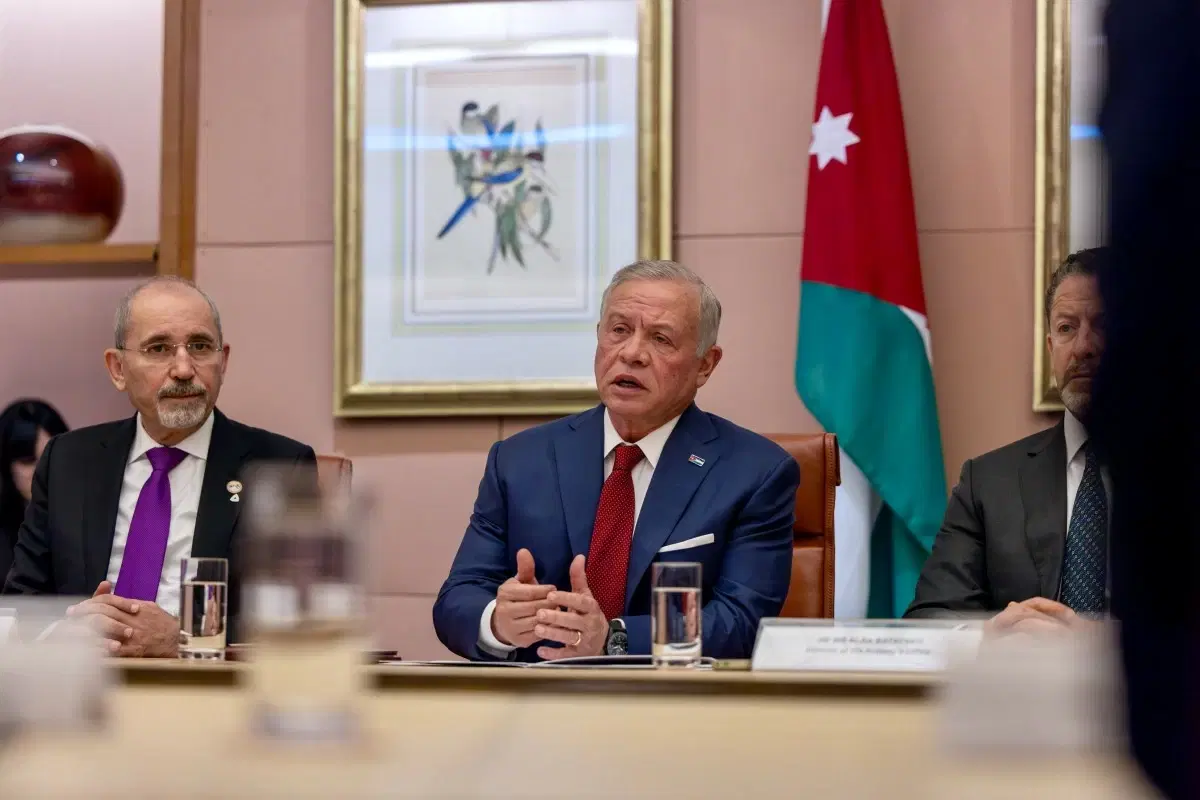
The King's visits to Malaysia and Australia and the impact of Jordanian diplomatic discourse
Amman6 min read
Share
The recent visits of His Majesty King Abdullah II to Malaysia and Australia confirm a Jordanian trend toward strengthening international relations and partnerships, and affirming the Kingdom's diplomatic presence in Asia and the Pacific, in parallel with intensifying political efforts aimed at containing regional crises and supporting Arab rights, foremost among them defending Palestinian rights and protecting regional security and stability.
The two visits also gain importance in light of the nature of the relations that bind Jordan to the two friendly countries, and the opportunities they provide to enhance political, economic, educational, and security cooperation, in addition to building common international positions regarding developments in the Middle East.
The royal visit to Malaysia represented an important step in the path of consolidating Jordanian-Malaysian relations, which have spanned more than six decades, as His Majesty held talks with the King of Malaysia, Sultan Ibrahim ibni Sultan Iskandar, and Prime Minister Anwar Ibrahim, which addressed ways to develop bilateral relations and expand areas of cooperation, in addition to discussing regional and international developments.
The Jordanian-Malaysian talks emphasized the importance of building on the historical relations between the two countries and enhancing coordination on issues of common interest, especially the Palestinian cause, in addition to the continued regional tensions and the call for international action toward political solutions in the region.
In this context, His Majesty King Abdullah II stressed the need to stop the Israeli escalation in the region and halt violations in the West Bank and Jerusalem, while preserving the existing historical and legal status quo of Islamic and Christian holy sites, affirming the centrality of the Palestinian cause and the necessity of achieving peace based on the two-state solution.
Regarding bilateral cooperation between the two countries, the importance of developing economic and trade relations and enhancing cooperation in the fields of technology, defense, education, and scientific research emerged, as the two sides announced an agreement to reactivate the Jordanian-Malaysian Trade Committee, which allows for the development of communication channels between economic institutions and the business sector in both countries.
The royal movement moved to Australia, where His Majesty held talks with Governor-General Sam Mostyn, Prime Minister Anthony Albanese, and a number of senior government and parliamentary officials, within the framework of efforts to develop Jordanian-Australian relations and enhance cooperation in political, security, economic, and humanitarian files.
The diplomatic relations between the two countries, and the existing cooperation in the fields of defense, security, and counter-terrorism, in addition to the common interest in supporting regional stability and expanding trade relations and investment opportunities, reflect the volume of common files between them, and the extension of Jordanian-Australian relations to development sectors that can contribute to developing institutional expertise and improving the response to economic, social, and environmental challenges.
Australia condemned the Iranian attacks that targeted Jordan and expressed its solidarity with the Kingdom, affirming its support for diplomatic efforts aimed at ending the crisis and achieving sustainable security and stability. This position reflects the importance of Jordanian communication with friendly and partner countries to clarify the repercussions of the attacks targeting the Kingdom, while emphasizing the necessity of respecting the sovereignty of states and the integrity of their territories and security.
Dr. Rasha Al-Mubaideen, a professor of political science at Al-Zaytoonah University, emphasized the political importance of the two visits, noting that they reveal a diplomatic move that combines strengthening bilateral relations and expanding economic partnerships, in addition to intensifying political coordination regarding events in the region.
She added that this tour comes within the framework of expanding diplomatic support for the Jordanian position toward the Palestinian cause and affirming the two-state solution in light of the escalation in the occupied Palestinian territories, noting that the practical value of royal visits is highlighted in their ability to open new channels for cooperation and expand the network of Jordanian partnerships, which contributes to enhancing the Kingdom's political presence in international forums.
She indicated that the Palestinian cause was at the forefront of the diplomatic movement and occupied a prominent position in His Majesty's discussions in Malaysia and Australia, as an extension of the Jordanian position calling for stopping the escalation, protecting civilians, and preventing measures that undermine the chances of peace in the region.
She pointed to His Majesty's efforts to link the diplomatic movement with Jordanian national interests and the development opportunities available to the Kingdom, noting the importance of investing in the diplomatic momentum provided by the two visits and transforming it into effective results that enhance national interests, support the Jordanian economy, and expand the Kingdom's diplomatic presence.
For his part, researcher and political analyst Dr. Khaled Majali said that the royal visits made by His Majesty King Abdullah II to brotherly and friendly countries go beyond the framework of bilateral relations, as they represent one of the tools of Jordanian diplomacy to enhance Jordan's role on the international stage, expand its network of partnerships, defend its national interests, and contribute to regional and international solutions.
He added that His Majesty's two visits to Malaysia and Australia represent an opportunity to enhance communication with geographical areas of growing political and economic importance, and to expand areas of cooperation with countries that possess economic and technological capabilities, in addition to their role in international issues.
On the diplomatic path of the two visits, Majali said that both countries affirmed their commitment to supporting Palestinian positions in accordance with the two-state solution, international law, and relevant Security Council resolutions, and rejected attempts to annex the West Bank or displace the Palestinian people, pointing to their emphasis on the need to preserve the existing historical and legal status quo of Islamic and Christian holy sites in Jerusalem, and the importance of the historical Hashemite Custodianship over these holy sites, in addition to the need to support the United Nations Relief and Works Agency for Palestine Refugees (UNRWA).
He pointed to the existence of economic indicators and signs of opportunities that can be built upon to expand Jordanian exports and explore new areas for investment and industrial and technological cooperation, especially by translating political understandings into tangible economic projects.