Experts: King's visit to Australia opens horizons for investment and technology transfer
Amman7 min read
Share
Economic experts agreed that His Majesty King Abdullah II's visit to Australia holds strategic importance in expanding the Kingdom's international partnerships and opening new horizons for economic and investment cooperation, particularly in the mining, manufacturing, and technology sectors, noting that leveraging Australian expertise and attracting quality investments could contribute to increasing the value-added of national resources, boosting exports, and creating job opportunities.
In statements to (Alrai), they said that the royal moves strengthen bilateral relations and expand areas of cooperation with advanced economies, going beyond increasing trade exchange to transferring knowledge and technology and developing production capacities, emphasizing the importance of translating the results of the meetings into practical projects and partnerships that support the competitiveness of the national economy.
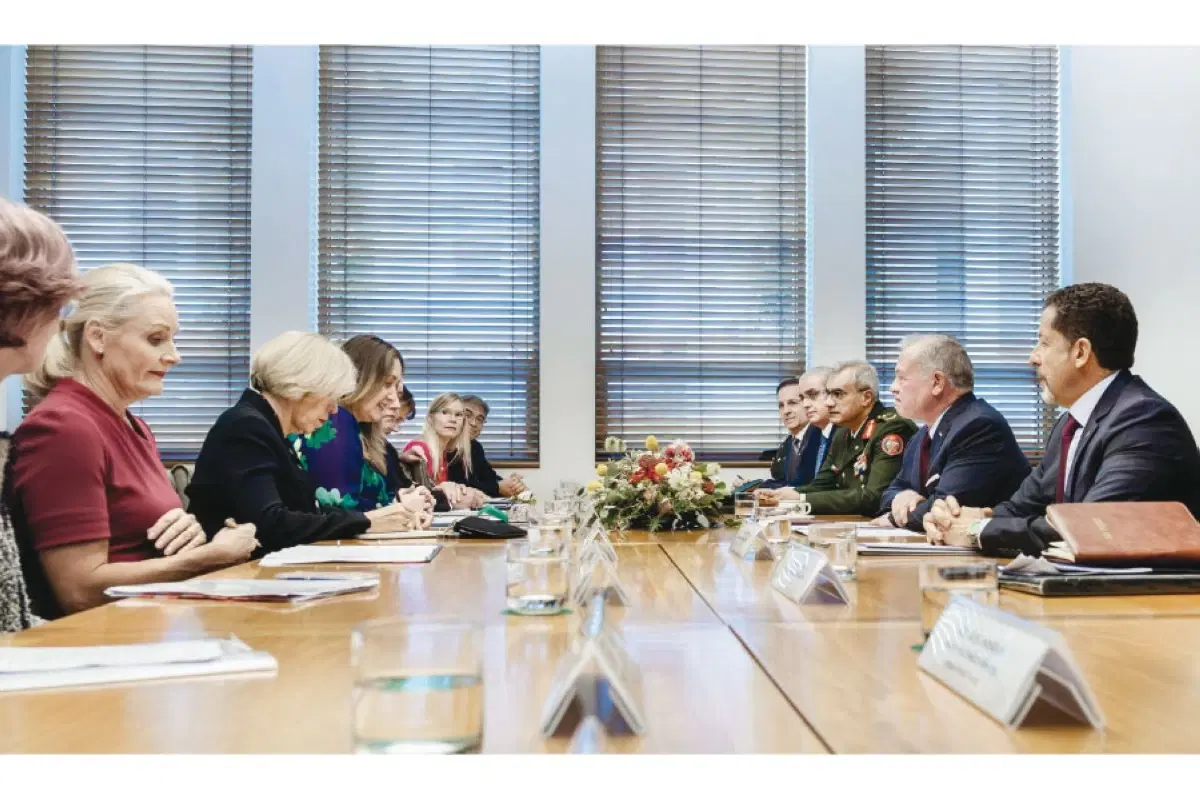
His Majesty King Abdullah II held a meeting yesterday, Tuesday, in the Australian capital, Canberra, with President of the Senate Sue Lines and Speaker of the House of Representatives Milton Dick, during which he expressed his appreciation for Australia's positions on regional and international issues, and Jordan's keenness to enhance joint work, especially in the political and parliamentary fields.
The meeting addressed the importance of intensifying international efforts to restore calm in the region and stop the attacks on Palestinians in the West Bank, Gaza, and Jerusalem, in addition to supporting the efforts of Syria and Lebanon in maintaining their security, stability, and sovereignty.
Financial and economic expert Dr. Mohammed Al-Hadab Al-Sarhan said that the visit strengthens the political and parliamentary framework of bilateral relations and gains special economic importance in light of the meeting with representatives of the Association of Mining and Exploration Companies of Australia, which includes more than 575 companies operating in the mining sector and related services.
He explained that partnership with an advanced economy like Australia allows Jordan to benefit from its expertise in developing natural resources and increasing their productivity, and transforming them into industries and products with higher value-added, which will positively reflect on exports, employment, and economic growth.
Al-Sarhan pointed out that the volume of trade exchange between Jordan and Australia in goods and services reached about 348.7 million Australian dollars during the 2024-2025 fiscal year, according to official Australian data, distributed between Australian imports from Jordan worth 131.5 million Australian dollars, and Australian exports to the Kingdom worth 217.2 million Australian dollars.
He indicated that these figures reflect the existence of a trade base that can be built upon, but at the same time, they provide room to expand cooperation in productive and technological sectors, so that the partnership is not limited to the exchange of goods, but includes investments that contribute to developing Jordanian products, raising their competitiveness, and benefiting from Australian industrial expertise.
He added that the mining sector is one of the most promising areas for cooperation between the two countries, in light of Australian expertise in exploration, mining, and related technology, and the mineral resources and opportunities for developing manufacturing industries that Jordan possesses.
He explained that the priority is to attract companies capable of contributing to the stages of exploration, technical evaluation, extraction, and manufacturing, in order to enhance local value-added, rather than just exporting raw materials whenever the economic feasibility for manufacturing is available.
Al-Sarhan linked these opportunities to the development of transport infrastructure, noting the importance of the Aqaba-Shidiya-Ma'an railway project in enhancing the attractiveness of investment in the sector by reducing the costs of transporting mining products and increasing the competitiveness of exports.
He indicated that the integration between Australian expertise, Jordanian resources, and transport infrastructure could contribute to building an integrated production chain that includes extraction, manufacturing, transport, and export, which increases the economic return from natural wealth and expands job opportunities in the governorates.
He pointed out that cooperation opportunities extend to water resource management and agricultural technology, in light of Australian expertise in improving water use efficiency and developing agricultural production in arid environments, which are areas directly related to Jordan's needs.
He explained that transferring this expertise could contribute to reducing agricultural production costs, increasing its productivity, and enhancing food security, in addition to opening the way for partnerships between companies, universities, and research centers in both countries.
In the same context, Al-Sarhan believed that the royal efforts aimed at enhancing calm and stability in the region carry important economic dimensions, in light of the impact of regional tensions on trade, investment, tourism, and shipping and insurance costs. He added that expanding partnerships with geographically distant countries, such as Australia, contributes to diversifying markets and sources of technology and reducing the concentration of economic risks.
He stressed that maximizing the economic return of the visit requires moving to a stage of practical follow-up, by preparing a list of mining and industrial projects with preliminary feasibility, including technical data, financing needs, infrastructure requirements, and local manufacturing opportunities, and presenting them to specialized Australian companies.
He also called for the formation of an economic and technical follow-up team that includes the relevant authorities for investment, energy, and mineral wealth, and representatives of the private sector, to identify targeted companies and develop implementable projects, noting the importance of measuring results by the volume of investments that enter the implementation and production stages, local value-added, jobs created, and growth in industrial exports.
For his part, economic expert Mounir Dieh said that royal visits to various countries of the world contribute to strengthening international relations and opening new markets for Jordanian industries, in addition to creating the necessary conditions to attract foreign investments and expand cooperation in priority economic sectors.
He explained that the visit to Australia provides opportunities to develop cooperation in the fields of technology, defense, mining, and manufacturing, and to benefit from Australian expertise in sectors where Jordan has opportunities for growth and expansion, noting the importance of meetings with representatives of Australian companies and institutions in introducing the investment opportunities available in the Kingdom.
He added that the royal moves contribute to removing obstacles to the movement of goods and travelers, and expanding areas of trade, investment, and tourism exchange, which supports economic growth and enhances investor confidence in the opportunities available in Jordan.
Dieh pointed out the importance of meetings that include Australian government institutions and non-profit organizations working in the field of mental health, to benefit from advanced expertise and expand cooperation between the two countries in this vital sector, which opens the way for the exchange of knowledge and institutional expertise.
In turn, economic expert Wajdi Makhamreh said that His Majesty the King's meeting with the President of the Australian Senate and the Speaker of the House of Representatives represents an additional step in Jordan's efforts to strengthen its international relations and expand political and economic cooperation with Australia.
He added that expanding coordination regarding the region's security, stability, and the sovereignty of its states contributes to enhancing international understanding of the repercussions of regional conflicts, at a time when the political and security environment is linked to the ability of economies to attract investments and sustain commercial activity.
On the economic level, Makhamreh noted that political and parliamentary relations create a supportive environment for economic cooperation and enhance the confidence of Australian investors in the opportunities available in the Kingdom, especially in light of Jordan's quest to attract quality investments and diversify its international partnerships.
He indicated that His Majesty the King's meeting with representatives of the Association of Mining and Exploration Companies of Australia provides an opportunity to benefit from Australian expertise in exploration, technology, and mining, and to develop the exploitation of Jordanian mineral wealth, which enhances the opportunities for establishing joint production and industrial projects.
Makhamreh stressed that the gains hoped for from the visit are not limited to the flow of investments, but include localizing technical and administrative expertise and developing local capabilities, which supports the competitiveness of productive sectors and enhances the ability of the national economy to benefit from international partnerships in the long term.