Industrialists: The King's visit to Malaysia opens horizons for industrial partnerships and quality investments
Jordanian-Malaysian relations pave the way for a broader phase of economic cooperation
Amman7 min read
Share
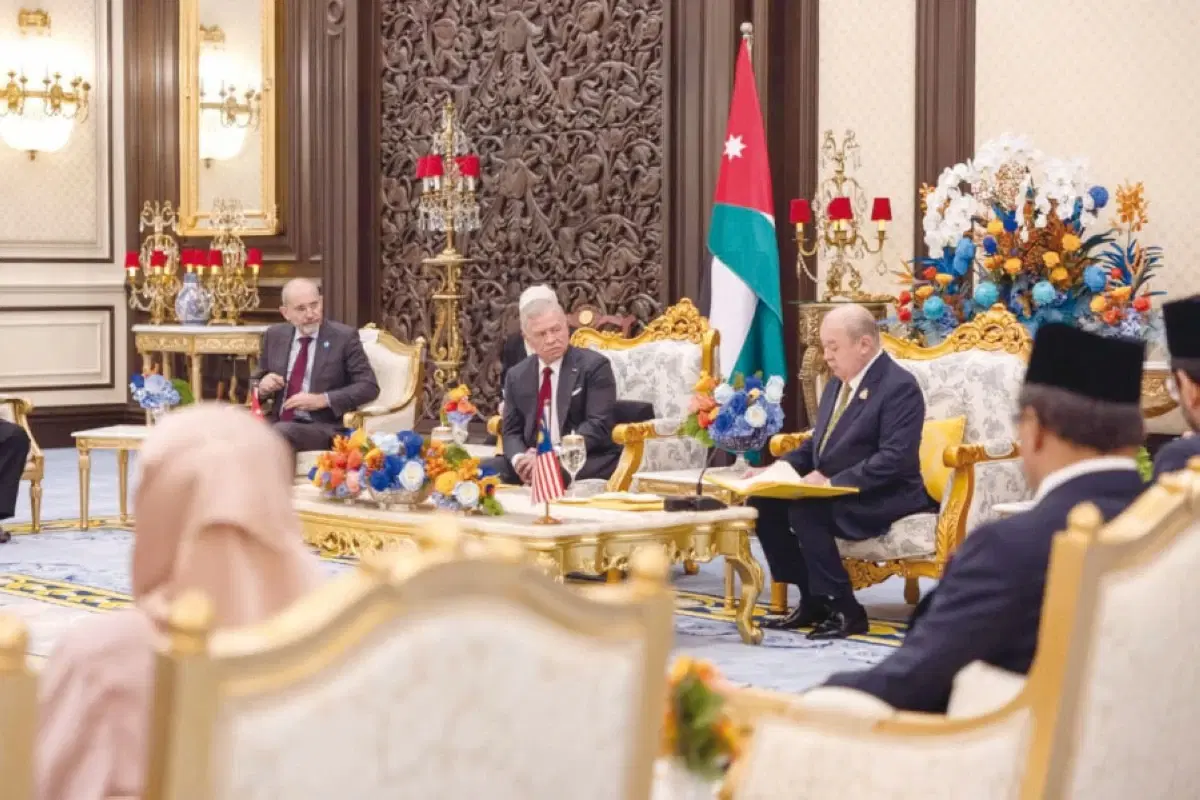
Workers in the industrial sector affirmed that the visit of His Majesty King Abdullah II to Malaysia represents an important milestone for strengthening Jordanian-Malaysian relations at both the political and economic levels, noting His Majesty's keenness to utilize international relations to serve strategic issues in the region, foremost among them the Palestinian cause, in parallel with expanding economic partnerships and opening new markets for national exports.
In statements to "Alrai," they said that the royal discussions with the Malaysian leadership reflect the importance of enhancing coordination regarding regional issues, especially Israeli violations in the West Bank and Jerusalem, in addition to building on the historical relations between the two countries to develop trade, industrial, and investment cooperation, and to benefit from the capabilities and expertise possessed by each.
His Majesty King Abdullah II and Malaysian Prime Minister Anwar Ibrahim discussed, during a meeting in Kuala Lumpur yesterday, Monday, ways to consolidate bilateral relations and utilize the capabilities of both countries to expand cooperation in various fields. His Majesty stressed the importance of building on relations spanning more than 60 years and enhancing dialogue on regional and international issues of common interest.
His Majesty also emphasized the importance of coordination within the Organization of Islamic Cooperation to mobilize an effective international position to stop dangerous Israeli measures in the West Bank and violations of Islamic and Christian holy sites in Jerusalem, in addition to supporting efforts aimed at achieving peace and stability, protecting civilians, delivering aid to them, and supporting Syria and Lebanon in maintaining their security, stability, and sovereignty over their territories.
The Chairman of the Jordan and Amman Chambers of Industry, Engineer Fathi Al-Jaghbir, said that the King's visit and his meetings with the Malaysian leadership open new horizons for developing industrial and investment partnerships and expanding the presence of Jordanian products in Asian markets, confirming that royal moves to strengthen the Kingdom's relations with various countries of the world represent a fundamental pillar for expanding international economic partnerships, attracting quality investments, increasing exports, and providing job opportunities, in line with the goals of the Economic Modernization Vision.
Al-Jaghbir pointed out that trade relations between Jordan and Malaysia are witnessing positive development, as the volume of trade exchange between the two countries increased by 15.2 percent during 2025, while it continued to grow by 8 percent during the first eight months of the current year, which reflects the existence of real opportunities to elevate economic relations to more advanced levels.
He explained that Malaysia is one of the important industrial economies in Southeast Asia and possesses advanced expertise in manufacturing, technology, and high value-added industries, which provides promising opportunities to enhance industrial cooperation between the two countries, especially in the food, pharmaceutical, chemical, engineering, and electronic industries sectors, in addition to exchanging expertise, transferring technology, and developing joint production partnerships.
He added that Jordanian industry possesses a diverse production base and growing export capabilities, which have enabled it to reach more than 150 markets around the world, a matter that calls for continuing to diversify markets, enhancing the access of national products to Asia, and benefiting from Malaysia's location and its network of trade relations as an important gateway to reach the markets of the southeast of the continent.
Al-Jaghbir noted that Jordanian exports to Malaysia are concentrated in fertilizers and chemical products, which allows opportunities to expand the export base to include other industrial products that enjoy quality and competitiveness, especially in the food, pharmaceutical, and high value-added industrial sectors.
He emphasized the importance of building on the results of the royal visit, especially the trend towards reactivating the Jordanian-Malaysian Trade Committee and translating the momentum provided by the visit into practical steps that enhance communication between the business communities by organizing bilateral meetings and trade missions and exploring available investment and export opportunities.
He stressed the necessity of moving economic relations from traditional trade exchange to deeper industrial and investment partnerships based on integration in production and supply chains and benefiting from the competitive advantages of both countries, in a way that enhances the integration of Jordanian industry into regional and global value chains and opens the way for joint investments targeting local, regional, and international markets.
Al-Jaghbir confirmed the readiness of the Jordan and Amman Chambers of Industry to work with the concerned authorities and their counterparts in Malaysia to develop communication channels between companies and investors and to enhance institutional cooperation in a way that contributes to turning available opportunities into tangible projects and partnerships and supports Jordan's position as a regional center for manufacturing and export.
For his part, the Chairman of the Zarqa Chamber of Industry, Engineer Fares Hammoudeh, said that the King utilizes international relations to serve strategic issues at the regional level, indicating that the expanded discussions held by His Majesty with the King of Malaysia focused on the Palestinian cause, Israeli violations in the West Bank, and the importance of unifying Arab and Islamic positions regarding them.
Hammoudeh added that trade and economic files were present in the meetings held by the King with the Malaysian leadership, noting that the long history of Jordanian-Malaysian relations forms a foundation that can be built upon to enhance rapprochement and cooperation in economic and investment fields.
He explained that the diversity of resources in both countries and the difference in their geographical locations between the Middle East and Southeast Asia provide opportunities to enhance trade, tourism, and mutual investment, pointing to the importance of benefiting from the incentives provided by the Kingdom and its investment environment to attract Malaysian companies and expand their investments in Jordan.
Hammoudeh indicated that the visit comes in light of economic challenges and rapid changes at the international and regional levels, which enhances the importance of diversifying trade relations, attracting capital, and expanding areas of cooperation in advanced industrial sectors, especially defense industries, semiconductors, electronics, solar energy equipment, and auto parts.
In turn, the representative of the clothing and textile sector at the Jordan Chamber of Industry, Engineer Ihab Qadri, said that the King's visit to Malaysia carries strategic importance that goes beyond strengthening bilateral relations and reflects a Jordanian trend towards diversifying economic partnerships and opening up more deeply to emerging Asian economies at a time when global trade is witnessing changes in production centers, investment, and supply chains.
Qadri explained that Malaysia represents an economic model that has succeeded in building an advanced industrial and technological base, integrating into global value chains, and converting foreign investments into production and export capabilities, which provides an opportunity for Jordan to benefit from its experience and develop partnerships based on integration in expertise and capabilities.
He added that combining Malaysian expertise in manufacturing, technology, and investment with the advantages enjoyed by Jordan in terms of stability, strategic location, trade agreements, and human competencies can contribute to attracting quality investments, developing joint industries, and opening new channels for trade with Asian markets.
He pointed out that utilizing the political and diplomatic relations led by the King in expanding the Kingdom's economic options is gaining increasing importance, especially in light of the need to diversify partners and markets and reduce reliance on limited markets, in a way that enhances economic resilience and the Kingdom's ability to deal with international transformations.
Qadri indicated that the agreement to reactivate the Jordanian-Malaysian Trade Committee, in addition to the interest in expanding cooperation in technological fields, constitutes an opportunity to move economic relations to institutional partnerships with clear production and investment goals.
He emphasized the necessity of benefiting from the Malaysian experience in localizing technology, developing high value-added industries, and linking education and skills to the needs of the industrial sector, in addition to attracting investments capable of integrating into global supply chains.
He stressed the importance of translating the outcomes of the visit into specific cooperation programs that include industrial investment, technology, digital services, and trade, while identifying actionable opportunities and establishing joint follow-up mechanisms between the two governments and the private sector, in line with the goals of the Economic Modernization Vision.
Qadri concluded by noting that the strategic impact of the visit is linked to Jordan's ability to turn its openness to Asia into productive investments, knowledge transfer, and expansion of its export base, in a way that enhances the competitiveness of the national economy, supports its growth, and opens wider economic options for it in the long term.