The amendments came following a decree issued by President Ilham Aliyev last July regarding the implementation of a unified uniform in public educational institutions, according to the Azerbaijan Press Agency.
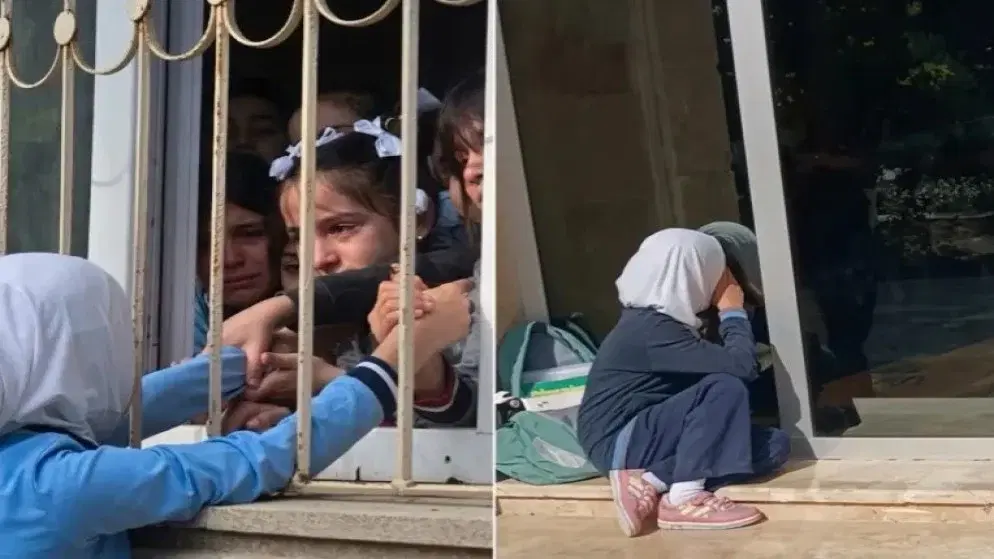
The repercussions of the decision began to emerge with the banning of veiled female students and teachers from entering some schools, according to media reports, while circulating video clips showed students waiting outside educational institutions and teachers saying goodbye to their students after being prevented from entering the schools.
Objections extended inside the schools, as students in some institutions boycotted classes in solidarity with their veiled colleagues, while female students and teachers resorted to following lessons in schoolyards or outside their buildings in protest against being denied entry, according to reports published by Al Jazeera.
The Azerbaijani Ministry of Internal Affairs stated that 37 people were arrested for public order violations related to objections against the implementation of school uniform rules, noting that there were disputes with staff at educational institutions, damage to some facilities, and attempts to obstruct traffic and the educational process.
Authorities announced the opening of a criminal case regarding the events, while the Baku Education Department said it would monitor schools to verify compliance with the new rules, according to Azerbaijani media reports and Reuters.
Proponents of the new rules insist on the necessity of standardizing school uniforms and maintaining the secular nature of public education, while opponents of the restrictions argue that they infringe upon freedom of belief and could lead to depriving female students of continuing their education and teachers of practicing their profession due to wearing the hijab.
The crisis reflects a debate over how to reconcile the secular nature of the Azerbaijani state with the religious rights of individuals, as the constitution stipulates the secularity of the state and the separation of religion from its affairs, in addition to guaranteeing freedom of conscience and belief.
The repercussions of the issue extended to relations with Turkey, after Oktay Saral, an advisor to Turkish President Recep Tayyip Erdogan, described the banning of veiled female students from education as "unacceptable," calling on Azerbaijan to reverse the decision.