Students' photos in digital stickers.. A violation of privacy and psychological harm
Weak family guidance and peer influence are the most prominent reasons
Amman5 min read
Share
Educational counselor: Using classmates' photos for mockery is aggressive behavior
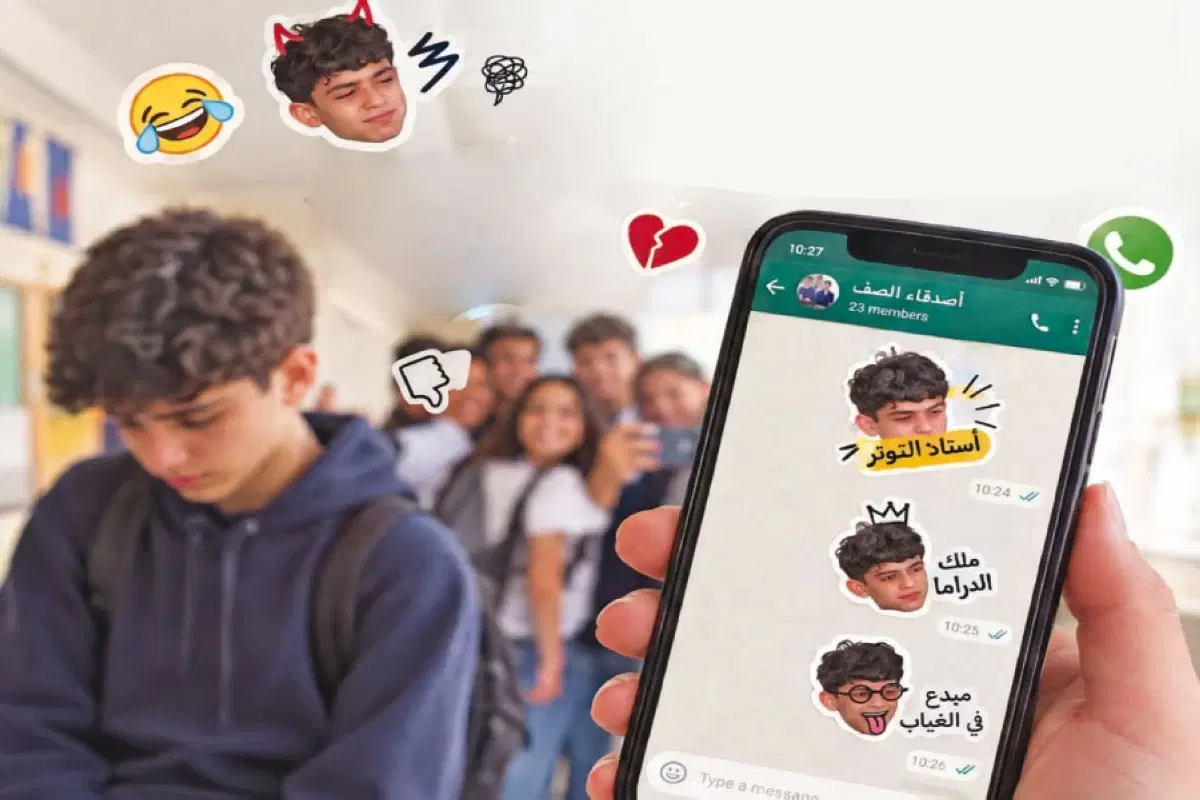
Enthusiastic atmosphere and emotions accompanied the opening of a student art exhibition at a school. To document the occasion, the teacher asked the class students to gather for a group photo. Most of them rushed to participate, except for one student who appeared tense and upset.
It later turned out that some students were using their classmates' photos to design digital "Stickers," attaching sarcastic or offensive phrases to them, and then circulating them via "WhatsApp" groups and other applications. This incident actually occurred in a private school, according to educational and psychological counselor Shatha Mubaideen, who spoke to "Alrai" about the psychological and social harm that these practices may cause, and their repercussions on students' relationships and academic achievement.
Mubaideen explains that using classmates' photos to mock or belittle them is considered a form of aggressive behavior, which is not limited to physical assault, but also includes insults and psychological harm, whether in the school environment or through digital platforms.
She attributes these behaviors to several factors, including: weak family guidance and supervision, peer influence and imitation, the use of applications that are not age-appropriate, and the child's desire to gain acceptance and belonging to the group, or to attract attention and express rebellion and independence.
She emphasizes the importance of educating children about the consequences of their actions, promoting respect for others and empathy towards them, in addition to dealing firmly with offensive behaviors without resorting to violence or verbal abuse.
She adds that understanding the motives behind these actions helps in addressing them; the child may be seeking praise and appreciation, or may need more attention and affection within the family.
She stresses the role of the family and the school in promoting positive behavior, listening to children, providing support and containment, and helping them realize the impact of their actions on others' feelings and relationships.
In the context of raising awareness about these practices, a private school in Amman sent an awareness message to parents titled "An awareness message to parents regarding the circulation of digital stickers among students," in which it affirmed its keenness on the safety of students and the protection of their privacy and dignity.
The message pointed to the observation of behavior consisting of designing stickers related to other students and circulating them via communication applications, especially outside school hours.
It warned that these practices, even if they start as a joke or imitation, may cause psychological and social harm, especially when using students' photos or names without their permission, or attaching them to embarrassing or sarcastic phrases that affect their reputation.
The school called on parents to educate their children about the dangers of photographing others or using their photos and names without consent, and to monitor their use of applications and digital groups in an educational manner, emphasizing the importance of not reposting offensive content and reporting it to the family or the school.
Digital stickers are not limited to schools or children's behaviors; they have become part of daily interaction among adults as well. In groups of friends, family, and coworkers, many exchange stickers bearing their photos for the sake of joking and amusement, sometimes with the consent of the photo owners; they may even participate in circulating them and laughing at them themselves.
In these cases, stickers may be a means of expressing familiarity and fun, as long as their use is accepted by the owners of the photos and does not involve offense or embarrassment to them.
However, the problem begins when the humor crosses its limits, or the photo moves from one group to another, or is reused in a different context, or is attached to phrases that the owner does not accept. Consent to use a photo in a certain situation does not necessarily mean consent to all forms of its use or circulation, just as accepting jokes within a limited circle does not mean feeling comfortable with their spread on a wider scale.
The effects of circulating offensive digital stickers may go beyond psychological and social harm, leading to legal liability depending on the nature of the content and the circumstances of its publication or circulation.
In Jordan, the Cybercrime Law No. 17 of 2023 provides legal protection against acts of defamation, slander, and contempt via electronic means, in accordance with the provisions and conditions determined by the law. The circulation of a sticker containing an insult to a person may be subject to legal accountability, depending on the content of the sticker, the circumstances surrounding the incident, and the extent to which the relevant provisions apply.
As for children, the Jordanian Child Rights Law No. 17 of 2022 provides a framework for protecting their rights, dignity, private life, and reputation, in addition to measures aimed at protecting them from abuse and cybercrimes.