Modern nicotine products challenge families and schools
Alarming behavior calling for a community partnership
Amman4 min read
Share
Educator: "Vape" increases the difficulty of detecting smoking among students
The cigarette a student hides in their pocket is no longer a fleeting behavior that can be ignored, nor has the "vape" remained merely a small device tucked away in a school bag. Behind this phenomenon lie educational, social, and health questions concerning a generation whose awareness and behavior are being shaped in one of the most sensitive stages of life. Amid the curiosity of adolescence, peer influence, family and study pressures, and the temptation of flavors and attractive designs of modern smoking products, this scourge creeps into the school environment, placing the family, school, and society before a shared responsibility that goes beyond the limits of punishment to prevention, awareness, and treatment.
For his part, educator Qaisar Al-Gharaibeh said that the phenomenon of smoking among school students has become one of the behavioral and educational challenges that calls for greater attention from families, schools, and concerned institutions, especially with the expanding presence of modern smoking products, foremost among them electronic cigarettes, among teenagers.
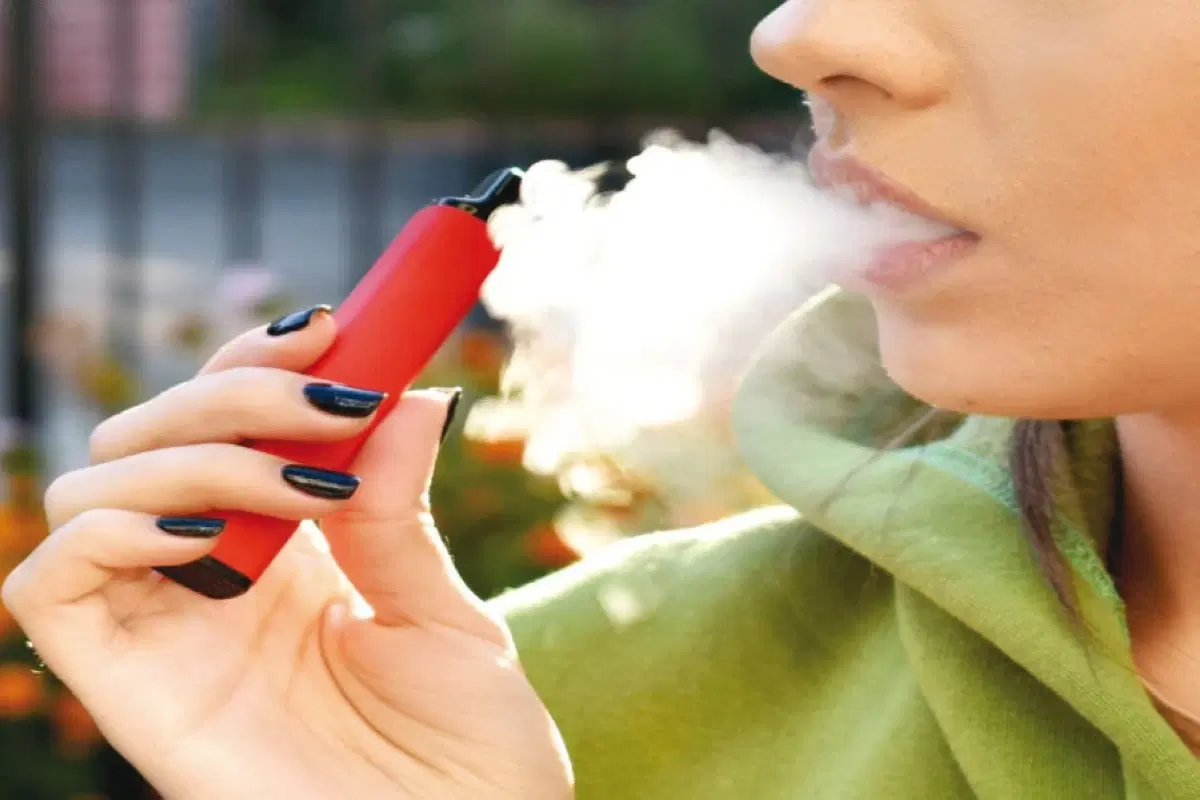
He explained that smoking is no longer limited to traditional cigarettes, as electronic cigarettes ("vapes") have imposed their presence among students, taking advantage of their small and attractive shapes, variety of flavors, and ease of concealment, which makes detecting their use within the school environment more difficult and increases the need for awareness, monitoring, and early prevention.
Al-Gharaibeh pointed out that adolescence represents a sensitive period in the formation of behaviors, as the desire to experiment, emulate adults, and imitate certain peers may drive them to try smoking. He noted that social and psychological pressures, along with the desire to prove oneself or belong to a certain group, may contribute to entrenching this habit.
He indicated that the student's surrounding environment plays an important role in shaping their behavior, whether through friends, family, or what they are exposed to via media and social media platforms, in addition to the ease of obtaining tobacco products and the availability of pocket money without sufficient follow-up in some cases.
He added that the presence of smoking role models within the family may also contribute to lowering the psychological barrier to trying smoking, given that the family represents the first model from which a child learns behavioral patterns. He emphasized that addressing the phenomenon begins with enhancing family dialogue, positive role modeling, and mindful monitoring.
Al-Gharaibeh pointed out that the effects of smoking during adolescence do not stop at the health aspect, but extend to psychological, behavioral, and educational aspects. Smoking can be linked to problems in concentration and academic achievement, absenteeism, and behavioral and disciplinary issues, in addition to the risks of nicotine addiction at an early age.
He emphasized the importance of dealing with student smokers from an educational and therapeutic perspective alongside the application of regulations and instructions, so that dealing with the problem is not limited to punishment, but includes searching for the reasons that drove the student to this behavior and providing them with appropriate support and guidance.
He stressed the necessity of activating the role of educational counselors and psychological specialists in schools, expanding health and behavioral awareness programs to start at early ages, and implementing joint programs with specialized health and community entities, which contributes to building genuine awareness of the dangers of smoking and modern nicotine products.
He pointed out the importance of providing positive alternatives for students through sports, cultural, and artistic activities and extracurricular programs, which help invest leisure time, boost self-confidence and a sense of belonging to the school, and provide safe spaces to express the pressures and problems adolescents face.
Al-Gharaibeh called on families to adopt an approach based on dialogue and monitoring without excessive constriction, to regulate daily pocket money to match children's needs, to monitor behavior mindfully, and to provide a stable and supportive family environment.
He also emphasized the importance of integrating roles between the family, school, and official authorities in curbing students' access to tobacco and nicotine products, tightening oversight on selling them to minors, monitoring commercial shops around schools, and ensuring the enforcement of relevant legislation and instructions.
Al-Gharaibeh stressed that confronting smoking among students is not the responsibility of the school alone, but a societal issue requiring a genuine partnership between families, educational and health institutions, and the local community. This is because protecting adolescents from smoking does not only mean safeguarding their health, but also contributes to building a safer and more stable school environment, and preparing a more aware generation capable of making healthy and sound choices.