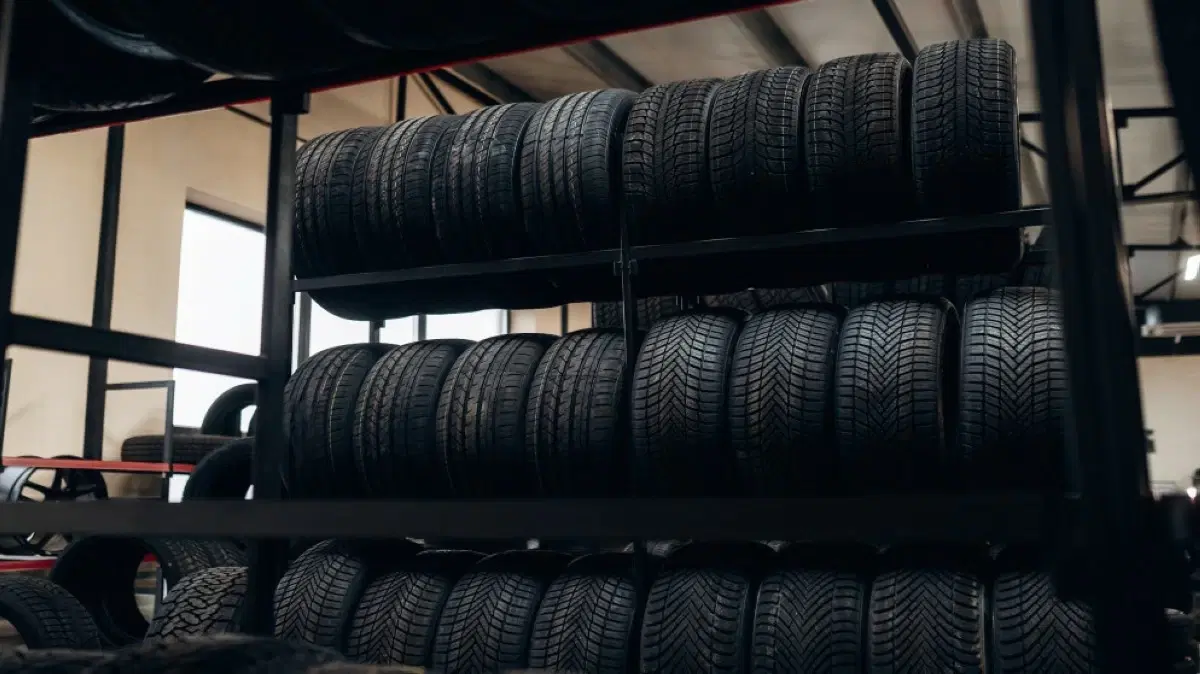
Al-Momani added that the tires seized by the institution exceeded the specified storage period, including tires manufactured in the years 2018, 2020, and 2021, noting that they were seized in warehouses, and all quantities were confiscated and transferred to yards belonging to the institution.
She explained that the institution requires "E-mark" certificates when importing tires, which prove that the tire was manufactured according to European requirements.
She confirmed that it is prohibited to import a tire that has been manufactured for more than two years, and it is also prohibited to sell it if its storage period exceeds 3 years.
She stressed the need to store tires according to the requirements specified in the technical regulation, in terms of storage method, shape, and appropriate conditions, due to its impact on the safety of the tires.
Al-Momani said that the institution is continuing its regulatory campaign on tires, due to their importance in traffic safety and their potential role in causing accidents.
Regarding objections to the institution's procedures, she explained that any factory, commercial establishment, or distributor whose products are seized, destroyed, or whose facility is closed has the right to object to the decision within 5 days, in accordance with the "Objection Instructions on Inspection and Supervision Procedures".
She pointed out that the objections are reviewed by a specialized committee to verify the safety of the procedures taken by the institution and the validity of the justifications provided by the party concerned regarding the non-compliant products, confirming that the right of objection includes imported products and products available in the markets.
She said that the percentage of objections that are found to be valid is very low, noting that it is estimated at about one case per thousand objections.