Specialists in Digital Platforms Discuss Electronic Publishing and Artificial Intelligence
Amman3 min read
Share
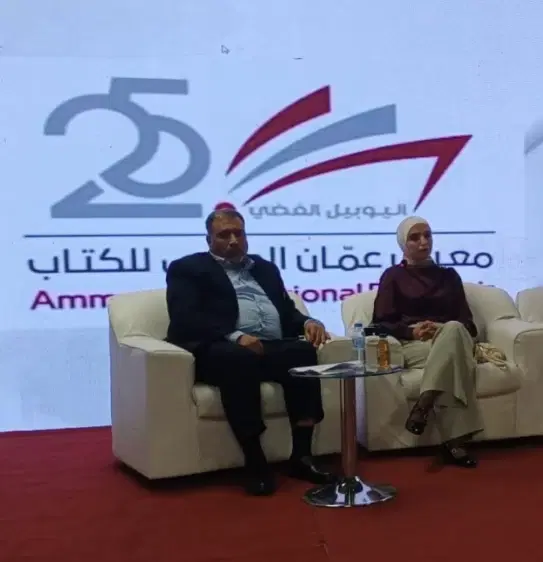
Specialists in electronic publishing discussed, during a seminar today, Wednesday, at the seminar hall of the Jordanian International Exhibitions Center in Mecca Mall, topics of electronic publishing and the use of artificial intelligence.
The seminar, titled "Electronic Publishing and the Use of Artificial Intelligence," was attended by Nasreen Baalbaki, the media and development officer at the Syrian Publishers Union, Iman Asaad, the editor-in-chief and producer of the Saudi platform "Thamaneeya," Haneen Jabri from the platform "Abjad," and was moderated by the journalist Riyad Abu Zaida, as part of the events of the Syrian Arab Republic, the guest of honor of the 25th edition of the Amman International Book Fair in its cultural program.
Baalbaki said that electronic publishing helps the publishing process and does not eliminate paper publishing, touching on the techniques of animated images in electronic publishing, especially in children's books.
She reviewed the types of electronic publishing and the techniques and mechanisms used.
She believed that the publisher who does not venture into the field of electronic publishing will remain outside the competition, noting that most European countries rely heavily on the (audio book) or audiobook technology, pointing out that artificial intelligence has greatly helped in developing electronic publishing tools.
For her part, Asaad emphasized the importance of originality in publishing.
In the context of employing artificial intelligence in writing and publishing, she raised a question about the idea or the originality of writing.
She discussed the tools for detecting writing and publishing through the use of artificial intelligence, touching on the challenges faced when using tools and techniques to detect the use of artificial intelligence.
She reviewed many experiences that created crises caused by the detection tools of the use of artificial intelligence, and the creation of a state of doubt about the writer and his product, noting that these tools, in the case of high-quality text, often give the result that artificial intelligence was used.
Despite these challenges, Asaad confirmed that artificial intelligence is a useful tool and it is necessary to deal with it.
For her part, Jabri said that platforms represent an integrated link that includes the publisher, the writer, and the reader, explaining that the role of platforms, regardless of their differences, is to help the publisher reach the book to the largest number of people and thus create a longer life cycle for the book.
She touched on the platform "Abjad," noting that it focuses on old editions, whether original or translated, and contributes to increasing their spread.
She reviewed the role of algorithms in knowing the requirements and needs of the reader.