Between the screen and grandmother's tales.. Children's literature seeks its place in the age of artificial intelligence
Amman4 min read
Share
Amidst the transformations imposed by the "digital child", the fears of artificial intelligence, and the new tools for writing and interaction provided by technology, authors and writers discussed the reality and future of children's literature during the symposium "Writing for Children in the Age of Technologies", held the day before yesterday, Friday, as part of the events of the 2026 Amman International Book Fair, organized by the Jordanian Publishers Union.
Poet and critic Dr. Nasser Shabaneh began the discussion by comparing the current artificial intelligence revolution to the television revolution of about half a century ago, when fears prevailed that the book would become extinct, emphasizing that technology is a "neutral tool" and that the paper book is capable of surviving provided that "reading education" is enhanced within the family and society, alongside the writer developing their tools and methods.
Shabaneh pointed out that artificial intelligence may open the door to the birth of "from children to children" literature, allowing children a greater space for expression rather than limiting writing about them to adults, noting that metered and rhymed poetry remains, in his view, one of the fields that artificial intelligence fails to emulate in the required manner.
For his part, Dr. Mahmoud Abu Farweh Al-Rajabi focused on the transformations that have occurred in the psychology of the "digital child", particularly the decline in their ability to concentrate in the face of the rapid flow of content, calling on children's literature writers to develop narrative methods and benefit from the "direct digital hook" (The Hook) technique, which is based on capturing the child's attention from the very first moment and quickly entering into the events, without falling into content simplification or trivialization.
Al-Rajabi considered that artificial intelligence excels in certain tasks, including proofreading and criticism, but remains limited in producing creative fictional writing, as it is based on programming and automated processing and lacks the human depth that gives the story its soul.
In turn, writer and playwright Youssef Al-Barri warned against taking a rejecting stance towards technology or engaging with it entirely, calling for what he described as a "logical blend of literature and modern technologies." He reviewed a field experiment he is conducting with children in which he employs AI-generated drawings to stimulate students to think critically and discuss what the machine produces.
Al-Barri emphasized his bias toward the human project in writing, which is based on empathy, feelings, and the warmth of "grandmother's tales," considering that this human space remains one of the aspects that is difficult for the machine to emulate.
As for writer Mohammad Jamal Amr, he criticized the persistence of some traditional themes in children's literature, calling for moving the child from the position of a passive recipient to a partner in the creative process through the multimedia digital text, which is based on four main elements: the child, the text, technology, and interaction.
Conversely, Amr warned against some risks of interactive storytelling, most notably mental distraction and security risks associated with the use of technology, emphasizing that children's literature is not limited to education and entertainment, but can also play roles in therapy, upbringing, and building the child's personality.
Writer Sana Al-Abdalat had opened the symposium by talking about the transition from tales of the past and traditional printed books to addressing a child "born with a tablet in their hand," pointing out that this transformation moved children's literature from direct behavioral guidance to an interactive space driven by image culture.
Al-Abdalat believed that this reality forces the writer to redefine their role, transforming into a "visual engineer" and intellectual motivator, capable of investing the tools of the era without sacrificing cultural identity, in the face of the increasing presence of screens in children's lives.
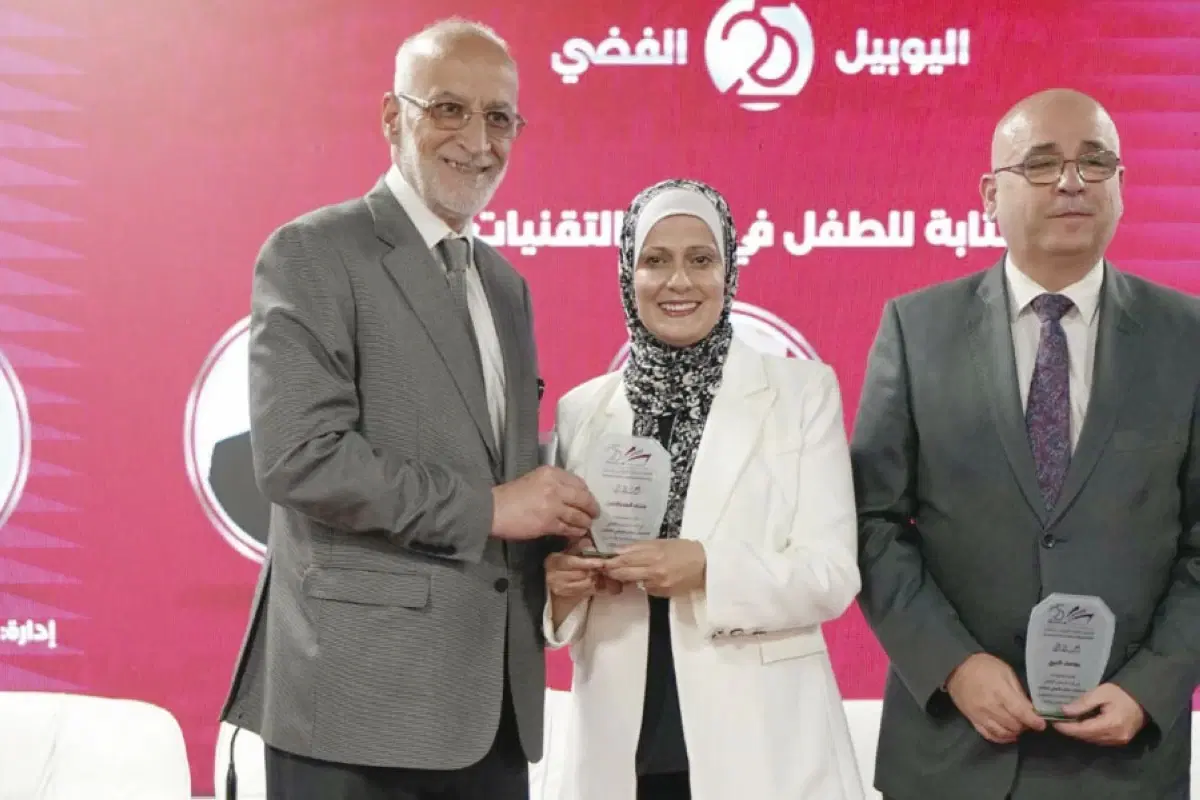
At the conclusion of the symposium, the President of the Jordanian Publishers Union and Director of the Amman International Book Fair, Jabr Abu Faris, honored the participants in the symposium in appreciation of their contributions.