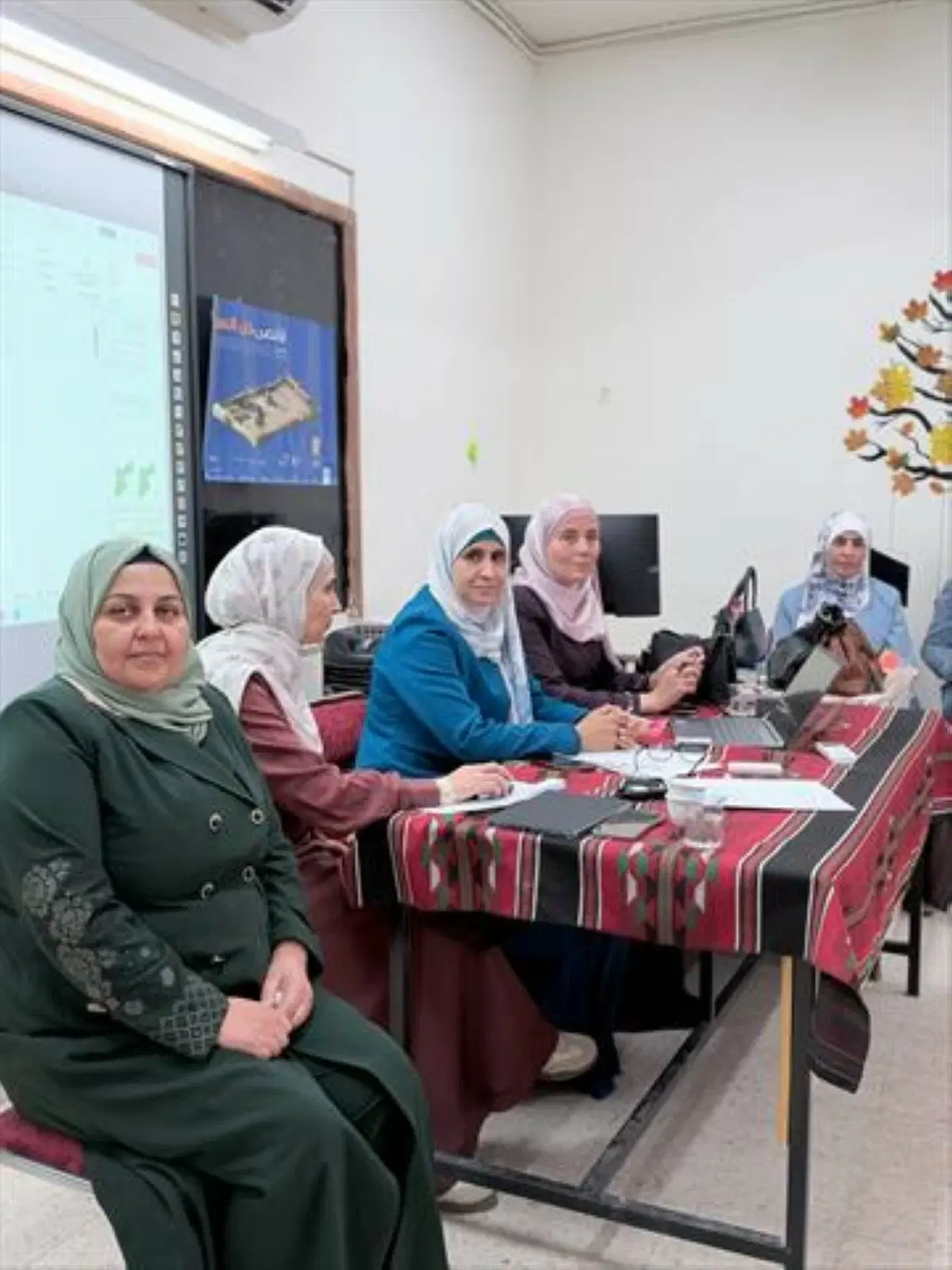
Al-Jafarah emphasized that the national evaluation results represent an important tool for diagnosing the reality of learning and determining actual educational needs, pointing out that the importance of these results does not lie in the numbers and indicators themselves, but rather in the ability to analyze them and benefit from them in making educational decisions that contribute to bringing about tangible improvement in student performance.
She stated that dealing with the evaluation results requires careful professional reading that reveals strengths and weaknesses, and helps in setting priorities and building remedial and developmental plans based on students' needs, stressing that the coming period calls for integrating efforts among school administrations, teachers, and educational supervisors to ensure the transformation of analysis results into practical actions that are actionable, monitorable, and evaluable.
Al-Jafarah added that the early primary grades form the cornerstone in building students' educational journey, as mastering reading, writing, and arithmetic skills is linked to their ability to continue learning and acquiring knowledge in subsequent stages, which requires intensifying efforts to provide appropriate educational support, continuously monitoring students' progress, and addressing the difficulties they face according to plans that respond to individual differences among them.
Al-Jafarah pointed out that specialized educational meetings provide a space for dialogue and the exchange of experiences between school leaderships and technical staff, and contribute to unifying visions and directing efforts toward educational priorities, indicating that the success of developmental plans is measured by the extent of their reflection on student learning and improving the outcomes of the educational process.
For her part, Al-Dalaeen emphasized the importance of utilizing the national evaluation results in determining the supervisory needs of schools, directing professional support to teachers, and enhancing effective teaching practices. She also reviewed the "Initiate, You Are Capable" initiative, launched by the Educational Supervision Division with the aim of stimulating developmental initiatives and enhancing professional responsibility and participatory work in the educational field.
The meeting addressed classroom observations for the Arabic language subject, where two educational supervisors, Iman Al-Sororayrah and Sumaya Al-Sororayrah, emphasized the importance of utilizing classroom observation in developing teaching methods, enhancing reading, comprehension, and expression skills, and taking into account individual differences among students.
Participants also discussed preparations for the Learning Quality Control Assessment Test (LQCAST), emphasizing the importance of coordination, organization, and follow-up to ensure the required readiness.