Shoman revisits the experience of Hashem Gharaibeh and his career in Jordanian narrative
Amman4 min read
Share
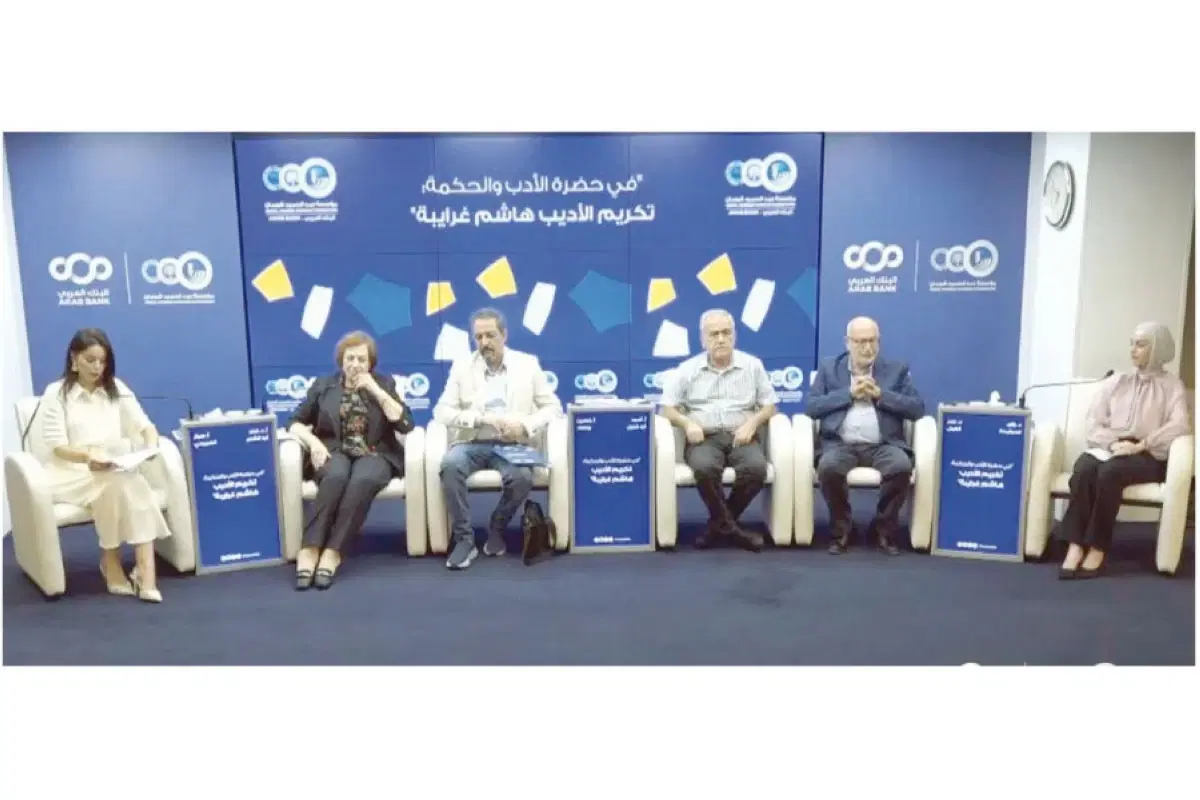
The Abdul Hameed Shoman Foundation celebrated the day before yesterday the writer and novelist Hashem Gharaibeh, in a meeting that revisited milestones of his literary and cultural experience and his role in the Jordanian cultural scene, with the participation of a number of writers, academics, researchers, and those interested in cultural affairs.
The meeting was titled "In the Presence of Literature and Wisdom: Honoring the Writer Hashem Gharaibeh," and featured Senator Dr. Hind Abu Al-Shaar, Dr. Omar Al-Ghoul, journalist and researcher Ahmed Abu Khalil, poet and short story writer Hussein Jallad, and Dr. Ru'a Hawamdeh, with the session moderated by writer Siwar Al-Subaihi.
The Foundation's CEO, Valentina Qussisiya, said that honoring Gharaibeh comes in celebration of the experience of a writer present in the Jordanian scene as an author, intellectual, and visionary, noting the difficulty of separating his life experience from his writing, in which the transformations, questions, and contradictions of society were present.
She pointed to his contributions to cultural life, especially in the field of creative writing through workshops he provided for writers, beginners, and those interested in narrative, in addition to his presence in the Jordanian Writers Association and cultural institutions and communities.
Qussisiya paused at Gharaibeh's relationship with the city of Irbid and his efforts to enhance communication between the cultural community and academic institutions, especially his experience with Yarmouk University and its library, and his contribution to expanding the presence of books and reading outside the university framework.
Senator Dr. Hind Abu Al-Shaar recalled a number of milestones she shared with Gharaibeh, including her participation in celebrating his novelistic achievements and the signing of the novel "Al-Shahbandar" in Beirut, in addition to cultural dialogues and meetings that brought them together, noting his presence in cultural seasons and the novel forum in Jordan.
Journalist and researcher Ahmed Abu Khalil addressed an aspect of Gharaibeh's cultural biography, recalling his experience in partisan work and prison, and noting his continued support for new writing experiences through training, criticism, and encouragement after leaving partisan work in the early nineties.
Dr. Ru'a Hawamdeh said that Gharaibeh chose to be an "ordinary and free human being," noting that his experience was not preoccupied with creating a hero image around himself, as much as it left an impact on generations of writers and those interested in creativity, while she saw that he established his narrative experience away from the clamor of literary schools and doctrines.
For his part, Dr. Omar Al-Ghoul discussed his relationship with Gharaibeh and his role in supporting cultural activities at Yarmouk University, noting his interest in expanding the role of the library, attracting students to it, organizing creative writing workshops, and participating in book club activities.
As for poet and short story writer Hussein Jallad, he addressed the presence of place and history in Gharaibeh's experience, noting that his works expanded the Jordanian narrative map temporally and spatially, from the Nabataeans and Petra to Amman, the northern village, and prison, so that the novel became for him a space for researching the layers of the Jordanian place and its transformations.
Jallad added that history in Gharaibeh's works does not always start from major events and well-known figures, but may be formed from small details such as documents, oral memory, stone, and daily experience, which gives these details a role in revealing history, place, and the human being.
At the conclusion of the meeting, Gharaibeh expressed his appreciation to the Abdul Hameed Shoman Foundation for its initiative to honor him, considering it a sign of loyalty to creators and appreciation for their contributions to enriching the Jordanian and Arab cultural scene.
Hashem Gharaibeh's literary project in narrative, short stories, and novels extends, intersecting with questions of the human being, place, memory, and social and political transformations, in addition to his presence in cultural life and his contributions to nurturing new talents and promoting the act of reading and writing.