The occupation is lenient in pursuing the perpetrators of attacks in the West Bank
3778 incidents and crimes committed by settlers since 2023
Follow Al Rai

As Israeli elections approach

The occupation is lenient in pursuing the perpetrators of attacks in the West Bank
3778 incidents and crimes committed by settlers since 2023
On the eve of the Israeli elections, inflammatory political rhetoric from ministers and Knesset members is escalating, in parallel with the continued expansion of settler attacks against Palestinians in the West Bank and East Jerusalem, amid accusations that the Israeli law enforcement system is lenient in pursuing the perpetrators of these attacks.
According to a report based on data from Israeli human rights organizations, the West Bank and East Jerusalem witnessed 3778 incidents and crimes committed by settlers against Palestinians since October 2023, resulting in the martyrdom of 136 Palestinians and the injury of 1832 others.
The report concludes that the scale and nature of the attacks, along with the official mechanisms for dealing with them, raise questions about whether the violence is merely the activity of extremist settlers outside the control of the state, or whether it is fueled by government and security policies and arrangements that allow the continuation of the attacks and limit the accountability of their perpetrators.
According to the 'Fortress Project' report, issued on October 1, 2026, 3778 incidents of violence and crime committed by settlers against Palestinians in the West Bank and East Jerusalem were recorded during the period between October 6, 2023, and September 28, 2026.
These incidents occurred at 987 sites, including 92 fatal incidents, resulting in the martyrdom of 136 Palestinians and the injury of 1832 others.
Physical assaults, with 1049 incidents, property destruction, with 986 incidents, intimidation and threats, with 844 incidents, and land and pasture seizures, with 698 incidents, were the most common types of recorded attacks.
Hebron Governorate topped the list of areas most affected by these attacks with 854 incidents, followed by Nablus with 715 incidents, then Ramallah and Al-Bireh with 525 incidents, while August 2026 recorded the highest monthly number of incidents since October 2023.
The report indicates that these figures represent a'minimum' and are not a comprehensive count, as the documentation process was limited to incidents documented by Israeli human rights organizations or the Israeli media. Additionally, 787 incidents documented by the United Nations Office for the Coordination of Humanitarian Affairs (OCHA) were not included due to the report's methodology of relying solely on Israeli sources.
The data raises questions about who is responsible for managing security and law enforcement in the West Bank, given the ongoing Israeli occupation of the region. The Israeli Military Command, represented by the Central Command, is responsible for overall military and security, while the 'Shaye' District Police are tasked with enforcing the law on Israeli settlers in the West Bank and East Jerusalem.
The report indicates that the arrest rate of Jewish suspects in what Israeli authorities describe as 'Jewish terrorism' cases decreased by about 50 percent in 2025 compared to the previous year, and that out of 15 requests submitted by the Shin Bet to target Jewish targets, only three were acted upon.
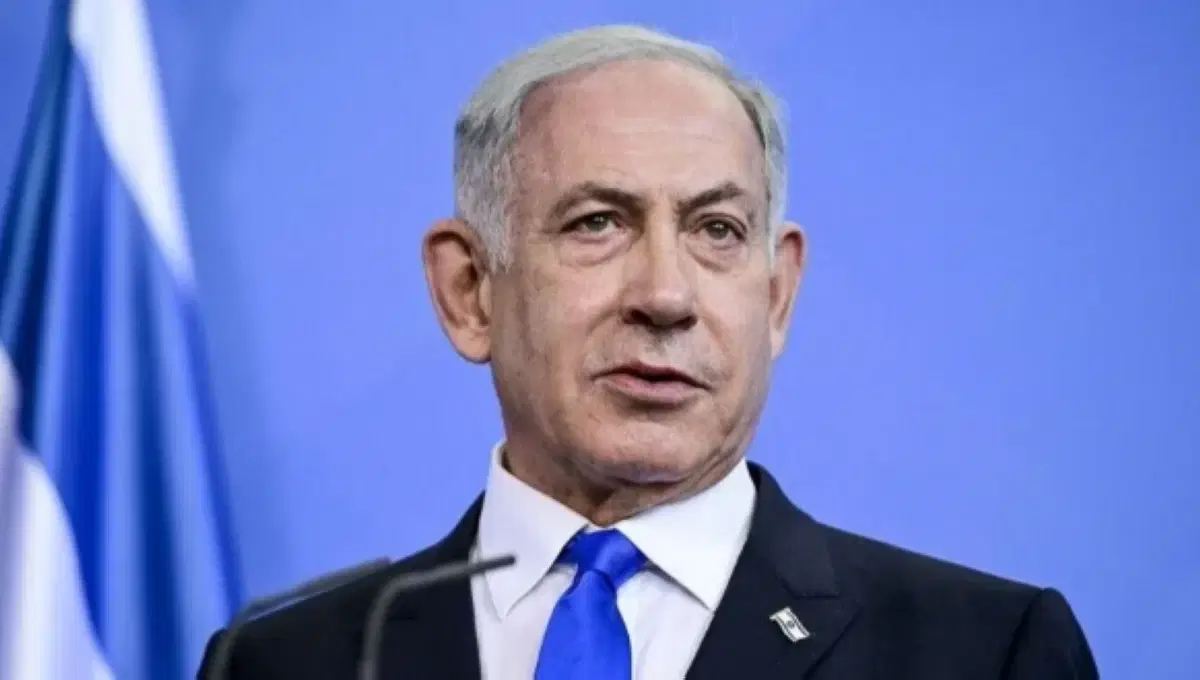
On June 6, 2024, during a meeting at the Central Command, Prime Minister Benjamin Netanyahu was quoted as asking the commander of the regional unit of the 'Shaye' Police, Avishay Malamat, about the failure to arrest any Jewish settlers during the unrest, according to the report, which noted that Netanyahu said that 'the Americans are pressuring on this matter'.
The report also includes accusations against 'Shaye' Police officials of obstructing investigations and leaking intelligence to the office of the Minister of National Security or his assistants regarding suspects in national crimes against Palestinians. It states that Dorfman, one of the Minister's assistants, was seen in a recording recommending that an attack on Palestinians be considered 'self-defense.' The report does not indicate that criminal charges have been filed in this case so far.
Major General Avi Balut commands the Central Command of the Israeli Army, which includes the West Bank.
The report criticizes the military command's approach to the settler file, while its sources say that the backgrounds and relationships of some officials with settlers raise questions about the independence of dealing with the attacks. These remain allegations in the report and not proven judicial rulings.
On the political and administrative side, Finance Minister Bezalel Smotrich, as part of the government coalition agreement, obtained broad powers in the Ministry of Defense related to civil affairs in the occupied Palestinian territories. According to a UN report, in 2023, the stages of approval for settlement expansion projects were reduced, with new administrative arrangements established to oversee settlement activity.
According to the report in question, administrative and legal changes have allowed for the expansion of permits related to grazing and agricultural installations, including temporary installations housing small herds of livestock, which, according to critics of these policies, has contributed to changing the facts on the ground, particularly in Area C.
After October 7, 2023, and with a shortage of military manpower, the Israeli army assigned the task of protecting a number of settlements to local security teams, who were equipped with military weapons, according to the report. Critics of this policy believe it has led to greater overlap between armed settlers and the official security system, while Israel says that arming local security teams was part of protecting settlements under existing security conditions.
In the face of what the report describes as a decline in police cooperation in some violence files, the Shin Bet intensified the use of administrative detention against a number of settlers suspected of involvement in acts of violence and property damage. These measures are based on intelligence information and do not require the filing of an indictment, which has sparked debate in Israel about their scope of use against settlers compared to their use against Palestinians.
The case of the village of Burqa serves as an example of what the report describes as the complexities facing the investigation of settler crimes. On August 4, 2023, settlers arrived in a pastoral area near the village, and a stone clash broke out between the two sides, resulting in the death of 19-year-old Palestinian Qusai Ma'tan by gunfire.
Israeli authorities arrested two Israelis in connection with the incident, Ya'aiel Indor, 29, from Ofra, and Elisha Yard, 23, from the outpost of Ma'aleh Migron, who worked as a spokesman for Knesset member Limor Son Har-Melekh. The two claimed that what happened was in self-defense. According to the report, the Shin Bet forwarded the intelligence materials directly to the Public Prosecution out of fear that they would be leaked from the police to the Minister's office, while Yard spent several days under house arrest before leaving without being tried in the case.
The article indicates that one of the participants in the incident later appeared in another incident against Palestinians, and that attacks on the village continued, which are facts that need to be clearly attributed to the source when published.
The controversy is not limited to the performance of security agencies, but is also linked to the political rhetoric of a number of ministers and Knesset members. In March 2023, after a settler attack on the town of Huwara, Smotrich said that the town 'must be erased' and that the State of Israel should do so, before clarifying later that he did not mean to erase the entire town but to target what he described as terrorists and their supporters.
These statements, along with other positions of ministers and Knesset members who supported settlers or criticized their arrest, reveal the presence of the settler violence file in Israeli political discourse, especially as elections approach, where security and domestic policy considerations intersect with the issue of settlement and the West Bank.
The report indicates the difficulty of measuring the true scale of settler crimes in the absence of an official and updated Israeli database that publishes all incidents on a regular basis.
The army and police sometimes publish cumulative annual data to the media, while the Shin Bet does not publish detailed data on national crimes committed by settlers, and some law enforcement data are only available through freedom of information requests submitted by Israeli human rights organizations, including 'Yesh Din'.
The documentation methodology also imposes additional limits on the figures, as it does not include military activities that fall within the framework of army operations, such as raids, arrests, or confrontations with militants or law enforcement at checkpoints.
In contrast, it includes incidents in which uniformed or reserve soldiers act outside the framework of military operations, after individual human review, and the number of crimes involving settlers and such soldiers is 257 incidents, according to the report.
Thus, the available figures place the file of settler violence before a more complex equation than simply recording the number of attacks, as it includes the nature of the relationship between settlers and security agencies, the mechanisms of investigation and prosecution, the administrative and legal changes related to settlement, and the political discourse issued by elected officials.
As Israeli elections approach, the question arises as to whether the escalation of inflammatory rhetoric will lead to more attacks on the ground, or whether it will prompt official institutions to tighten law enforcement procedures and hold perpetrators accountable.
Know more about this story?Send us a tip
Ask about this report — answers stay grounded in its text.